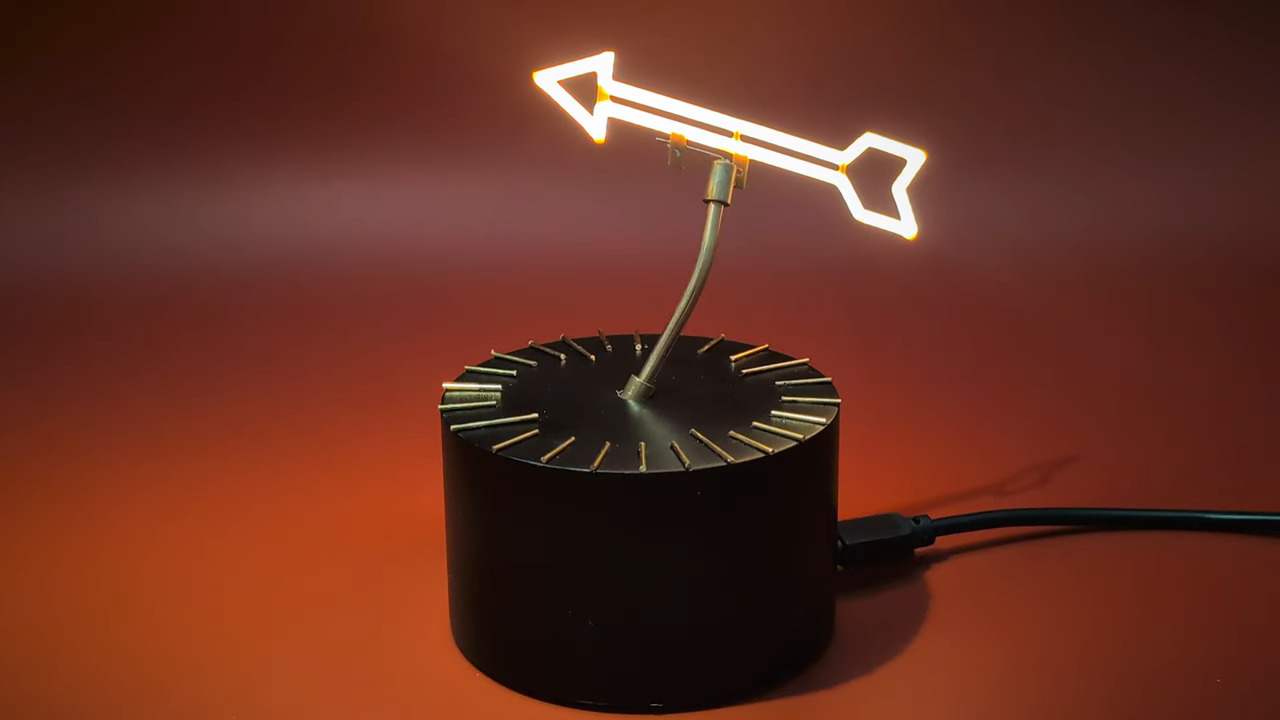
A reverse sundial sounds like something invented by a bored wizard, a retired math teacher, or someone who looked at a normal clock and said, “Nice, but can we make this unnecessarily fascinating?” Yet the idea is wonderfully real: by flipping the usual relationship between sunlight, shadow, and display, a reverse sundial can still tell time without batteries, Wi-Fi, charging cables, or that tiny panic you feel when your phone drops to 1%.
Traditional sundials use a gnomon, the shadow-casting part, to point across hour lines. A reverse sundial changes the trick. Instead of a plain shadow landing on printed numbers, the sundial itself can shape sunlight or shadow so the time appears as a readable pattern. In modern maker culture, this idea is often connected to digital sundials: clever 3D-printed designs that project numbers inside a shadow, making sunlight look like it suddenly learned how to use a calculator.
The result is both ancient and futuristic. It is part astronomy lesson, part optical illusion, part backyard conversation starter. And yes, when built, aligned, and used correctly, a reverse sundial still tells time.
What Is a Reverse Sundial?
A reverse sundial is not one single official museum category with a velvet rope and a Latin label. It is better understood as a design concept: a sundial that reverses the typical reading method. In a common horizontal sundial, the gnomon casts a moving shadow over fixed hour marks. In a reverse or digital-style sundial, the shadow or the light pattern itself may become the display.
Think of it this way: a normal sundial says, “Look where the shadow points.” A reverse sundial says, “Look what the shadow reveals.” That small change turns a familiar ancient device into something that feels almost magical.
One popular version uses a precisely shaped gnomon filled with tiny openings, slots, or channels. As the Sun moves across the sky, light passes through only certain parts of the structure. Those sunbeams form digits or readable time marks on the ground or on a surface. No screen. No motor. No app update arriving at the worst possible moment. Just sunlight, geometry, and patience.
How a Regular Sundial Tells Time First
To understand why a reverse sundial works, it helps to start with the classic version. A sundial tells time by using the apparent motion of the Sun across the sky. The Sun appears to move because Earth rotates. As Earth turns, shadows shift. A correctly designed sundial uses that predictable shadow movement to mark the hours.
The most important part is the gnomon. For a sundial to remain reasonably accurate through the year, the gnomon’s time-telling edge is usually aligned parallel to Earth’s axis. In the Northern Hemisphere, that means it points toward true north and is tilted at an angle related to the local latitude. This is why a sundial made for Miami will not behave perfectly if you casually plop it down in Seattle and expect it to perform like a professional.
A sundial also tells solar time, not always the exact clock time shown on your phone. Clock time is standardized by time zones. Solar time depends on where you are within that time zone, the date, Earth’s tilted axis, and Earth’s slightly elliptical orbit. This is why accurate sundials often need corrections for longitude, daylight saving time, and the equation of time. In other words, the Sun is dependable, but it is not trying to match your lunch meeting.
How the Reverse Sundial Flips the Idea
The reverse sundial keeps the same celestial foundation but changes the user experience. Instead of placing numbers on the dial plate and letting the shadow point to them, the designer can encode the numbers into the shape of the gnomon or the path of light. When sunlight arrives from a particular angle, it activates one pattern. As the Sun moves, another pattern appears.
This is why people often describe digital sundials as “shadow displays.” The object does not have electronic pixels, but it behaves a little like a pixel display. Each tiny cutout or shaped passage acts like a gate. At one solar angle, certain gates allow light through. At another angle, different gates do the job. Put enough of these together, and the Sun can project recognizable numbers.
The design problem is harder than it looks. A maker cannot simply drill random holes and hope the universe becomes polite. The holes must be calculated so that sunlight traveling from specific directions creates the intended digits. The device must also tolerate seasonal changes in the Sun’s height, imperfect printing, and real-world alignment mistakes. Basically, the Sun is a very strict project manager.
Why It Still Works Without Electronics
The magic of a reverse sundial is really geometry wearing a magician’s cape. Sunlight travels in straight lines. Earth rotates at a steady rate. The Sun’s apparent position changes predictably throughout the day. If a device is designed around those predictable angles, it can translate solar position into time.
This is the same principle behind ordinary sundials, but reverse sundials make the conversion more visually dramatic. They do not need a battery because the Sun supplies the light source. They do not need a processor because the geometry is already “programmed” into the object. A 3D-printed digital sundial is, in a funny way, a physical algorithm. The code was used during design, but the finished object runs on sunshine.
That is why these devices are such powerful teaching tools. They show that computation does not always require a glowing screen. Sometimes a shape can do the thinking, provided it was designed with enough precision.
The Science Behind the Shadow
Solar Angle
The Sun’s position in the sky can be described by altitude and azimuth. Altitude is how high the Sun appears above the horizon. Azimuth is its compass direction. A sundial mostly depends on these changing angles. Morning sunlight comes from one side, noon sunlight arrives from a higher and more central position, and afternoon sunlight swings toward the other side.
Latitude
Latitude matters because the Sun’s path looks different depending on where you are on Earth. A sundial designed for one latitude may need adjustment or redesign for another. This is why serious sundial plans often ask for your location. It is not being nosy. It is doing astronomy.
True North
Many sundials must be aligned with true north rather than magnetic north. A compass points toward magnetic north, which can differ from true north depending on location. The difference is called magnetic declination. If you ignore it, your sundial may still look charming, but it may also tell time with the confidence of a person guessing the answer on a quiz show.
Equation of Time
The equation of time explains why apparent solar time and mean clock time do not always match perfectly. Earth’s orbit is not a perfect circle, and Earth’s axis is tilted. Together, these factors make sundial time run slightly fast or slow depending on the date. This does not make sundials wrong. It makes them honest about the sky.
Reverse Sundial vs. Digital Sundial
The phrase “reverse sundial” may be used casually to describe several unusual designs, but the digital sundial is the most eye-catching modern example. It displays numbers using sunlight and shadow. Some versions show time in intervals, such as every 20 minutes, and work best during the brighter central part of the day. That limitation is not a failure; it is part of the design bargain. A solar-powered object naturally becomes less useful when the Sun clocks out.
A digital sundial can look like a strange sculptural block, a small architectural model, or a piece of futuristic cheese. The “Swiss cheese” comparison is common because the gnomon may contain many carefully placed holes. But unlike actual cheese, every opening has a job. One wrong cut can make the display blurry, incomplete, or hilariously confusing.
That is also why 3D printing became important for modern designs. Precise digital modeling makes it possible to shape complicated internal passages that would be painful to build by hand. Makers can use software to simulate sunlight angles, test the display, and print the geometry as a physical object.
Why People Love This Odd Little Invention
Reverse sundials hit a rare sweet spot. They are scientific enough to teach astronomy, artistic enough to belong on a patio, and weird enough to make people stop scrolling. They remind us that old technologies are not automatically boring. Sometimes they just need a mischievous redesign.
They also challenge the way we think about “digital.” In everyday speech, digital usually means electronic. But digital can also mean information shown as discrete values, such as numbers. A digital sundial can display digits without electricity, which makes the phrase feel like a tiny rebellion against modern assumptions.
There is also a sustainability charm here. A reverse sundial does not consume power during use. It does not need rare components to operate. It does not become obsolete because a software company changed its mind. As long as the structure remains intact and the Sun keeps showing up for work, the device can continue to function.
Limitations: Because the Sun Has Boundaries Too
A reverse sundial is clever, but it is not a replacement for your phone alarm. It works only when direct sunlight is available. Clouds, shade, rain, indoor lighting, and nightfall are not its best friends. It may also be less readable early in the morning or late in the afternoon, when shadows stretch dramatically and sunlight arrives at shallow angles.
Accuracy depends on design quality, correct latitude, careful alignment, and whether the user applies time corrections. A display that shows time in 20-minute increments is delightful, but it will not help if you need to know whether it is 2:03 or 2:04. For that, please return to the boring miracle of modern clocks.
Still, limitations do not ruin the appeal. They actually make the object more interesting. A reverse sundial forces us to notice the sky, location, season, and motion of Earth. It turns timekeeping from a silent background service into a visible relationship with the planet.
Can You Make One Yourself?
Yes, though the difficulty depends on the type. A simple experimental reverse sundial can be made with cardboard, a flashlight, sunlight, and cutout shapes to observe how light changes with angle. That version teaches the concept without demanding engineering perfection.
A true digital sundial is more advanced. It usually requires accurate modeling, location-specific settings, and a 3D printer capable of producing clean openings. You would need to consider the intended latitude, orientation, time range, display interval, and the surface where the shadow will land. The more precise the desired display, the more careful the design must be.
For beginners, the best path is to start with a traditional sundial. Build a simple paper or garden sundial, align it correctly, and watch how the shadow moves. Once that makes sense, the reverse design becomes easier to appreciate. It is hard to remix a song before you know the melody.
Educational Value: A Tiny Observatory in Disguise
Teachers and parents love sundials because they sneak several subjects into one activity. Astronomy explains the Sun’s apparent movement. Geometry explains angles and projections. History shows how ancient cultures measured time long before wristwatches. Engineering enters when students test, adjust, and improve their design.
A reverse sundial adds one more layer: design thinking. Students can ask, “What if the shadow did more than point?” That question leads to optics, pattern-making, prototyping, and problem-solving. It also gives learners a satisfying “aha” moment when they realize the device is not magic. It is careful planning made visible.
This is the kind of project that rewards curiosity. Even a failed attempt teaches something useful. If the shadow is blurry, why? If the time is off, is the gnomon misaligned? If the digits appear backward, did the projection surface or orientation flip the pattern? Suddenly, mistakes become data. That is science with fewer lab coats and more sunshine.
Design Example: The Shadow That Prints Numbers
Imagine a small 3D-printed block mounted on a jar in a sunny window or on a patio table. Inside the block are narrow tunnels shaped and angled for different solar positions. At 11:00, sunlight passes through one set of openings and projects “11:00” or a simplified digit pattern. Later, at 1:20, the Sun has moved, and a different set of pathways lines up. The old digits disappear, and the new ones appear.
To a viewer, it feels as if the sundial knows the time. In reality, the device knows nothing. It simply responds to sunlight from a predictable direction. That is the elegance of it. The intelligence is embedded in the structure.
Why the Reverse Sundial Still Matters
In a world of atomic clocks, GPS time, smartwatches, and kitchen appliances that somehow also want firmware updates, a reverse sundial is not important because it is the most practical clock. It matters because it changes our relationship with time. It slows us down. It invites us to look up. It reminds us that time is not just numbers on a screen; it is also the turning of Earth beneath a star.
That may sound poetic, but it is also practical. Sundials helped humans understand days, seasons, direction, and place. Reverse sundials continue that tradition while adding modern creativity. They connect ancient observation with contemporary fabrication. That is a rare combination: old wisdom wearing 3D-printed sneakers.
Personal Experiences and Real-World Reflections on Reverse Sundials
The first time someone sees a reverse sundial working, the reaction is usually not quiet academic appreciation. It is more like, “Wait, what?” Then comes the crouching, squinting, pointing, and a brief moment where everyone behaves like detectives investigating a shadow. That reaction is part of the charm. A reverse sundial does not just tell time; it starts conversations.
In a backyard setting, the experience feels almost theatrical. You place the object in sunlight, align it carefully, and wait for the shadow to sharpen. At first, it may look like an abstract blot. Then the digits begin to make sense. The moment the time becomes readable, the object earns its applause. It feels like watching a secret message appear, except the secret is “it is lunchtime,” which is admittedly less dramatic but still useful.
One practical lesson appears immediately: alignment matters. A few degrees in the wrong direction can turn a clever time display into modern art. This is where many beginners discover the difference between “north-ish” and true north. The sundial does not care about your confidence. It cares about geometry. That can be humbling, especially when a plastic object seems better at astronomy than you are.
Another experience is the sudden awareness of weather. With a reverse sundial, clouds become villains. A passing cloud can erase the display as quickly as someone closing a laptop. Instead of feeling annoyed, you start noticing the rhythm of light. Bright sun gives crisp marks. Hazy light softens them. Low-angle sunlight stretches everything. The device trains your attention without giving a lecture.
There is also joy in showing it to people who are used to digital screens. A child may understand it faster than an adult because children are often more willing to accept that shadows can do surprising things. Adults tend to ask where the battery is hidden. When they realize there is no battery, no sensor, and no tiny electronic wizard inside, the reverse sundial becomes even more impressive.
For makers, the experience is different but equally rewarding. Printing or building a reverse sundial teaches patience. Small defects matter. A rough edge can blur a digit. A poor surface can make the projection harder to read. The best results come from testing, adjusting, and resisting the temptation to declare victory after one sunny afternoon. Like many good projects, it rewards tinkering.
For writers, artists, and design lovers, the reverse sundial is a reminder that technology does not have to be loud to be brilliant. It can be quiet, passive, and beautiful. It can use a star 93 million miles away as its power source and still fit on a table. That is not just clever engineering. That is cosmic comedy with excellent timing.
Most of all, using a reverse sundial makes time feel physical again. Modern clocks make time seem invisible and absolute. A sundial shows that time is also local, seasonal, and connected to where you stand. The shadow on the wall is not just a display. It is evidence that Earth is moving, the Sun is shining, and you are standing in the middle of a very large, very old clock.
Conclusion
A reverse sundial still tells time because it does not abandon the science of the traditional sundial. It simply rearranges the performance. Instead of letting a shadow point to numbers, it uses sunlight and shadow to reveal numbers, patterns, or readable time marks. The idea blends astronomy, geometry, design, and a little maker mischief into one unforgettable object.
It will not replace atomic clocks, smartphones, or the microwave clock that has been blinking since the last power outage. But it does something those devices rarely do: it makes time visible, local, and delightful. A reverse sundial proves that ancient timekeeping still has new tricks, and sometimes the best screen is just a patch of sunlight on the ground.