Imagine trying to say “I love you,” “I need help,” or “please stop asking me if I want soup,” but your muscles refuse to cooperate. For many people living with paralysis, ALS, brainstem stroke, or other severe neurological conditions, the mind can still form language clearly while the body cannot turn those thoughts into sound. That heartbreaking gap between intention and expression is exactly where a new generation of brain-computer interfaces is making history.
Scientists are now creating speech from brain signals by using implanted sensors, artificial intelligence, and speech-decoding software that can translate attempted speech into text, synthetic voice, or even a talking digital avatar. It sounds like science fiction wearing a lab coat, but the research is very realand it is moving fast.
These systems do not “read minds” in the movie-villain sense. They are designed to detect patterns in the brain that appear when a person tries to speak. The computer learns those patterns, connects them to speech sounds, and then produces words. In the best demonstrations so far, people who could not speak clearly have been able to communicate at speeds far beyond older assistive devices.
What Does It Mean to Create Speech From Brain Signals?
Creating speech from brain signals means converting neural activity into language that other people can understand. The process usually begins in brain regions involved in speech production, such as areas that help coordinate the lips, tongue, jaw, larynx, and other parts of the vocal tract. When someone attempts to speakeven if no sound comes outthe brain may still send recognizable commands related to speech movement.
A brain-computer interface, often called a BCI, records those signals. Then machine learning models analyze the activity and predict what the person intended to say. Depending on the system, the output may appear as text on a screen, synthesized speech from a speaker, or animated facial movement from a digital avatar.
Think of it as a very advanced translator. But instead of translating English to Spanish, it translates “brain activity during attempted speech” into “words the rest of us can understand.” Admittedly, it is not as catchy on a travel app, but it is far more life-changing.
How the Technology Works
1. Sensors Record Brain Activity
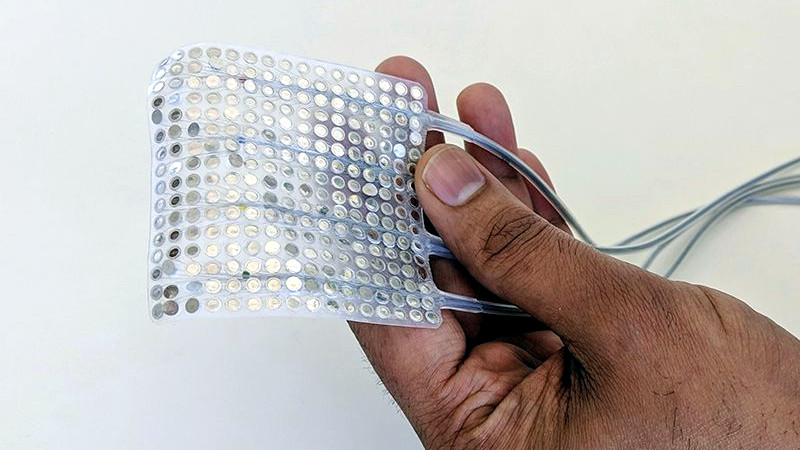
Most high-performing speech neuroprosthesis systems use implanted electrodes. Some rest on the surface of the brain, while others use microelectrode arrays that reach into the brain’s outer layer to record more detailed activity. These sensors pick up patterns from neurons when the user attempts to speak.
The reason researchers often use implanted devices is signal quality. Noninvasive tools, such as scalp EEG, are safer and easier to apply, but they usually capture blurrier signals. For speech, tiny details matter. The brain activity for “bat,” “pat,” and “mat” can be surprisingly close, and the computer needs a clean enough signal to tell them apart.
2. AI Learns Speech Patterns
After the brain signals are recorded, artificial intelligence models are trained to recognize patterns. Many systems focus on phonemes, the smallest meaningful sound units in speech. For example, the sounds that make up “cat” are different from those in “cap,” even though the words are cousins wearing different hats.
The AI learns how neural signals correspond to these sound units. Then a language model helps assemble the likely phonemes into words and sentences. This is similar to how autocorrect guesses what you meant to typeexcept with far higher stakes and, thankfully, fewer embarrassing “ducking” mistakes.
3. The Output Becomes Text, Voice, or an Avatar
Once the system predicts the intended words, it can display them on a screen or send them to a text-to-speech engine. Some newer systems can synthesize a voice that resembles the user’s pre-injury voice, using old recordings when available. Other systems go further by creating facial expressions on a digital avatar, allowing the user to convey emotion as well as words.
That emotional layer matters. Communication is not only about information. It is also about rhythm, personality, timing, humor, irritation, sarcasm, warmth, and the tiny pause before someone says, “Really?” A good speech neuroprosthesis should not just deliver words. It should help restore presence.
Major Breakthroughs in Brain-to-Speech Research
UCSF’s Synthetic Speech From Brain Activity
One important early milestone came from researchers at the University of California, San Francisco. Their work showed that brain activity could be used to control a virtual vocal tracta computer model of the lips, jaw, tongue, and larynxto generate synthetic speech. This was a proof of principle that the brain’s speech centers could provide enough information to produce understandable spoken sentences.
The exciting part was not that the system sounded perfect. It did not. The exciting part was that the research suggested a path toward restoring more natural communication for people who had lost speech. Instead of spelling words letter by letter, future users might speak through a neural prosthesis in full phrases or sentences.
Stanford’s High-Speed Speech Neuroprosthesis
Another major leap came from Stanford Medicine and the BrainGate research community. In a study involving a woman with ALS who could no longer speak intelligibly, researchers used implanted sensors and AI software to decode attempted speech into words on a computer screen.
The system reached about 62 words per minute in testing, a dramatic improvement compared with many earlier BCI communication systems. It also worked with a large vocabulary, which is crucial. A device that only lets someone say “yes,” “no,” and “I want coffee” is helpful, especially before coffee, but real conversation needs freedom.
The Stanford work showed that the brain can preserve detailed speech-related patterns even after years of severe speech impairment. That discovery gives researchers hope that people who cannot speak may still have usable neural signals for communication.
UC Davis and the ALS Speech Restoration Case
UC Davis Health reported another powerful example involving a man with ALS. Researchers implanted sensors in a brain region involved in speech coordination and used a BCI system to translate his attempted speech into text, which could then be spoken aloud by a computer.
The system was reported to reach very high accuracy and allowed communication soon after activation. For families affected by ALS, this kind of progress is not just technical news. It is personal. It means a person may be able to participate in conversation again, express needs more clearly, and reconnect with loved ones in a way that feels more immediate.
Brain-to-Voice Streaming in Near Real Time
More recent work from UC Berkeley and UCSF has focused on naturalistic speech streaming. Earlier systems could involve delays, and even a few seconds of lag can make conversation feel awkward. Anyone who has ever talked on a video call with bad Wi-Fi knows the pain. Now imagine that delay attached to every sentence you try to say.
Researchers have been developing models that decode brain activity into audible speech more quickly, moving closer to real-time conversation. In one case, a woman who had been unable to speak after a stroke used a system that generated speech in a voice resembling her own. The goal is not only to make communication possible, but to make it feel more like talking.
Why This Matters for People With Paralysis and Speech Loss
For people who cannot speak, communication often depends on eye-tracking systems, head pointers, letter boards, or caregiver interpretation. These tools can be valuable, but they are often slow and tiring. Many allow only a few words per minute. Natural conversation, by contrast, can reach more than 100 words per minute.
That difference changes daily life. Slow communication can make it harder to join a group conversation, interrupt politely, make a joke at the right moment, or explain a medical need quickly. A faster speech BCI could help users participate more naturally in family life, education, work, health care, and social relationships.
The technology may eventually benefit people with ALS, brainstem stroke, locked-in syndrome, spinal cord injury, traumatic brain injury, and other conditions that damage the body’s ability to produce speech while leaving language and intention intact.
Why AI Is the Secret Sauce
Brain signals are messy. They do not arrive in neat little folders labeled “noun,” “verb,” and “please add dramatic pause.” They are electrical patterns that shift over time, vary from person to person, and can change even within the same user from day to day.
Artificial intelligence helps by finding patterns that would be almost impossible for humans to identify manually. Deep learning models can compare thousands of neural recordings with intended speech targets, then learn which signal patterns correspond to particular sounds or words.
Language models also help. If the decoder is unsure whether the user meant “I need water” or “I need waiter,” context can guide the output. This does not mean the AI is inventing thoughts. It means the system uses probability to choose the most likely words from noisy data, much like speech recognition software does when it transcribes a podcast host who talks too fast after three coffees.
Is This Mind Reading?
The phrase “mind reading” is tempting, but it is misleading. Current speech BCIs are generally trained to decode intentional speech-related activity. In many systems, the user must try to speak or imagine specific speech actions. The device is not casually browsing someone’s private thoughts like a nosy neighbor peeking through the curtains.
That said, newer research into inner speech raises important ethical questions. If future systems can decode silently imagined words, users will need strong control over when decoding is active. Researchers have already explored privacy protections, including password-like activation methods that require the user to intentionally start the system.
This is not a small issue. A communication device should empower the user, not turn private thought into public audio. The future of brain-to-speech technology depends not only on accuracy and speed, but also consent, privacy, security, and user control.
The Biggest Challenges Ahead
Safety and Surgery
The most accurate systems often require surgery to implant electrodes. Any implanted device brings medical risks, maintenance questions, and long-term durability concerns. Researchers must prove that these systems can work safely for years, not just in impressive laboratory sessions.
Training Time
Many BCIs need personalized training. The system must learn one person’s neural patterns, which can take many sessions. Future devices will need faster calibration, easier setup, and better adaptation when signals change.
Accuracy in Real Life
A lab is controlled. Real life is not. People talk when they are tired, emotional, distracted, or surrounded by noise. A practical speech neuroprosthesis must work during ordinary life, not only when a researcher says, “Please attempt sentence number 482,” with a clipboard in hand.
Voice Quality and Emotion
Words are only part of speech. A natural voice includes pitch, tone, stress, pacing, and emotion. Researchers are working on restoring expressiveness so users can sound excited, serious, playful, annoyed, or tendernot like a GPS politely trapped in a hospital room.
What This Could Mean for the Future
If brain-to-speech systems keep improving, they could become one of the most meaningful assistive technologies of the century. Future devices may be wireless, fully implanted, more comfortable, and easier to use at home. They may connect to phones, computers, smart home systems, and communication apps.
In the long run, speech BCIs might do more than restore lost communication. They could deepen our understanding of how the brain produces language. They may also inspire better AI speech systems, better rehabilitation tools, and new ways to support people with communication disabilities.
Still, the most important goal is simple: helping people be heard. Not as patients, not as case studies, and not as miracle headlinesbut as themselves.
Experiences and Real-Life Reflections on Scientists Creating Speech From Brain Signals
When people first hear about scientists creating speech from brain signals, the reaction is usually a mix of wonder and mild panic. Wonder because the idea is extraordinary. Panic because the phrase “brain signals” makes everyone imagine a helmet that blurts out every awkward thought they have ever had in an elevator. Fortunately, real speech neuroprosthesis research is much more focused, careful, and human-centered than that.
The most meaningful experience connected to this topic is not the technology itself, but what the technology gives back. Speech is easy to take for granted until it is gone. Most people can complain about cold fries, ask for directions, whisper a joke, or say “I’m scared” without planning every letter. For someone who has lost speech, even a short sentence can require patience, equipment, and enormous energy.
That is why brain-to-speech research feels different from many flashy AI breakthroughs. It is not about making a gadget more entertaining. It is about restoring a basic human bridge. A person who can communicate faster can make choices faster. They can join conversations before the topic changes. They can correct misunderstandings. They can express personality again, including the kind of dry humor that no medical chart can capture.
Families often experience communication loss as a second illness. The person is still present, still thinking, still feeling, but everyday conversation becomes narrow and slow. A successful speech BCI can widen that doorway. It may allow a parent to speak to a child, a partner to share a private thought, or a patient to explain symptoms more clearly to a doctor. These are not small upgrades. They are life upgrades.
There is also an emotional experience for the user when the system speaks in a voice that resembles their own. A generic computer voice can communicate words, but a personalized voice can carry identity. Hearing something close to one’s former voice after years of silence can be powerful. It is a reminder that technology works best when it protects individuality, not when it turns everyone into the same polite robot narrator.
At the same time, the experience is not magically easy. Users may need training sessions. The system may make mistakes. The equipment may feel complex. The voice may not always match the user’s intended rhythm or emotion. Researchers and clinicians must design these devices with patience, dignity, and honest expectations. A speech neuroprosthesis should never be marketed as a miracle button. It is better understood as a toolan extraordinary tool, yes, but still one that must be tested, improved, regulated, and personalized.
For the public, the best way to understand this breakthrough is to look past the sci-fi sparkle and see the everyday scenes it could make possible: ordering lunch without an interpreter, joining a family argument about where to go on vacation, telling a nurse exactly what hurts, laughing at the right second, or saying goodnight in a familiar voice. That is the real promise behind scientists creating speech from brain signals. Not mind control. Not magic. Just communication returning to someone who never stopped having something to say.
Conclusion
Scientists creating speech from brain signals have opened a new chapter in assistive communication. By combining brain-computer interfaces, implanted sensors, AI decoding, language models, and speech synthesis, researchers are building systems that can transform attempted speech into text, sound, and expressive digital communication.
The technology is still developing. It must become safer, faster, more accurate, more durable, and easier to use outside the lab. But the progress is remarkable. For people who have lost the ability to speak because of paralysis, ALS, stroke, or other neurological conditions, speech neuroprostheses could eventually offer something priceless: the ability to communicate naturally again.
And in a world overflowing with noise, restoring one person’s voice may be one of the most beautiful uses of technology we have.
Note: This article is for general educational and editorial purposes only. It is not medical advice, and brain-computer interface treatments remain investigational in many settings.