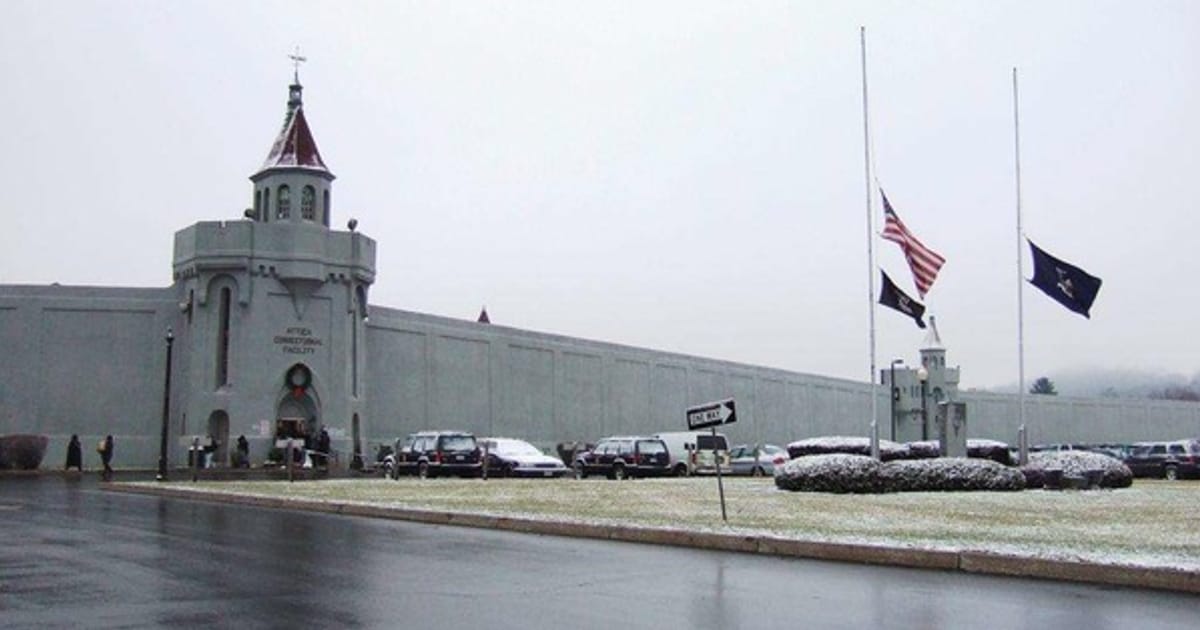
Attica Correctional Facility is one of those American prison names that seems to carry its own echo. Say “Attica,” and people may think of the 1971 uprising, maximum security walls, courtroom headlines, true-crime documentaries, civil rights debates, or a Hollywood character shouting the name like he just discovered caps lock. But beyond the symbol, Attica is also a real prison in western New York with a long, complicated history and a long list of well-known former and current prisoners connected to it.
This article looks at famous prisoners at Attica Correctional Facility without treating crime like trading cards. The point is not to glorify anyone. It is to understand why certain names became attached to Attica, how the prison became part of American public memory, and why some inmate stories still raise hard questions about punishment, rehabilitation, wrongful conviction, celebrity, violence, media coverage, and the justice system.
What Is Attica Correctional Facility?
Attica Correctional Facility is a maximum-security prison for men located in Attica, New York, between Buffalo and Rochester. Opened in the early 1930s, it became one of the last major “big house” prisons built in the United States. Its design, with massive walls and guard towers, reflected an era when the solution to prison disorder was often more stone, more steel, and more control.
The facility is operated by the New York State Department of Corrections and Community Supervision. Over the decades, Attica has housed people convicted of serious crimes, high-profile defendants, long-term prisoners, political figures, organized-crime figures, and men whose cases later became symbols of broader debates about justice.
Attica is best known nationally because of the 1971 Attica prison uprising. In September of that year, incarcerated men took control of parts of the prison and demanded better living conditions, medical care, religious freedom, fairer parole practices, and an end to abusive treatment. The standoff ended in a deadly state assault. The event became one of the most consequential prison uprisings in U.S. history and still shapes how journalists, historians, lawyers, and reform advocates talk about prisons today.
Why Attica Became Linked to Famous Prisoners
Not every prison becomes famous. Most prisons are known mainly to families, attorneys, correctional workers, and the people inside them. Attica became different for three major reasons. First, its 1971 uprising placed it at the center of national debate. Second, New York’s courts and media have handled many high-profile cases, and some of those prisoners passed through Attica. Third, Attica’s maximum-security status meant it often received people considered difficult to house, vulnerable because of notoriety, or tied to widely publicized crimes.
It is also important to use careful language. Some people described online as “Attica inmates” are former Attica prisoners, not necessarily housed there today. Prisoners are transferred for many reasons: security, medical needs, discipline, protective custody, age, parole procedures, or ordinary system management. So, when discussing famous prisoners at Attica Correctional Facility, accuracy matters more than dramatic phrasing.
Mark David Chapman
Mark David Chapman is one of the most widely recognized names associated with Attica. Chapman pleaded guilty to murdering John Lennon outside Lennon’s Manhattan apartment building in December 1980. In 1981, he was sentenced to 20 years to life in prison.
Chapman spent decades at Attica, making his connection to the facility one of the prison’s most widely reported modern associations. His presence there also created a strange historical irony: Lennon had publicly expressed support for Attica prisoners years before his own killer was sent there. That irony is often mentioned in articles and documentaries because history, apparently, has a taste for uncomfortable plot twists.
Chapman’s repeated parole hearings have continued to draw public attention. He has been denied parole many times, and recent public records have placed him at Green Haven Correctional Facility rather than Attica. Even so, his long confinement at Attica remains a major reason the prison appears in discussions of famous inmates.
David Berkowitz, the “Son of Sam”
David Berkowitz, known as the “Son of Sam,” is another infamous figure connected to Attica. Berkowitz terrorized New York City in the 1970s before his arrest and conviction. He received multiple life sentences and became one of the most recognizable criminal names in American history.
Berkowitz spent time at Attica after his sentencing. His imprisonment there became part of the larger story of how New York handled notorious prisoners whose names were already burned into public memory. Later reports have placed him at Shawangunk Correctional Facility, but Attica remains an important chapter in his incarceration history.
His case also shows how public attention can follow a prisoner for decades. Parole hearings, prison interviews, religious conversion, and victim-family responses all became part of the ongoing coverage. For Attica, the Berkowitz connection added another layer to the prison’s reputation as a place where New York sent some of its most infamous offenders.
Willie Sutton
Willie Sutton belongs to a different era of criminal fame. Known as “Willie the Actor,” Sutton became famous for bank robberies, disguises, prison escapes, and a public image that seemed almost designed for newspaper columnists. He was not famous because of modern television documentaries or streaming platforms. He became famous when newspapers, radio, and rumor did the heavy lifting.
Sutton was sent to Attica and remained there until he was paroled in 1969. The FBI has noted that he was released from Attica State Prison on Christmas Eve that year. Because Sutton was already a legendary bank robber by the time he reached Attica, his time there connected the prison to a much older tradition of American outlaw celebrity.
Unlike some other names on this list, Sutton’s public image often carried a strangely theatrical quality. That does not erase the seriousness of his crimes, but it explains why his name still appears in histories of famous prisoners. He represented the pre-digital criminal celebrity: no podcasts, no viral clips, just headlines, mugshots, and a nickname good enough to survive the decades.
Colin Ferguson
Colin Ferguson was convicted after the 1993 Long Island Rail Road shooting, in which six people were killed and many others were injured. The case shocked New York and became one of the most widely covered commuter-rail crimes in U.S. history.
Ferguson was incarcerated at Attica for a period after his conviction. His name appears in discussions of Attica partly because of the severity of the crime, partly because of the unusual courtroom proceedings, and partly because later reporting placed him among other high-profile prisoners in the facility’s Special Housing Unit.
His case illustrates a recurring theme in Attica history: the prison has often been used not only as a place of punishment, but also as a place for managing men whose notoriety makes their incarceration more complicated. Fame, in prison, is not a perk. It can mean tighter supervision, isolation, conflict, and constant attention from the outside world.
Joel Rifkin
Joel Rifkin, a serial killer convicted in New York, was also held at Attica. Reports have described his time there as heavily restricted, including long periods of isolation or protective custody because of his notoriety and the risk that his presence could create problems in the general prison population.
Rifkin’s Attica chapter is a reminder that famous prisoners are not all famous in the same way. Some become famous because the public is fascinated by courtroom drama. Others become infamous because their crimes expose failures in policing, social protection, mental health response, or public awareness. In Rifkin’s case, the notoriety was connected to fear, revulsion, and the vulnerability of victims whose lives were too often overlooked until it was too late.
Attica’s role in his incarceration shows the administrative challenge of housing a prisoner whose name alone can disrupt prison order. Maximum security does not simply mean tall walls. It also means constant decisions about movement, housing, safety, and control.
Kendall Francois
Kendall Francois was convicted of murdering eight women in Poughkeepsie, New York, in the 1990s. After his conviction, he was housed at Attica before later being held at Wende Correctional Facility, where he died in 2014.
Francois’ case remains part of New York criminal history because of the number of victims, the local impact on Poughkeepsie, and the painful questions it raised about whose disappearances receive urgent attention. His connection to Attica adds to the list of deeply notorious New York offenders who passed through the facility.
When writing about people like Francois, the most responsible approach is to avoid turning the offender into the center of the moral universe. The victims matter. Their families matter. The community that lived with the fear and aftermath matters. A prison profile should never become a souvenir shop for infamy.
Sam Melville
Sam Melville was a radical activist and convicted bomber associated with the late 1960s protest era. He was incarcerated at Attica and became one of the better-known prisoners connected to the 1971 uprising. Melville was among the incarcerated men killed when the state retook the prison in September 1971.
Melville’s name appears in Attica history not only because of his criminal conviction but because he was involved in prison organizing. During the uprising, prisoners drafted demands that touched on labor, medical care, censorship, religious practice, parole, and basic dignity. Those demands were not abstract theories. They came from men living inside the institution every day.
His story shows how Attica’s famous-prisoner history is not limited to true-crime notoriety. It also includes political activism, prison labor debates, and the broader prisoners’ rights movement. In other words, Attica history is not just “who was locked up there?” It is also “what did their presence reveal?”
H. Rap Brown, Later Jamil Abdullah Al-Amin
H. Rap Brown, later known as Jamil Abdullah Al-Amin, was a major figure in the Black Power era and the Student Nonviolent Coordinating Committee. He served time at Attica in the 1970s after a robbery conviction and converted to Islam while incarcerated.
Brown’s time at Attica connects the prison to the political turbulence of the late 1960s and 1970s. During that period, prisons became sites of ideological struggle, racial conflict, religious transformation, and legal activism. Attica was not isolated from the country’s politics. It was one of the places where those politics landed, heavily guarded and badly ventilated.
His story is especially important because it complicates the phrase “famous prisoner.” Brown was not simply a man known for a criminal case. He was already a national political figure before prison, and his incarceration became part of a larger biography involving civil rights, radical politics, religion, and later legal controversy.
Valentino Dixon
Valentino Dixon stands apart from many names on this list because he was exonerated. Dixon spent 27 years in prison after being wrongfully convicted of murder. He became known for drawing detailed golf-course landscapes while incarcerated at Attica, despite not being a golfer himself. That sentence sounds like the setup to a quirky indie movie, except the real story involved nearly three decades of lost freedom.
Dixon’s artwork eventually attracted attention from Golf Digest, lawyers, innocence advocates, and Georgetown students. His conviction was vacated in 2018, and he walked out of prison after maintaining his innocence for decades.
Dixon’s connection to Attica is crucial because it prevents the story from becoming a simple list of infamous offenders. Attica has housed guilty people, but it has also housed people whose cases exposed serious flaws in the justice system. A fair article about famous Attica prisoners must include wrongful conviction, because prison history without wrongful conviction is like a courtroom transcript with half the pages missing.
David Sweat
David Sweat became widely known after escaping from Clinton Correctional Facility in 2015 with Richard Matt, an event that led to a massive manhunt and later inspired dramatized coverage. Sweat survived the manhunt and was later transferred within the New York prison system, including to Attica in 2017.
Sweat’s Attica connection is different from Chapman’s or Sutton’s. He was not famous first and then sent to Attica for decades. Instead, he became famous because of an escape from another prison, and Attica later became part of his post-escape custody history.
His case shows how a prison system responds when a prisoner becomes famous for a security failure. Transfers after major incidents are not unusual. They can reflect security reviews, housing decisions, or administrative judgment. In Sweat’s case, Attica’s maximum-security profile made it a logical name to appear in coverage after the escape.
Dean Faiello
Dean Faiello, an unlicensed cosmetic practitioner convicted in connection with the death of Maria Cruz, was also imprisoned at Attica. His case received heavy media attention because it involved deception, professional misconduct, a victim who trusted him, and a shocking aftermath that drew intense New York tabloid coverage.
Faiello later spoke publicly about his time in Attica, including claims about sobriety and education while incarcerated. His story belongs in the Attica discussion because it shows another type of infamous prisoner: not a gangland figure, not a political radical, not a serial offender, but someone whose crime became a cautionary tale about trust, credentials, addiction, and accountability.
Attica, in that sense, has housed people whose cases became famous for very different reasons. Some were public enemies. Some were political symbols. Some were wrongful-conviction stories. Some were media storms. The prison walls did not care which category brought them there.
The 1971 Attica Uprising and Its Famous Prisoners
No article about Attica Correctional Facility is complete without the 1971 uprising. The event turned Attica from a prison into a national symbol. Prisoners demanded reforms related to food, medical treatment, wages, censorship, religious freedom, education, legal access, and parole. The uprising ended after state forces retook the prison, and dozens of people died, including hostages and incarcerated men.
The uprising also produced names that became historically significant, including prisoner leaders, observers, lawyers, journalists, and officials. Some men at Attica became famous not because they had committed nationally known crimes, but because they spoke during the uprising, negotiated demands, or became part of the investigation and aftermath.
This is why Attica’s famous-prisoner history cannot be reduced to a “most notorious inmates” list. The prison is also famous because of the people inside who challenged the system, the people who died there, and the people whose testimony later forced the public to revisit official accounts.
What Famous Attica Prisoners Reveal About American Justice
The famous prisoners at Attica Correctional Facility reveal several patterns. First, the U.S. media often remembers offenders more easily than victims. That is uncomfortable, but true. A responsible article should name the issue rather than accidentally feeding it.
Second, notoriety changes incarceration. A famous prisoner can become a security problem, a target, a symbol, or a source of institutional stress. Protective custody and isolation may be used, sometimes for safety and sometimes in ways that raise serious human-rights concerns.
Third, Attica’s history shows that punishment and reform are constantly in tension. Some prisoners connected to Attica committed devastating crimes. Others became part of movements for prison reform. At least one, Valentino Dixon, was later exonerated. These stories do not cancel each other out. They sit side by side, which is exactly why Attica remains so difficult to summarize neatly.
Experiences Related to Famous Prisoners at Attica Correctional Facility
For readers, researchers, families, students, and true-crime followers, learning about famous prisoners at Attica Correctional Facility can be a strange experience. At first, the famous names pull attention like neon signs. Mark David Chapman, David Berkowitz, Willie Sutton, Colin Fergusonthese names arrive with headlines already attached. But the deeper you go, the more Attica stops feeling like a trivia list and starts feeling like a mirror held up to American punishment.
One common experience is surprise at how many different kinds of fame intersect at one prison. A bank robber from the newspaper age. A political activist from the civil rights era. A wrongfully convicted artist whose golf drawings helped reopen public interest in his case. A prisoner linked to one of the most infamous escape stories in modern New York. This variety makes Attica feel less like a single story and more like a crowded archive with the filing cabinets slightly jammed.
Another experience is discomfort. Reading about Attica means facing harm from multiple directions. There is the harm caused by people convicted of serious crimes. There is the harm suffered by victims and families. There is the harm caused when prison conditions become brutal or when official narratives hide mistakes. There is also the harm of wrongful conviction, where the state takes years that cannot be returned. Attica does not allow easy emotional shortcuts. It is not a theme park for crime history. It is a place where human consequences piled up for generations.
Students researching Attica often begin with the 1971 uprising and then discover the famous prisoners afterward. True-crime readers often begin with a notorious name and then stumble into the uprising. Either route leads to the same realization: Attica’s reputation was not created by one event or one inmate. It was built through decades of court cases, transfers, investigations, deaths, parole hearings, reforms, failures, and public memory.
For writers and editors publishing content about Attica, the biggest lesson is tone. The subject demands clarity, not carnival barking. The names may attract clicks, but the writing should not treat suffering like entertainment confetti. A good Attica article gives context, avoids graphic excess, respects victims, and makes room for complexity. Yes, famous prisoners are the hook. But the deeper story is about institutions, accountability, public fear, rehabilitation, and the uncomfortable question of what society expects prisons to do.
In that sense, the experience of learning about famous Attica prisoners is like walking into a room expecting one headline and finding an entire library. Some shelves contain infamous crimes. Others contain legal mistakes. Others contain political struggle. Others contain art, religion, parole, aging, remorse, denial, and memory. Attica’s walls may be fixed in place, but the meaning of Attica keeps moving.
Conclusion
Famous prisoners at Attica Correctional Facility include some of the most notorious names in New York criminal history, but Attica’s story is larger than notoriety. Mark David Chapman, David Berkowitz, Willie Sutton, Colin Ferguson, Joel Rifkin, Kendall Francois, Sam Melville, H. Rap Brown, Valentino Dixon, David Sweat, and Dean Faiello all connect to the prison in different ways. Some represent infamous crimes. Some represent political history. Some represent wrongful conviction. Some represent the administrative reality of managing high-profile prisoners.
Attica remains powerful in American memory because it forces people to hold several truths at once. Crime causes real harm. Victims and families deserve respect. Prisons are institutions with enormous power. Conditions inside them matter. Wrongful convictions happen. Rehabilitation is complicated. Public fame can distort justice. And history, when handled carefully, is much more useful than sensationalism.
Note: This article is written for educational and historical context. It avoids sensationalizing crime and keeps the focus on verified public information, institutional history, and responsible analysis.