A letter from Santa has a special kind of magic. It can make a child sit up straighter, smile wider, and suddenly remember that yes, maybe the cookie crumbs on the carpet were not “the dog’s fault.” Whether you want to surprise your child, create a family tradition, or send a charming Christmas keepsake, learning how to write a letter from Santa is easier than convincing a reindeer to wear a sweater.
The best Santa letters are personal, warm, believable, and full of tiny details that make children feel seen. They do not need to sound like a corporate memo from the North Pole Department of Gift Distribution. In fact, the less stiff they sound, the better. A great letter from Santa should feel like it traveled all the way from a cozy workshop where cocoa is always warm, elves are slightly dramatic, and someone is definitely tracking who shared their toys this year.
In this guide, we will explore three practical ways to write a letter from Santa: a handwritten personalized letter, a mailed North Pole-style letter, and a printable or digital Santa letter. Each method works for different families, timelines, budgets, and levels of holiday secrecy. We will also cover what to include, what to avoid, examples you can adapt, and real-life experience tips to make the whole thing feel magical instead of stressful.
Why a Letter from Santa Still Feels Magical
In a world where children can ask a smart speaker whether penguins have knees, old-fashioned mail still feels wonderfully mysterious. A letter from Santa gives kids something physical to hold, reread, fold, hide under a pillow, and proudly show to grandparents. It turns Christmas excitement into a memory.
A personalized Santa letter can also encourage kindness, gratitude, patience, and imagination. Instead of focusing only on gifts, the letter can praise a child for helping a sibling, being brave at school, learning to read, feeding the family pet, or trying again after a hard day. Santa becomes more than a man with a sleigh. He becomes a cheerful storyteller who notices effort.
Parents and caregivers can use Santa’s voice to reinforce positive habits without sounding too preachy. The trick is balance. A letter that says, “I saw you clean your room once in March, and frankly, I expected more,” is funny for adults but maybe not ideal for a five-year-old. Keep the message encouraging, gentle, and full of wonder.
Way 1: Write a Handwritten Personalized Letter from Santa
The most classic way to write a letter from Santa is to create it yourself by hand. This method is simple, inexpensive, and incredibly personal. It works especially well for younger children because small details make the letter feel real. Mention their name, age, favorite toy, pet, teacher, holiday tradition, or something kind they did recently.
What Makes a Handwritten Santa Letter Work?
A handwritten letter has warmth. Even if your handwriting looks like an elf wrote it during a snowstorm, that can actually help. Santa is busy, after all. The key is to write in a voice that feels kind, jolly, and slightly magical.
Start with a cheerful greeting. Use phrases like “Merry Christmas from the North Pole!” or “Ho ho hello, Emma!” Then mention something specific from the child’s life. This is the sparkle. A sentence like “Mrs. Claus told me you have been working hard on your reading” feels far more believable than “You have been good this year.”
Next, add encouragement. Santa can praise effort, kindness, creativity, patience, bravery, or generosity. If the child wrote a wish list, Santa can gently acknowledge it without making promises. Try saying, “The elves are checking their workshop shelves carefully,” or “I saw your wish list, and we are doing our very best.” This keeps the magic alive without guaranteeing a pony, a drum set, or a pet dragon named Steve.
Simple Handwritten Letter from Santa Example
Here is a short example you can personalize:
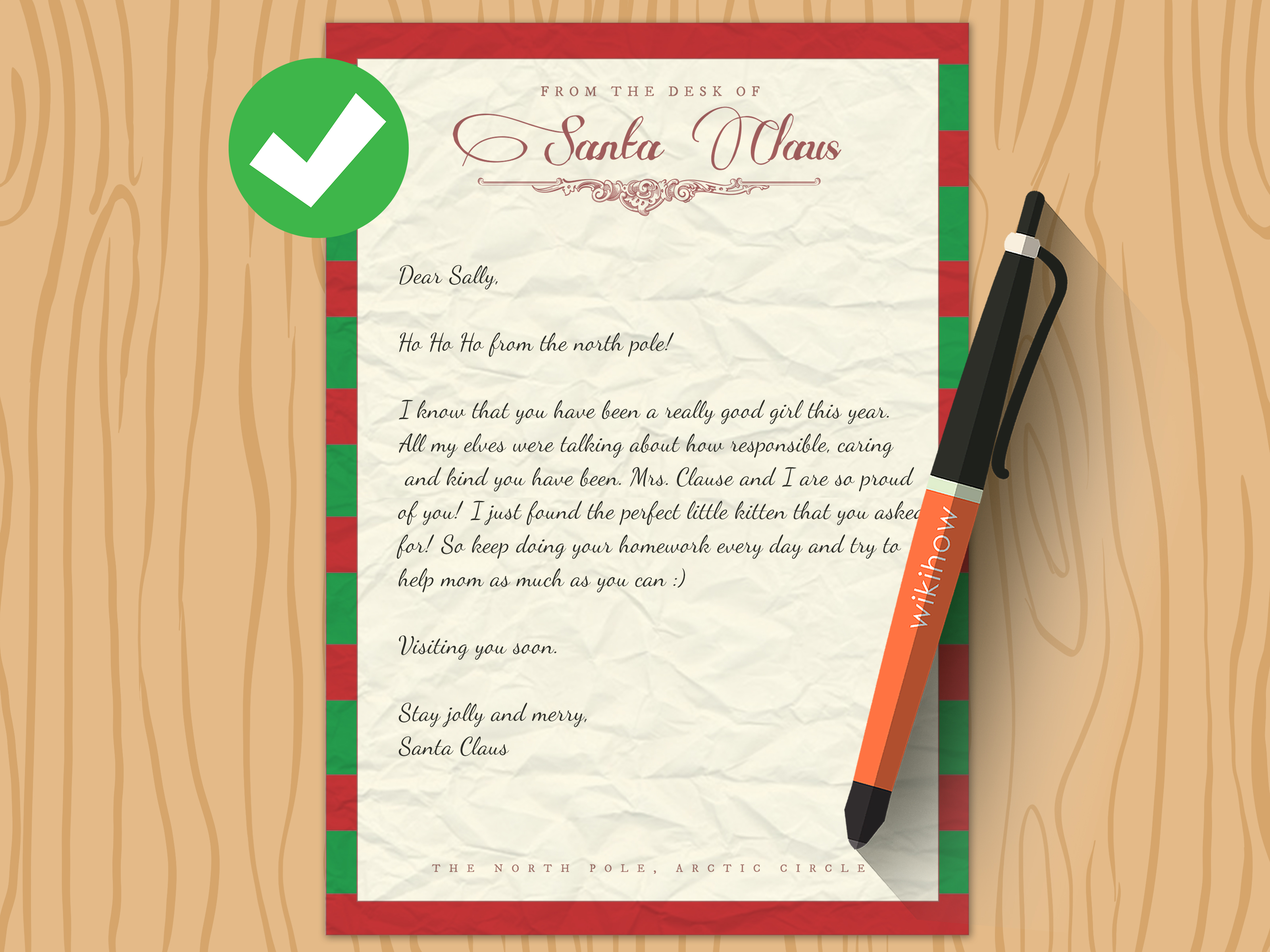
Dear Lily,
Merry Christmas from the North Pole! I was so happy to read your letter this year. The elves were especially excited to hear that you have been helping your little brother and practicing your spelling words. That kind of effort makes the whole workshop cheer.
I also heard you left carrots for the reindeer last Christmas. Rudolph says thank you, though he still insists he only ate two. Between you and me, I counted four.
Keep being kind, curious, and brave. Mrs. Claus and I are very proud of you. I hope your Christmas morning is full of joy, laughter, and just the right amount of wrapping paper chaos.
With Christmas cheer,
Santa Claus
Tips for Making It Look Authentic
Use festive paper, cream-colored stationery, or a simple red-and-green border. If you do not have fancy paper, plain paper still works. Add a small doodle of a candy cane, snowflake, sleigh bell, or reindeer hoofprint. You can also sprinkle in phrases like “the workshop,” “Mrs. Claus,” “the reindeer barn,” “the Nice List,” and “the North Pole mailroom.”
Change your handwriting if your child is old enough to recognize it. Use a different pen, write slowly, or ask a trusted friend or relative to write the final version. If your child has detective energy, avoid phrases you use all the time. If you always say “teamwork makes the dream work,” Santa should probably not say it unless Santa has also been attending your family meetings.
Way 2: Create a Mailed Letter with a North Pole Feel
The second way to write a letter from Santa is to prepare a reply and mail it so it feels official. This is one of the most exciting options because children love receiving real mail. A stamped envelope addressed to them can feel more thrilling than half the presents under the tree.
In the United States, families often use seasonal postal traditions to make Santa letters feel more authentic. The general idea is simple: the child writes to Santa, the adult writes a personalized reply, and the letter is prepared so it appears to come from Santa. USPS also provides holiday mailing guidance and Operation Santa resources, which encourage clear addresses, postage, and timely mailing during the busy Christmas season.
How to Build the Mailed Santa Letter
First, have the child write a letter to Santa. This part is more than a wish list. Encourage the child to say hello, share something about their year, mention something they are proud of, ask Santa a question, and say thank you. A letter that includes feelings and details gives you more material for Santa’s reply.
Second, write Santa’s response. Mention one or two things from the child’s letter. If they asked whether the elves sleep, answer with imagination: “Yes, but one elf named Pip claims he only needs cocoa and jingles.” If they asked for a specific gift, acknowledge it kindly without promising. Santa can say the elves are working hard, the sleigh has limited space, or Christmas surprises are still being wrapped.
Third, prepare the envelope carefully. Put the child’s name and address clearly on the envelope. Add a festive return address such as “Santa Claus, North Pole.” Make sure the postage is correct. During the holidays, mail moves through a very busy system, so sending early is always smarter than doing a dramatic mailbox sprint on Christmas Eve.
What to Include in a Mailed Letter from Santa
A mailed Santa letter should feel like it traveled. You can add tiny North Pole details, such as weather reports, workshop updates, reindeer gossip, or elf news. For example:
- “It snowed marshmallow-sized flakes at the North Pole this morning.”
- “The elves have been testing toy trains all week, which means the workshop floor is very busy.”
- “Rudolph has been practicing takeoffs and only knocked over one snowman.”
- “Mrs. Claus baked cinnamon cookies, and the mailroom smelled wonderful.”
These details make the letter cinematic. Children do not just read it; they picture it.
Mailed Santa Letter Example
Dear Mason,
Ho ho ho from the North Pole! Your letter arrived safely, and I read it beside the fireplace while the elves sorted peppermint ribbon. Thank you for writing so neatly. The mailroom elves appreciate that more than you know.
I was very glad to hear that you helped your mom carry groceries and that you have been trying hard in math. Trying again when something feels tricky is one of the brightest signs of a kind and brave heart.
I saw your Christmas wishes, and the elves are checking their lists carefully. I cannot promise every surprise, but I can promise that your letter made everyone smile. Please keep being thoughtful, helpful, and full of questions. The world needs curious kids.
Give my warm wishes to your family. And please tell your dog not to bark at the sleigh this year. Last time, Comet nearly dropped his map.
Merry Christmas,
Santa Claus
Way 3: Use a Printable or Digital Santa Letter Template
The third way to write a letter from Santa is to use a printable or digital template. This option is perfect when time is short, handwriting secrecy is difficult, or you want a polished design. Templates can include festive borders, Santa letterhead, North Pole seals, candy cane dividers, snowflakes, or “official Nice List” styling.
A template does not have to feel generic. The best printable Santa letters leave room for personalization. You can customize the child’s name, achievements, wish list details, family traditions, and Santa’s closing message. Think of the template as the sleigh. Your personal details are the reindeer.
When a Template Is the Best Choice
A Santa letter template is useful when you are writing letters for multiple children. It keeps the design consistent while letting each message feel personal. It is also helpful for teachers, grandparents, daycare providers, or community groups who want to create a magical experience without handcrafting every snowflake from scratch.
Digital letters can also work well for long-distance families. A grandparent can help “Santa” send a printable letter, or a parent traveling for work can arrange a surprise message at home. Just remember that a printed letter should still sound human. Avoid stiff lines like, “Your annual behavioral report has been reviewed.” Santa is not filing taxes.
How to Personalize a Santa Letter Template
Use a structure like this:
- Greeting: “Dear Ava,” or “Ho ho hello, Jackson!”
- North Pole opening: Mention snow, elves, reindeer, cookies, or the workshop.
- Personal praise: Name one specific kind, brave, or helpful thing the child did.
- Wish list acknowledgment: Refer to their letter without promising every item.
- Gentle encouragement: Suggest kindness, sharing, reading, helping, or patience.
- Magical closing: End with Santa’s signature and a festive phrase.
Printable Santa Letter Example
Dear Noah,
Season’s greetings from the North Pole! The workshop is glowing with twinkle lights, the elves are humming carols, and Rudolph is proudly wearing his brightest red nose.
I heard wonderful news about you this year. You have been sharing more, helping at home, and using your imagination in big ways. That makes Mrs. Claus and me very happy.
Your Christmas wishes have been added to my special list. The elves are checking everything carefully, but remember, the best Christmas surprises are not always the biggest boxes. Sometimes they are the moments that make your family laugh together.
Keep being kind, joyful, and helpful. I will be looking for your house on Christmas Eve, so make sure you get plenty of sleep.
With jolly wishes,
Santa Claus
What Every Great Letter from Santa Should Include
No matter which method you choose, every strong letter from Santa needs four ingredients: personalization, warmth, imagination, and emotional safety.
Personalization
Use the child’s name and at least two specific details. Mention a pet, hobby, school subject, sibling, favorite cookie, or recent accomplishment. Specific details make the letter believable. “I saw how carefully you built that block tower” is stronger than “You were good.”
Warmth
Santa should sound kind, not judgmental. Avoid scary lines about constant watching. Children already have enough concerns without imagining a bearded surveillance expert monitoring snack decisions. Instead, focus on encouragement: “I noticed how hard you tried” or “Your kindness made me smile.”
Imagination
Add North Pole world-building. Mention the reindeer, elves, Mrs. Claus, snowy windows, bells, maps, cocoa, toy shelves, or the sleigh. These tiny details make the letter feel alive.
Emotional Safety
Be careful with promises. Do not guarantee specific gifts unless you are completely sure. A safer line is, “The elves are doing their best,” or “Christmas morning has a few surprises waiting.” This protects the magic while avoiding disappointment.
Common Mistakes to Avoid
Writing a letter from Santa is fun, but a few mistakes can make it feel less magical. First, avoid sounding too adult. Santa does not need to write like a bank manager. Use simple, cheerful language.
Second, avoid overusing the “naughty or nice” idea. A gentle mention of kindness is fine, but heavy warnings can make the letter feel like a performance review with sleigh bells. Christmas magic works best when it inspires, not intimidates.
Third, do not make the letter too long for young children. A preschooler may enjoy a short note with big details, while an older child may appreciate a longer story. Match the length to the child’s attention span.
Fourth, proofread names carefully. Nothing ruins North Pole credibility faster than Santa spelling “Sophie” as “Sofa.” Unless your child is actually named Sofa, in which case, carry on and please tell us the story.
Experience-Based Tips for Writing a Better Letter from Santa
After helping many families shape Santa letters, one lesson becomes clear: the magic is not in the perfect paper, the fanciest envelope, or the most dramatic “official North Pole” stamp. The magic is in recognition. Children light up when Santa notices something real about them.
One family wrote a Santa letter for a child who had struggled with tying his shoes. Instead of focusing on gifts, Santa wrote, “I heard you kept practicing even when the laces were tricky.” That single sentence became the child’s favorite part of the letter. He carried it around all morning, not because Santa mentioned toys, but because Santa noticed his effort.
Another parent used Santa’s letter to soften holiday stress. Their child was nervous about moving to a new school. Santa wrote that even the reindeer sometimes feel wobbly before a long flight, but they get brave by taking one step, then another. The child did not suddenly become fearless, but the letter gave the family a sweet way to talk about courage.
For siblings, personalization matters even more. If each child receives a letter, avoid making them identical except for the name. Children compare. They compare cookie sizes, stocking shapes, and, yes, Santa paragraphs. Give each child one unique compliment. One might be praised for creativity, another for patience, another for helping with a pet. This prevents the letters from feeling copied and keeps the emotional value high.
It also helps to include family traditions. Mention the Christmas pajamas, the cinnamon rolls, the movie night, the ornament they made, or the annual debate over whether the star is crooked. Traditions make Santa feel connected to the household. The letter becomes part of the family story, not just a seasonal decoration.
One practical experience tip: prepare the letter before the holiday rush begins. December has a way of turning normal adults into tape-covered goblins searching for batteries at 11:43 p.m. Write the letter early, hide it well, and set a reminder for mailing or placing it. If you are using a physical letter, choose a hiding spot your child will not explore. The sock drawer is risky. Children become tiny archaeologists in December.
If your child is starting to ask whether Santa is real, adjust the tone. Older children may appreciate a more thoughtful letter about generosity, wonder, and the joy of giving. You can write from Santa as a symbol of kindness rather than only a gift-bringer. For example, “The spirit of Christmas grows every time someone gives, helps, forgives, or makes another person smile.” This keeps the tradition meaningful even as belief changes.
For children who are very literal, be gentle with magical claims. Some kids love elaborate elf logistics. Others will ask how Santa entered an apartment without a chimney and then demand architectural evidence. You can keep the letter magical but flexible: “Christmas magic finds a way,” or “My sleigh team knows how to deliver surprises safely.” Short answers are your friend.
Finally, save a copy. A letter from Santa may seem like a small holiday activity now, but years later it can become a treasured keepsake. Put it in a memory box, take a photo, or store the digital file. Childhood traditions move quickly. One day you are writing about Rudolph’s snack preferences, and the next you are explaining why Santa’s stationery is making you emotional in the hallway.
Conclusion
Writing a letter from Santa is one of the simplest ways to create Christmas magic at home. You can make it handwritten and heartfelt, mail it for a North Pole-style surprise, or use a printable template for a polished keepsake. The format matters less than the feeling. A great Santa letter tells a child, “You are noticed. Your kindness matters. Your imagination belongs here.”
Keep the message personal, cheerful, and age-appropriate. Mention real details, add a sprinkle of North Pole charm, avoid impossible promises, and let Santa sound warm rather than formal. Whether the letter arrives in the mailbox, appears beside a plate of cookies, or is tucked into a stocking, it can become a tradition your family remembers long after the wrapping paper has retired to the recycling bin.