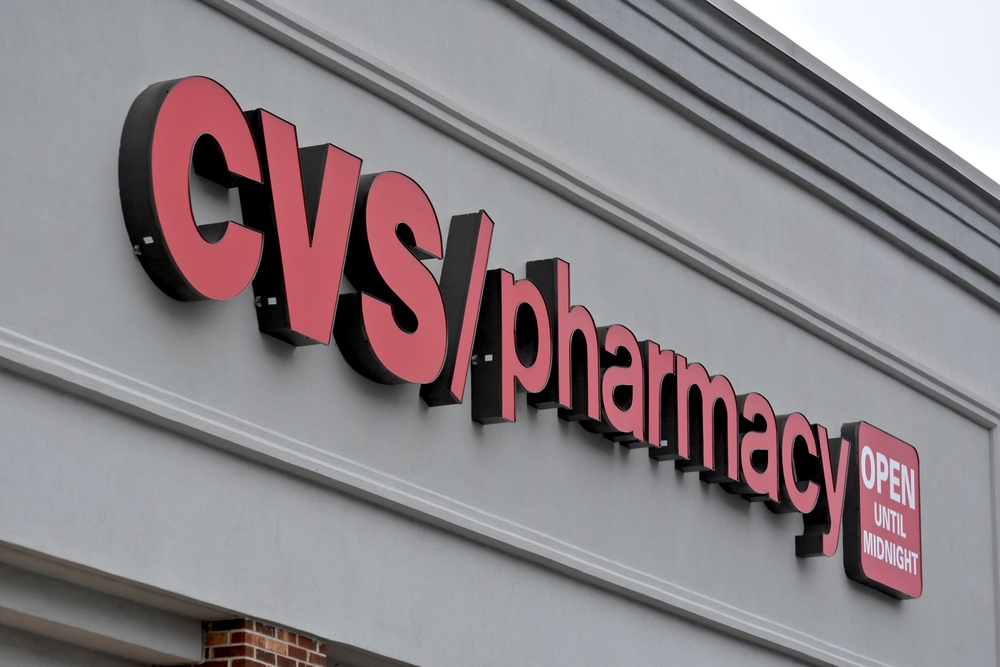
If 2018 had a corporate health care soap opera with boardrooms instead of beach houses, the CVS-Aetna merger was it. The deal had scale, suspense, regulators, skeptics, Wall Street hand-wringing, and a bold promise that sounded almost too tidy for American health care: take a giant insurer, pair it with a giant pharmacy chain and pharmacy benefit manager, and somehow make care cheaper, simpler, and more convenient. Easy, right? Sure. And I am one shampoo aisle away from becoming a cardiologist.
Jokes aside, the proposed union between CVS Health and Aetna was the health care transaction everyone kept circling back to in 2018 because it was not just another merger. It was a test of where the industry was heading. Would the future of care revolve around hospitals and physician groups? Or would it increasingly move into retail stores, neighborhood clinics, data platforms, benefit design, and vertically integrated health care giants with fingerprints on nearly every step of the patient journey?
That is why the CVS-Aetna merger was still the one to watch in 2018. It sat at the center of the biggest debates in health care: cost control, patient convenience, competition, drug pricing, Medicare, chronic disease management, and the growing power of companies that wanted to be more than one thing at once. CVS did not just want to fill prescriptions. It wanted to become a front door to care. Aetna did not just want to pay claims. It wanted a stronger physical presence in communities across the country. Put them together, and the result was either a clever reinvention of care delivery or a very expensive way to make an already concentrated industry even more concentrated.
Why This Deal Felt Bigger Than a Normal Merger
On paper, the headline number alone was enough to make people sit up straighter. But the real reason the merger mattered was strategic. CVS was already much more than a drugstore chain. It had retail pharmacies, MinuteClinic walk-in clinics, and Caremark, one of the country’s biggest pharmacy benefit managers. Aetna brought a major insurance business with a large footprint in employer coverage, government programs, and Medicare-related products. Together, the companies were pitching a more integrated model: insurance, pharmacy benefits, retail care, medication management, and local access under one giant corporate umbrella.
That vision sounded especially timely in 2018 because health care was already being shaken by consolidation, pressure on drug costs, and fear of new disruptors. The Amazon-Berkshire Hathaway-JPMorgan announcement earlier that year rattled incumbents and reminded everyone that the market’s weak spots were visible from outer space. Into that anxiety walked CVS and Aetna with a message that was equal parts offense and defense: if health care was about to be remade, they wanted to be the ones holding the blueprints.
The Bull Case: Why Supporters Thought CVS and Aetna Made Sense
A new “front door” to health care
The optimistic version of the merger was appealing because it addressed one of the most obvious frustrations in the American system: health care is inconvenient on purpose, or at least it often feels that way. You have insurance over here, pharmacy benefits over there, a primary care office somewhere else, and a hospital system charging enough to make your co-pay develop a personality disorder.
CVS argued that its stores and clinics could become community-based health hubs. Instead of using a retail location only to buy cough drops, pick up a prescription, and wonder why there are seventeen brands of floss but only one working blood pressure machine, consumers could use the same footprint for screenings, counseling, chronic disease support, medication reviews, follow-up after hospital discharge, and lower-acuity care. That was the big promise: keep people healthier in cheaper settings before they ended up in expensive ones.
Chronic disease management could get more coordinated
Supporters also liked the possibility of tighter coordination for patients with diabetes, hypertension, asthma, heart disease, and other chronic conditions. In theory, combining Aetna’s medical data with CVS’s pharmacy data and local care network could help the company identify gaps in adherence, flag risk earlier, and intervene faster. If you believe many health care dollars are burned because people do not get the right care at the right time, the merger looked like a giant experiment in closing those gaps.
There was also a practical consumer angle. Many people visit pharmacies far more often than they visit doctors. That makes the neighborhood pharmacy one of the few recurring touchpoints in a fragmented system. CVS and Aetna were betting that this simple truth could be turned into a business model.
Retail access was the hook
Location mattered. CVS already had thousands of stores in communities across the country, plus MinuteClinics and nursing resources that gave it a physical presence many health care companies could only dream about. If the merged company could use those sites for more preventive and follow-up care, it might create a lower-friction experience for members. For consumers who dread waiting weeks for a routine appointment and then paying hospital-adjacent prices for basic services, that pitch had some undeniable charm.
The Bear Case: Why Critics Were Not Buying the Happy Brochure
Vertical mergers can still squeeze competition
One reason the deal attracted so much scrutiny is that it was not a classic merger between two insurers. It was largely vertical, meaning the companies operated at different stages of the health care chain. Supporters argued that meant fewer direct overlaps and more opportunity to create efficiencies. Critics responded with a giant raised eyebrow.
The concern was not that CVS and Aetna sold the exact same product everywhere. The concern was leverage. A combined company could have stronger incentives to favor its own insurance products, its own pharmacy channels, or its own benefit design. Rival insurers, pharmacies, and pharmacy benefit managers worried they could face higher costs or weaker access. Critics also argued that patients could ultimately feel the impact through reduced choice, narrower networks, or more subtle steering into the combined company’s ecosystem.
Medicare Part D was a real regulatory problem
The biggest immediate antitrust issue in 2018 centered on Medicare Part D prescription drug plans for individuals. Regulators concluded the transaction raised competition concerns there, which is why the Department of Justice required a divestiture of Aetna’s individual Medicare Part D business as a condition for proceeding. That mattered for two reasons. First, it showed the deal was not getting a free pass. Second, it underscored that even a supposedly strategic, forward-looking merger could still have plain old competition problems in existing markets.
Scale does not automatically equal savings
The pro-merger story leaned heavily on better outcomes and lower costs. The anti-merger story asked a blunt question: where is the proof? Bigger companies routinely promise that integration will reduce waste. Sometimes it does. Sometimes it mostly creates larger conference rooms and more complicated org charts. Health care, with all its billing complexity and misaligned incentives, is especially good at swallowing grand plans whole.
Physician groups and antitrust critics argued that consolidation often raises the risk of higher prices, less innovation, and reduced competition, even when the marketing deck says “consumer-centric” in very confident font. They also questioned whether retail clinics were really equipped to manage the sickest and most expensive patients, who are often the ones driving health spending in the first place.
The 2018 Timeline Made the Deal Impossible to Ignore
Part of what kept the CVS-Aetna merger in the spotlight was simple timing. The deal was announced at the end of 2017, but 2018 was the year when the real drama played out. Regulators reviewed it. Industry groups attacked it. Executives defended it. Observers compared it with other attempted combinations in insurance, pharmacy benefits, and care delivery. And by the end of the year, the transaction had both a remedy and a closing.
That made 2018 the true proving ground. It was the year the vision had to survive contact with antitrust review, political skepticism, and market reality. It was also the year the companies had to persuade investors and policymakers that this was not just a defensive move against Amazon, a reaction to margin pressure, or a bid for even more control over the drug pipeline. They had to argue it was a blueprint for a better health care model.
In that sense, the merger became a referendum on the future structure of health care. If CVS and Aetna could pull it off, other companies would not just notice. They would copy, counter, or combine.
What the Merger Could Mean for Patients
More convenience, at least in theory
For patients, the best-case scenario was fairly straightforward. More services closer to home. Easier help with prescription adherence. Simpler navigation between benefits and care. Better follow-up after a hospital stay. More preventive services in low-cost settings. If the merged company actually used its footprint well, a lot of routine care could become less annoying. In American health care, reducing annoyance is not a small policy goal. It is practically a moonshot.
But convenience is not the same as competition
The patient downside was harder to spot in a TV ad but still important. When one company has more control over insurance, pharmacy benefits, pharmacy access, data, and care touchpoints, it can shape consumer behavior in ways that may not always feel voluntary. A benefit design can nudge you. A network can steer you. A preferred pharmacy arrangement can “politely” suggest that your choice is free only if you pick the option the giant company already owns. That is why critics stayed worried even while acknowledging the convenience angle.
What the Merger Meant for Rivals and the Industry
The deal also mattered because it signaled that the old boundaries in health care were melting. Drugstores wanted to look like care platforms. Insurers wanted more direct access to patients. Pharmacy benefit managers wanted stronger corporate parents. Retailers wanted a bigger share of routine care. And everyone wanted more data, more scale, and more ways to touch the patient before, during, and after a claim.
That broader strategic shift is a big reason the CVS-Aetna merger remained the one to watch in 2018. It was not merely about whether one transaction would close. It was about whether a new architecture of health care was becoming normal. If the answer was yes, then hospitals, physician groups, competing insurers, independent pharmacies, and employers all had to rethink where power was heading.
So, Was the CVS-Aetna Merger Really the One to Watch?
Absolutely. In 2018, no other health care deal captured so many trends at once. It touched retail medicine, vertical integration, pharmacy benefits, Medicare, chronic disease management, antitrust law, consumer experience, and the competitive scramble triggered by tech disruption. It had a giant price tag, a giant strategic ambition, and giant consequences if it worked.
Even better, from an analyst’s perspective, it forced a useful question: what exactly should a modern health care company be? A payer? A pharmacy? A clinic operator? A data platform? A care coordinator? CVS and Aetna were effectively answering, “Why choose?” That answer might eventually prove brilliant, flawed, or some messier combination of both. But in 2018, it was impossible to dismiss.
The merger was worth watching not because it guaranteed success, but because it concentrated so many of the industry’s hopes and fears into one deal. Supporters saw a more connected system. Critics saw more corporate control. Regulators saw at least one market that needed a fix. Competitors saw a warning shot. Patients saw the possibility of easier access, mixed with the usual health care fine print that always seems to arrive just after the cheerful brochure.
In other words, the CVS-Aetna merger was not just a transaction. It was a very large argument about the future of American health care wearing a merger agreement as a costume.
Extra Experience Section: What Watching the CVS-Aetna Deal Felt Like in 2018
For people working around health care in 2018, the CVS-Aetna merger did not feel abstract. It felt personal, practical, and a little unsettling. Employers watched it and wondered whether this kind of integration might finally create more predictable costs for covering workers and their families. Patients watched it and hoped that maybe, just maybe, getting a prescription, understanding benefits, and finding basic care would stop feeling like three separate scavenger hunts. Pharmacists, physicians, and health policy analysts watched with a more cautious expression, because they understood how often “greater efficiency” can become corporate code for “please stand by while we rearrange the maze.”
For patients managing chronic conditions, the pitch had real emotional appeal. Imagine getting discharged from a hospital and then having a local pharmacy-based team help review your medications, spot potential problems, and nudge you before a preventable setback turns into another expensive trip back to the ER. That idea sounded practical in a system that often leaves patients carrying a discharge packet, a bag of prescriptions, and a prayer. The merger story connected with that frustration. It suggested that the next chapter of health care could happen closer to home and with fewer handoffs.
For local clinicians, though, the reaction was more mixed. Some saw value in easier follow-up, improved medication adherence, and another access point for patients who struggle to get timely appointments. Others worried about fragmentation in disguise. Would retail settings truly complement primary care, or would they siphon away simpler encounters while leaving doctors with the hardest cases and less continuity? Would data-sharing improve care, or would it mainly improve the merged company’s ability to keep patients inside its own ecosystem?
From an investor perspective, the experience of following the deal in 2018 was like watching one giant chess move trigger five more. The transaction suggested that scale alone was no longer enough. The next competitive edge would come from controlling multiple layers of the system at once: the insurance relationship, the pharmacy benefit, the prescription, the clinic visit, the follow-up call, and the store around the corner. That raised obvious questions. If CVS and Aetna pulled this off, who had to respond next? Would rivals build, buy, or partner? Would insurers rush toward retail? Would retailers rush toward insurance? The suspense was not just about one closing date. It was about the chain reaction afterward.
And for anyone who covered health care policy, the deal felt like a live demonstration of the industry’s contradictions. Everyone says they want better coordination, lower costs, and more consumer-friendly care. But when a company tries to stitch together insurance, pharmacy benefits, and neighborhood care under one roof, it also concentrates power in ways that can threaten competition. That tension sat at the heart of the 2018 experience. The merger was exciting because it aimed at real problems. It was controversial because it proposed solving them with even more scale. Watching it unfold felt like watching the health care system try to fix itself using the same bigness that many critics say helped break it.
Conclusion
The CVS-Aetna merger stayed at the center of the health care conversation in 2018 because it was far more than a giant acquisition. It was a stress test for a new style of health care company: vertically integrated, consumer-facing, data-heavy, and built to manage everything from benefits to pills to neighborhood access points. Supporters saw a chance to simplify care and lower costs. Critics saw a risk of reduced competition and greater corporate control. Regulators saw enough concern to require a divestiture in Medicare Part D. All of that made the merger a defining story of the year.
If you wanted one deal that best captured where American health care was trying to go in 2018, this was it. Not because it solved every problem, but because it put nearly all of them on the table at once.