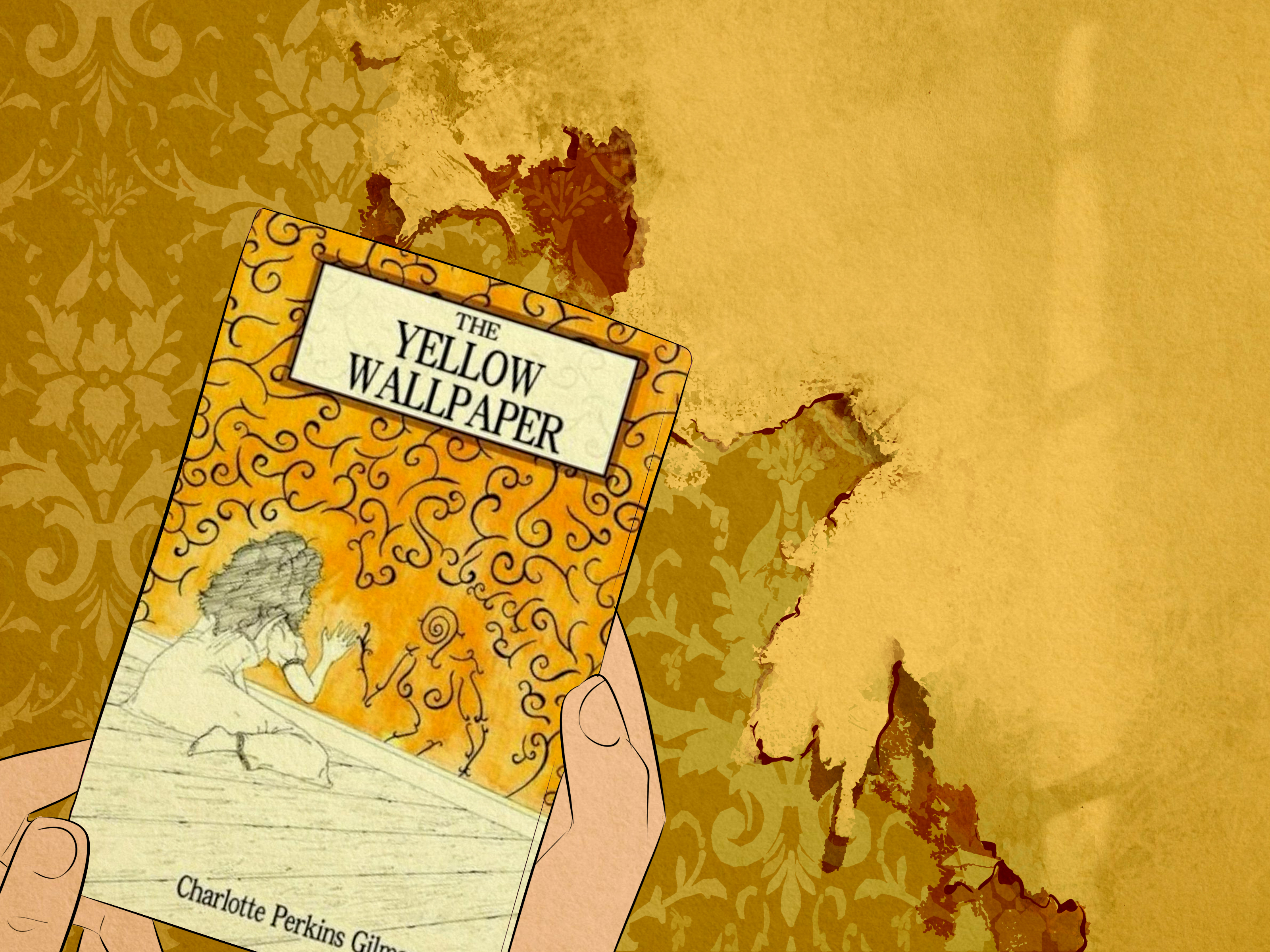
“The Yellow Wallpaper” by Charlotte Perkins Gilman is one of those short stories that walks into class wearing a sensible Victorian dress and then quietly rearranges everyone’s brain. At first glance, it seems simple: an unnamed woman is taken to a rented country house to rest, recover, and avoid “overstimulation.” But beneath that polite surface is a sharp, eerie, and deeply political story about mental health, marriage, gender roles, medical authority, and the terrifying cost of being silenced.
Published in the 1890s, the story is now considered a landmark of American feminist literature and psychological Gothic fiction. It is brief enough to read in one sitting, but dense enough to keep students, teachers, critics, and late-night essay writers busy for generations. The yellow wallpaper itself becomes more than ugly home décor. It becomes a symbol, a prison, a mirror, anddepending on how deeply you stare at ita warning label with floral patterns.
This study guide offers a clear summary, character analysis, major themes, important symbols, literary devices, and practical essay ideas to help readers understand why “The Yellow Wallpaper” still feels so modern, unsettling, and painfully relevant.
Quick Facts About “The Yellow Wallpaper”
- Author: Charlotte Perkins Gilman
- Genre: Short story, Gothic fiction, psychological fiction, feminist literature
- Point of view: First-person diary-style narration
- Setting: A rented colonial mansion, mostly inside an upstairs nursery
- Main character: An unnamed woman recovering from what appears to be postpartum depression or nervous illness
- Central conflict: The narrator’s need for creative freedom versus the controlling “rest cure” imposed by her husband and doctor
- Main symbols: The yellow wallpaper, the nursery, barred windows, the woman behind the pattern, moonlight, creeping
Historical Background: Why Gilman Wrote the Story
Charlotte Perkins Gilman’s story was inspired by her own experience with a medical treatment known as the “rest cure.” After the birth of her daughter, Gilman struggled with severe depression and consulted the famous physician Silas Weir Mitchell. His advice emphasized rest, domestic life, and the avoidance of intellectual or artistic work. For a writer, that advice was not exactly a spa day. It was more like being told to unplug her soul.
Gilman later explained that returning to meaningful work helped her recover, while enforced idleness had made her condition worse. “The Yellow Wallpaper” transforms that experience into fiction. The story is not a literal diary of Gilman’s life, but it uses her personal suffering to expose a larger social problem: women’s voices were often dismissed by husbands, doctors, and cultural norms that treated female independence as dangerous.
This background matters because the story is not only about one woman losing touch with reality. It is also about a society that calls control “care,” silence “treatment,” and obedience “recovery.” That is what makes the story so haunting. The room may be fictional, but the forces locking the narrator inside were very real.
“The Yellow Wallpaper” Summary
The Beginning: A Beautiful House With Bad Energy
The story begins with the unnamed narrator arriving at a large rented mansion with her husband, John. John is both her spouse and her physician, which already creates a power imbalance large enough to park a carriage in. He believes she is suffering from a temporary nervous condition and prescribes rest, fresh air, and absolutely no writing or creative work.
The narrator disagrees with his approach, but she repeatedly doubts herself because John is practical, respected, and medically trained. Her brother, also a physician, agrees with him. In other words, the men have formed a tiny committee, and her own mind has not been invited to the meeting.
She is placed in an upstairs room that used to be a nursery. The room has barred windows, a heavy bed, scratched floors, and torn yellow wallpaper. At first, she simply dislikes the wallpaper. It is ugly, chaotic, and irritating. But because she is forbidden from working, writing openly, or socializing freely, she begins studying it obsessively.
The Middle: The Wallpaper Starts to Move
As the narrator spends more time isolated in the room, her mental state worsens. She secretly writes in her journal, but even that small act requires hiding. John treats her like a child, calling her affectionate names while refusing to take her thoughts seriously. His sister Jennie helps manage the household and seems to represent conventional domestic obedience.
The narrator becomes increasingly fascinated by the wallpaper’s strange pattern. She notices that it appears different in daylight and moonlight. Eventually, she believes there is a woman trapped behind the pattern, shaking it and trying to escape. The more the narrator studies the wallpaper, the more she identifies with the trapped figure.
This shift is crucial. The wallpaper is no longer just wallpaper. It becomes a visual form of the narrator’s confinement. The woman behind it represents the narrator herself, along with other women trapped by social expectations, marriage, domestic roles, and medical control. The pattern becomes a cage; the room becomes a prison; the “cure” becomes the illness.
The Ending: Escape or Breakdown?
Near the end of the story, the narrator locks herself in the nursery and tears down the wallpaper. She believes she is freeing the woman behind it. When John finally opens the door, he finds his wife creeping around the room. He faints, and she continues moving around the room, stepping over him as she goes.
The ending is famously ambiguous. Has the narrator escaped? Has she completely broken down? The answer is both, and that is what makes the conclusion so powerful. Psychologically, she has collapsed under the pressure of isolation and control. Symbolically, however, she has rejected John’s authority. For once, he is the one lying helpless on the floor, while she keeps moving.
It is not a cheerful victory. Nobody should put confetti on this ending. But it is a disturbing form of rebellion. The narrator loses the socially acceptable version of herself, yet she also breaks through the role that imprisoned her.
Character Analysis
The Unnamed Narrator
The narrator is intelligent, imaginative, sensitive, and increasingly desperate. Her unnamed status is important because it makes her both individual and universal. She is one woman, but she also represents many women whose identities were reduced to wife, mother, patient, or domestic caretaker.
Her secret writing shows that she has a strong inner life. Even when John tells her not to think too much, she cannot stop observing, interpreting, and creating meaning. Her tragedy is not that she has too much imagination. Her tragedy is that imagination is the only freedom left to her.
John
John is the narrator’s husband and doctor. He is not presented as a cartoon villain twirling a mustache in the hallway. In fact, he probably believes he is helping her. That makes him more realistic and more dangerous. His love is filtered through authority, condescension, and control.
John dismisses the narrator’s feelings, laughs at her concerns, and refuses to consider that his treatment may be harming her. His character represents patriarchal medicine and the broader social belief that men knew what was best for women’s bodies, minds, and futures.
Jennie
Jennie, John’s sister, manages the domestic space and appears comfortable with traditional gender roles. She is not cruel, but she reinforces the system that confines the narrator. She notices the narrator’s interest in the wallpaper but does not fully understand what is happening. Jennie functions as a contrast: she is the woman who fits into the domestic pattern, while the narrator cannot.
The Woman in the Wallpaper
The woman behind the wallpaper is a hallucination, a symbol, and a double of the narrator. She represents trapped female identity. As the narrator’s obsession grows, the boundary between herself and the wallpaper woman dissolves. By the end, freeing the woman means becoming her.
Major Themes in “The Yellow Wallpaper”
1. The Danger of Silencing Women
The story shows how damaging it is when women are denied a voice. The narrator repeatedly tries to explain what she needs: activity, writing, conversation, meaningful work, and a different room. John ignores her. Her decline is not caused by one dramatic act of cruelty but by repeated dismissal. Every “you’re fine” becomes another brick in the wall.
2. Mental Health and Misguided Treatment
Gilman criticizes a medical culture that treated women’s mental distress through isolation and inactivity. Modern readers may recognize symptoms associated with postpartum depression, anxiety, or psychological trauma, but the story is careful to show that the treatment worsens the narrator’s condition. The cure becomes a cage.
3. Patriarchal Control
John controls where the narrator sleeps, what she does, whom she sees, and whether her thoughts are valid. His authority comes from both marriage and medicine. That double power makes the narrator’s resistance extremely difficult. The story exposes how patriarchy can appear gentle while still being oppressive.
4. The Need for Creative Expression
Writing is the narrator’s lifeline. She hides her journal because it is the one place where she can speak honestly. When she is denied creative work, her mind turns inward and attaches itself to the wallpaper. The story suggests that self-expression is not a luxury. For some people, it is survival.
5. Appearance Versus Reality
The mansion looks peaceful, but it becomes frightening. John appears caring, but his care is controlling. The nursery seems childish and safe, but it resembles a prison. The wallpaper looks like decoration, but it reveals the story’s deepest truth. Gilman uses Gothic techniques to show that horror often hides inside ordinary domestic life.
Important Symbols
The Yellow Wallpaper
The wallpaper is the story’s central symbol. Its confusing pattern reflects the narrator’s mental state, but it also represents the social pattern that traps women. The more she studies it, the more she sees imprisonment beneath decoration. It is ugly because the system it represents is ugly.
The Nursery
The narrator’s room is called a nursery, which emphasizes infantilization. John treats his wife like a child rather than an adult partner. The barred windows and damaged furniture also suggest confinement and past struggle. This is not a healing room. It is a room where people are controlled.
Barred Windows
The barred windows symbolize limited freedom. The narrator can see the outside world, but she cannot truly enter it. This detail captures the central tension of the story: she is close to life, movement, and independence, yet separated from them.
The Woman Behind the Pattern
The trapped woman represents the narrator’s suppressed self. She also represents women collectively trapped behind the “patterns” of society. When the narrator tears the wallpaper, she attacks the symbolic structure that has contained her.
Moonlight and Daylight
In daylight, the narrator tries to behave according to social expectations. At night, the wallpaper seems more alive. Moonlight reveals what daytime respectability hides. The night becomes a space where suppressed truths emerge.
Literary Devices and Style
First-Person Diary Narration
The diary format creates intimacy. Readers experience the narrator’s thoughts directly, including her doubts, frustrations, and shifting perceptions. Because she is writing secretly, the journal feels like a forbidden space of honesty.
Unreliable Narration
The narrator becomes increasingly unreliable as her mental health deteriorates. However, her unreliability does not make her meaningless. In fact, her distorted perceptions reveal emotional truths that the “rational” characters ignore.
Gothic Atmosphere
The isolated mansion, strange room, creeping figure, and psychological terror all connect the story to Gothic fiction. But Gilman updates the Gothic tradition by placing the horror inside marriage, medicine, and domestic life.
Irony
John believes rest will cure the narrator, but rest destroys her. He believes he understands her condition, but he is blind to her suffering. The greatest irony is that the person most committed to saving her becomes the person most responsible for her collapse.
Study Questions for Students
- Why does Gilman leave the narrator unnamed?
- How does John’s role as both husband and doctor affect the narrator’s freedom?
- What does the yellow wallpaper symbolize at different points in the story?
- Is the ending a defeat, a victory, or both?
- How does the story criticize the treatment of women’s mental health in the nineteenth century?
- What makes the narrator unreliable, and why does that matter?
- How does the setting create Gothic suspense?
Possible Essay Topics
- Feminist reading: Analyze how the story critiques patriarchal control in marriage and medicine.
- Symbolism essay: Explain how the wallpaper changes from decoration into a symbol of imprisonment.
- Mental health essay: Discuss how isolation and forced inactivity contribute to the narrator’s breakdown.
- Gothic fiction essay: Show how Gilman uses Gothic elements to expose domestic horror.
- Narration essay: Examine how the diary format shapes the reader’s understanding of the narrator.
Reading Experience: Why “The Yellow Wallpaper” Still Gets Under Your Skin
Reading “The Yellow Wallpaper” for the first time can feel strangely personal. Many readers begin with confidence: “It’s just a short story about wallpaper. I have survived worse home décor.” Then, page by page, the atmosphere tightens. The room feels smaller. John’s cheerful authority becomes more irritating. The narrator’s little observations begin to sound less quirky and more desperate. By the ending, the reader may feel as if they have also been locked in that nursery, staring too long at a pattern that refuses to behave.
One reason the story works so well in classrooms is that it rewards slow reading. Students often notice the obvious symbol first: the wallpaper as a prison. But on a second reading, smaller details become louder. The narrator is not allowed to choose her room. She is not allowed to write freely. She is told that her own interpretation of her body and mind is wrong. These details help readers understand that oppression in the story is not only physical. It is linguistic, emotional, and intellectual. She is trapped not just by walls, but by other people’s definitions of her.
The story also creates productive discomfort. Modern readers may want to diagnose the narrator, but Gilman pushes us to look beyond diagnosis. The more important question is not simply “What condition does she have?” but “Why does nobody listen to her?” That question still matters. In schools, workplaces, families, and medical settings, people can still feel dismissed when they describe pain, exhaustion, anxiety, or creative hunger. The story’s nineteenth-century setting may feel distant, but its emotional logic is uncomfortably familiar.
For students writing essays, the best experience is often to track how their own opinion changes. At first, John may seem caring. Later, his care feels controlling. At first, the narrator’s obsession may seem irrational. Later, it starts to look like the only available language for her confinement. This shifting response is not a mistake; it is the engine of the story. Gilman wants readers to experience how easily authority can disguise itself as kindness.
Teachers can use the story to open conversations about voice, autonomy, medical history, gender expectations, and the power of symbols. Readers outside the classroom can use it as a reminder that rest is not healing when it is forced, silence is not peace when it is imposed, and a room can be comfortable while still being a cage. That is why “The Yellow Wallpaper” remains unforgettable. It turns a domestic object into a psychological landscape, and once you see the woman behind the pattern, it is very hard to unsee her.
Conclusion
“The Yellow Wallpaper” endures because it is both a chilling psychological story and a precise social critique. Charlotte Perkins Gilman uses a simple settinga woman in a roomto explore enormous questions about freedom, identity, mental health, marriage, and the right to be heard. The narrator’s descent into madness is tragic, but it is also revealing. Her breakdown exposes the cruelty of a world that calls women fragile while refusing to give them room to breathe.
For students, the story is a rich text for literary analysis because every detail matters: the diary structure, the nursery, the barred windows, John’s language, the changing wallpaper, and the final act of tearing it down. For general readers, it remains a haunting reminder that people do not thrive when their voices are locked away. Sometimes the scariest room is not haunted by ghosts. Sometimes it is haunted by rules.
Note: This article is original, publication-ready content written in standard American English and based on established literary, historical, and educational information about Charlotte Perkins Gilman and “The Yellow Wallpaper.”