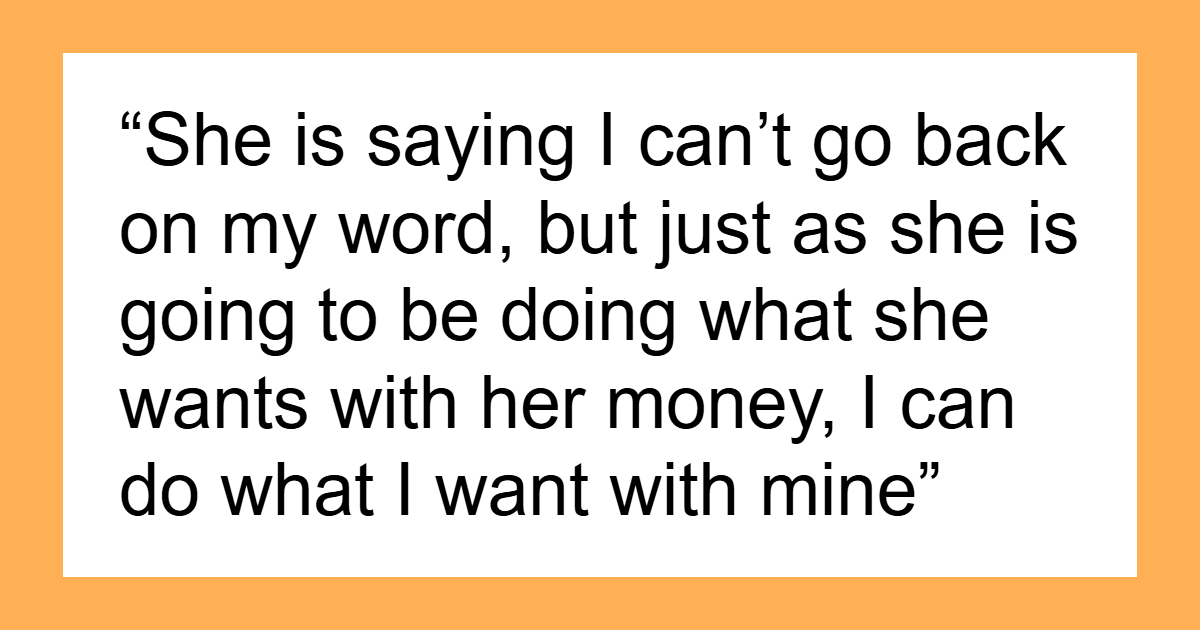
There are family disagreements, and then there are the kind that make everyone in the room suddenly become a lawyer, a therapist, a financial planner, and a part-time philosopher. This story falls squarely into that second category. A father is horrified to learn that his daughter wants to spend money inherited from her grandfather on a dangerous plastic surgery. She says it is her money. He says it is a terrible idea. Somewhere in the background, Grandpa is probably rolling over in his grave at the phrase “inheritance-funded elective body overhaul.”
Why does this kind of story spread so quickly online? Because it touches three emotional live wires at once: grief money, body image, and parental fear. Money left by a loved one rarely feels like “just money.” It carries memory, intention, guilt, pressure, and sometimes a silent family script about what that money was supposed to mean. Add cosmetic surgery to the mix, especially a procedure with a reputation for serious risk, and suddenly the debate is no longer about dollars. It becomes a referendum on judgment, values, adulthood, autonomy, vanity, safety, and love.
That is what makes this story more than internet drama. It is really a modern family case study about what happens when personal freedom collides with real medical risk and emotional inheritance. And yes, it is also about the uncomfortable fact that social media can make dangerous choices look like glow-ups with better lighting.
Why This Family Conflict Feels So Explosive
Inheritance has a sneaky way of carrying emotional instructions even when the will itself is silent. A grandparent may never have written, “Please do not use this money on a high-risk cosmetic procedure inspired by filtered selfies and bad advice,” but family members often build their own meaning around a bequest. One person sees freedom. Another sees legacy. Another sees responsibility. Another sees a future down payment, tuition fund, emergency cushion, or the sort of practical stability older generations love because they survived enough chaos to romance boring decisions.
That is why the father in this story is not only reacting to the surgery itself. He is reacting to what the spending symbolizes. To him, the money likely represents opportunity, security, and the grandfather’s long-term care for the family. To the daughter, it may represent adulthood, independence, and the right to make her own choices without being micromanaged. Neither side is speaking only about cash. They are speaking two different emotional languages and both think the other one sounds ridiculous.
This is where many families get stuck. The parent says, “I’m trying to protect you.” The adult child hears, “I don’t trust you.” The child says, “It’s my body and my money.” The parent hears, “I’m willing to risk myself to chase a trend.” Everybody is technically speaking English, but nobody is having the same conversation.
The Real Problem: Dangerous Plastic Surgery Is Not Just A Vibe
The phrase “dangerous plastic surgery” should not be dismissed as dramatic parenting language. All surgery carries risk, even elective cosmetic procedures marketed with glossy before-and-after photos and suspiciously cheerful fonts. Depending on the procedure, patients may face complications related to anesthesia, infection, bleeding, poor wound healing, blood clots, fluid shifts, scarring, nerve changes, dissatisfaction with results, and the need for revision surgery. In other words, the “after” photo may not be the end of the story. Sometimes it is merely chapter one.
Some procedures raise more concern than others. When people talk about especially high-risk cosmetic operations, the Brazilian butt lift often enters the chat immediately, and not because it won a personality contest. It has drawn repeated warnings from plastic surgery organizations because of the danger associated with fat entering large blood vessels during gluteal fat transfer. That does not mean every such procedure ends badly. It does mean this is not remotely the same as impulsively buying expensive shoes and regretting them next season. Shoes do not require emergency care when the trend cycle changes.
That medical reality matters. A lot. Social media has a bad habit of presenting cosmetic surgery as if it were halfway between skincare and sorcery. A quick consultation, a dramatic reveal, a new silhouette, and presto: a new life. Real life is less cinematic. Recovery can be physically demanding, emotionally unpredictable, and financially messy. Some procedures require ongoing monitoring. Some results change with time, weight fluctuation, aging, pregnancy, or complications. Some patients are thrilled. Some are not. Some discover that surgery changed their body but did not touch the insecurity that drove the decision in the first place.
Body Image, Filters, And The Pressure To “Fix” What Was Never Broken
One reason this story hits such a nerve is that it sits inside a larger culture of appearance anxiety. We live in an age where face-tuning apps, algorithmic beauty standards, and heavily edited bodies can quietly turn insecurity into a daily ritual. What used to be a passing bad-hair-day feeling can now become a full-time performance review conducted by your front-facing camera.
That does not mean everyone seeking cosmetic surgery has a mental health disorder. It does mean motivation matters. A lot. When the desire for surgery comes from overwhelming distress, obsessive appearance checking, constant comparison, or the belief that one procedure will finally unlock worthiness, doctors and mental health professionals start paying closer attention. Conditions such as body dysmorphic disorder can complicate cosmetic decision-making because the perceived flaw often remains emotionally powerful even after the body is altered.
That is why the father’s fear may be bigger than the operation itself. He may suspect that the surgery is not a stand-alone choice but the visible tip of a deeper struggle. Parents are not always correct about that, but they are not automatically irrational for wondering. If a young adult suddenly wants to spend a significant inheritance on a risky body-altering procedure, it is fair to ask: Is this a calm, informed decision made over time, or is it a panic purchase wrapped in medical paperwork?
Is The Father Right To Freak Out?
Emotionally? Very understandable. Strategically? That depends on what he does next.
Parents often make the mistake of believing that the intensity of their fear will automatically prove the wisdom of their position. It rarely works that way. When a father responds with horror, threats, or moral thunderbolts, the daughter may become even more determined. Nobody likes feeling treated like a reckless child, especially when they have legal control over their own money.
That said, concern is not control. A parent can be deeply alarmed and still be asking legitimate questions. Has the daughter had multiple consultations? Is the surgeon board-certified in plastic surgery? Is the facility properly accredited? Has she been screened for unrealistic expectations? Does she understand recovery time, complication risk, revision risk, and total cost beyond the surgery itself? Is this a procedure she still wants after months of reflection, or only after a few weeks of doom-scrolling beauty content at midnight?
The father is most persuasive when he stays in the lane of facts, care, and long-term thinking. He becomes much less persuasive the moment he slips into insults, body shaming, or power plays. If he frames the conversation as “You’re foolish and ruining your life,” he loses. If he frames it as “I love you, I’m scared by the medical risk, and I want you to slow down and make the most informed decision possible,” he at least keeps the door open.
Is The Daughter Wrong Because It’s Her Inheritance?
Legally, if the money is hers, then yes, she may be free to use it in a way the family hates. That is the awkward thing about adulthood: it often arrives before wisdom feels fully installed. But freedom and wisdom are not identical twins. A choice can be legally hers and still be short-sighted, emotionally reactive, or financially painful.
Inheritance is easy to spend and much harder to replace. That is especially true for young adults, who often have more future needs than they can currently imagine. Tuition, housing, emergency savings, relocation costs, car repairs, health expenses, or even the simple luxury of not spiraling when life punches you in the walletthese things are not glamorous, but they age well. Using a lump sum on a risky cosmetic procedure may feel empowering in the moment. Years later, it may feel like setting a pile of security on fire because the internet said your hips needed a better storyline.
Still, it is important not to flatten the daughter into a stereotype. Wanting cosmetic surgery does not automatically make someone shallow, brainwashed, or irresponsible. People seek aesthetic procedures for many reasons: confidence, long-standing insecurity, post-pregnancy body changes, reconstructive concerns, or the desire to align appearance with self-image. The issue is not whether she wants surgery. The issue is whether she is making a medically informed, emotionally stable, financially sound decision.
What A Better Family Conversation Would Look Like
If this family wants to avoid detonating over brunch, they need a better script. The goal should not be to “win” but to slow the process down. That might mean agreeing on a waiting period before any surgery is scheduled. It might mean requiring consultations with qualified surgeons, not random social-media salespeople with ring lights and dangerous confidence. It might mean meeting with a financial planner to show what that inheritance could become in five or ten years. It might mean a few sessions with a therapist so the daughter can sort out whether this desire is rooted in thoughtful self-determination or in painful self-rejection.
A practical compromise is often more useful than a dramatic ultimatum. For example, the family could agree that no decision gets made until the daughter has done a full risk review, budgeted the total cost including recovery and potential revisions, and sat with the choice for a meaningful period of time. The father does not need to pretend he loves the idea. The daughter does not need to surrender her autonomy. What both of them need is a pause button.
The Hidden Issue: Grief Money Changes How People Think
Money from a grandparent can feel strangely unreal. People treat inherited money differently from money they earn slowly through work. Economists call that mental accounting. Families call it “Why on earth would you do that with Grandpa’s money?” Because inherited funds can feel separate from ordinary budgeting, people sometimes spend them more emotionally, more symbolically, and more impulsively.
That is why this case is about more than plastic surgery risks. It is also about the psychology of inherited wealth. One family member sees the money as sacred. Another sees it as liberating. Another thinks the deceased would have wanted happiness, whatever form that takes. Another thinks the deceased definitely did not mean “spend it on elective surgery with a scary complication profile.” Since the dead cannot clarify, the living improvise, and that is how arguments get legendary.
The Bigger Lesson For Families
This story resonates because countless families are having versions of it right now. Maybe not over the exact same surgery, but over some combination of money, body image, and control. The lesson is not that parents should run adult children’s lives. It is not that cosmetic surgery is always wrong. It is not even that inheritance must be spent in the most practical way possible, because human beings are not spreadsheets in shoes.
The real lesson is that high-risk, high-cost decisions deserve slower thinking than our culture usually encourages. A body is not a trend board. An inheritance is not a magic reset button. And a parent’s panic, while often messy, sometimes contains a truth worth listening to: some choices are too permanent to be made under the spell of insecurity, pressure, or online fantasy.
If the daughter ultimately decides against the surgery, that does not mean the father “won.” It may simply mean time and good information did their job. If she still chooses to proceed after careful evaluation, then at least the decision will have been made like an adult choice rather than a digitally enhanced dare. Either way, the most loving outcome is not blind approval or brute-force control. It is honest conversation, informed consent, emotional clarity, and a reminder that no procedure should have to carry the burden of proving a person’s worth.
Real-Life Experiences Related To This Topic
Stories like this linger because they sound extreme, yet the emotional pattern is incredibly familiar. One young woman spends months comparing herself to influencers who all seem to have the same waist, the same hips, the same polished look that suggests they were born under perfect lighting. She begins by casually bookmarking transformation videos “just for fun.” Then she joins forums. Then she starts talking about surgery as if it were inevitable, almost responsible, like finally replacing a broken appliance. Her family is stunned because, from their perspective, nothing was broken in the first place. From hers, the flaw has become impossible to unsee.
Another family has a different version of the same fight. A son inherits money meant to give him a head start in life and wants to use a large chunk of it on a procedure that promises confidence. His mother argues for tuition, housing, or investing. He argues that confidence is also an investment. They go in circles because both are talking about “the future,” but one means emotional relief and the other means financial stability. Neither is fully wrong, which somehow makes the argument even louder.
There are also people who go through with cosmetic procedures and later admit the emotional build-up was bigger than the result. Not always because the surgery failed, but because they expected it to rearrange their entire life. They imagined waking up with a new body and a new personality, a calmer mind, better relationships, more respect, fewer insecurities, and some kind of cinematic inner peace. Instead, they woke up sore, swollen, anxious, and still themselves. That realization can be jarring. The mirror changed faster than the mind did.
On the other side, there are families who regret how they handled these moments. Some parents respond with mockery, moralizing, or ultimatums and end up pushing their child deeper into secrecy. Later they realize that fear made them clumsy. They were trying to say, “Please do not risk your health because the world made you feel not-good-enough,” but what came out sounded more like, “You are making a stupid, selfish choice.” Once that happens, the conversation becomes about respect instead of safety.
And then there are the people who pause. They delay the decision. They get a second and third opinion. They talk to a therapist. They sit with the discomfort instead of immediately trying to cut, fill, transfer, sculpt, or fix it. Sometimes they still choose surgery, but from a calmer place. Sometimes they do not. What they usually gain, either way, is clarity. That may be the most valuable experience of all.
Because beneath the headlines and the family drama, this topic is really about a timeless human question: when pain shows up in the mirror, how do we know whether we need a procedure, a conversation, more time, or a different way of seeing ourselves? The answer is rarely instant, rarely simple, and definitely not improved by treating an inheritance like a speed-run to self-worth.
Conclusion
The father’s horror, the daughter’s insistence, and the inherited money at the center of the dispute all point to the same truth: this is not merely a spending disagreement. It is a collision between autonomy and risk, between legacy and desire, between body image and long-term security. Dangerous plastic surgery is not a casual purchase, and inheritance is not emotionally neutral money. That is why the conflict feels so intense. The smartest path forward is neither blind approval nor controlling panic. It is careful medical vetting, honest emotional reflection, financial perspective, and enough patience to make sure a permanent decision is not being made for temporary reasons.