Note: This article is for informational purposes only and is not a substitute for care from a licensed clinician or a qualified professional piercer.
An industrial piercing looks amazing when it heals well. That is the dream. The reality? It is one of the pickier ear piercings you can get. Unlike a simple lobe piercing, an industrial piercing connects two cartilage holes with one bar, which means your ear has to calm down, repair itself, and tolerate a piece of jewelry stretched across two healing points at the same time. In other words, it is a little dramatic. Beautiful, but dramatic.
If you are wondering how to heal an industrial piercing without turning your ear into a full-time complaint department, the answer is simple: clean it gently, stop irritating it, keep the jewelry appropriate, and learn the difference between normal healing and a problem that needs help. A lot of people think healing means “spray it a few times and hope for the best.” Industrial piercings laugh at that kind of optimism.
What Makes an Industrial Piercing Harder to Heal?
An industrial piercing usually goes through the upper ear cartilage at two separate points and uses one straight barbell to connect them. Cartilage heals more slowly than soft tissue because it has less blood flow, and industrial piercings add a second challenge: when one side gets irritated, the whole bar can shift and annoy the other side too. It is basically a group project, and one partner is always doing something unhelpful.
That is why industrial piercing healing time is usually measured in months, not weeks. Some people do well in four to six months, but many need six to twelve months for the area to settle down fully. If the piercing gets bumped, slept on, snagged in hair, or cleaned with harsh products, healing can drag on even longer.
What Normal Healing Looks Like
Before you panic over every tiny crust or moment of tenderness, it helps to know what a healing industrial piercing normally does. In the early phase, some swelling, redness, soreness, and light crusting are common. The area may feel warm after cleaning or after you accidentally bonk it while pulling on a hoodie like it personally offended you.
Normal healing can also include:
- Mild tenderness when you touch the surrounding ear
- Clear or pale yellow fluid that dries into crusties
- Occasional irritation bumps after pressure or snagging
- On-and-off sensitivity for weeks or even months
What is not normal is worsening pain, thick pus, a very hot ear, rapidly spreading redness, fever, or swelling that keeps climbing instead of slowly improving. Cartilage infections deserve respect, not wishful thinking.
How to Heal an Industrial Piercing the Right Way
1. Clean it with sterile saline, not a chemistry set
The best aftercare for an industrial piercing is usually the least exciting: sterile saline wound wash and clean water. Spray the piercing one to two times a day, let the solution soften any dried discharge, and gently pat the area dry with clean gauze or a disposable paper product. If you shower daily, letting warm water run over the piercing can also help rinse away debris.
Do not scrub like you are trying to erase a mistake. A healing piercing is a wound, not a countertop.
2. Wash your hands before touching it
This sounds obvious, but it is also the rule most people break when they are bored, curious, or standing in front of a mirror doing “just a quick check.” Dirty hands introduce bacteria, and repeated touching keeps the area irritated. If you are not cleaning it, leave it alone.
3. Do not twist, rotate, or play with the bar
Old-school piercing advice often told people to rotate jewelry. Modern aftercare does not love that. Twisting the bar can tear fragile tissue, drag crust through the channel, and prolong healing. Your industrial bar is not a fidget toy.
4. Reduce pressure as much as possible
Pressure is one of the biggest reasons an industrial piercing stays angry. Sleeping on that side, wearing tight headphones, catching the bar in your hair, or letting glasses and hats rub the area can keep it irritated for months. A travel pillow or donut pillow can help if you are a side sleeper. It looks silly, but so does a swollen ear you have been “waiting out” for five months.
5. Keep the jewelry in place during healing
Do not remove the jewelry early just because the piercing looks better on the outside. Industrial piercings can seem healed before the inner tissue is ready. Taking the bar out too soon can lead to shrinking, closure, irritation, or reinjury when jewelry is reinserted. If something feels wrong with the fit, visit a professional piercer instead of trying to troubleshoot with random jewelry from the internet.
Products and Habits to Avoid
If you want to heal an industrial piercing faster, the real trick is not magic spray. It is avoiding the stuff that slows healing down.
- Skip alcohol and hydrogen peroxide. They can dry and irritate healing tissue.
- Skip harsh soaps and antibacterial cleansers. Gentle is better.
- Skip ointments unless a clinician tells you otherwise. Thick products can trap moisture and grime.
- Skip swimming in pools, lakes, oceans, and hot tubs during sensitive healing periods. Germs and irritation are not helpful guests.
- Skip over-cleaning. More is not always more. Too much cleaning can keep the piercing inflamed.
- Skip hair products, makeup, and lotion near the piercing. They can irritate the skin and leave residue.
- Skip changing the jewelry too early. A cute upgrade is not worth a setback.
Why Jewelry Quality Matters More Than People Think
If your industrial piercing is constantly irritated, the jewelry itself may be part of the problem. High-quality materials are easier on healing skin, and implant-grade titanium is often the gold standard because it is lightweight and less likely to trigger nickel sensitivity. Some people do fine with compliant surgical steel, and high-quality 14k or 18k gold can work too, but cheap mystery metal is basically an invitation to irritation.
Fit matters just as much as material. A bar that is too short can squeeze swollen tissue and trap debris. A bar that is too long can catch on hair, towels, and shirts all day long. Sometimes a piercing that “won’t heal” really needs a professional jewelry adjustment or downsize after the initial swelling drops.
Signs Your Industrial Piercing May Be Infected
A lot of industrial piercings look moody. That does not automatically mean infection. But some symptoms should move you out of “I’ll monitor it” mode and into “I should get help” mode.
Watch for these warning signs:
- Increasing redness, swelling, or throbbing pain
- Heat spreading across the upper ear
- Thick yellow or green discharge
- A bad smell along with worsening drainage
- Fever or feeling generally unwell
- Redness extending beyond the piercing site
- Jewelry becoming embedded or the ear changing shape
Because an industrial piercing involves cartilage, serious infection can become more complicated than a minor lobe problem. Do not tough it out if your upper ear looks significantly swollen, very red, or painful. Prompt medical care matters. And do not yank the jewelry out on your own unless you have been advised to do so by a clinician or a professional piercer involved in your care.
What About Irritation Bumps, Keloids, and Allergy Problems?
Not every bump is a keloid, and not every bad day is an infection. Many industrial piercings develop irritation bumps from pressure, friction, poor jewelry angle, or too much handling. These often improve when the cause is fixed. Keloids are a different story. They are overgrowths of scar tissue that can get larger over time and may need evaluation by a dermatologist, especially if you are prone to keloid scarring.
Allergic reactions can also mimic poor healing. If the area stays itchy, rashy, or persistently irritated, talk to your piercer about the jewelry metal. Nickel sensitivity is common, and switching to implant-grade titanium may help.
How to Make Healing Easier Day to Day
Good industrial piercing care is mostly a game of avoiding unnecessary nonsense. A few daily habits can make a huge difference:
- Sleep on the opposite side or use a travel pillow
- Keep wet hair off the piercing after showers
- Change pillowcases regularly
- Clean your phone if it touches that ear
- Be careful with hats, helmets, masks, and over-ear headphones
- Tie back hair if it keeps catching on the bar
- Visit a reputable piercer if swelling has gone down and the bar feels oversized
If your industrial piercing keeps flaring no matter what you do, the issue may be anatomy, angle, jewelry fit, or trauma you are not noticing. At that point, a reputable piercer can assess whether the setup is workable or whether the piercing is fighting an uphill battle.
When to See a Piercer vs. When to See a Doctor
See a professional piercer if:
- The jewelry seems too tight, too long, or poorly fitted
- You have repeated snagging or pressure problems
- You have an irritation bump that is not improving
- You think the angle or placement may be causing constant stress
See a doctor if:
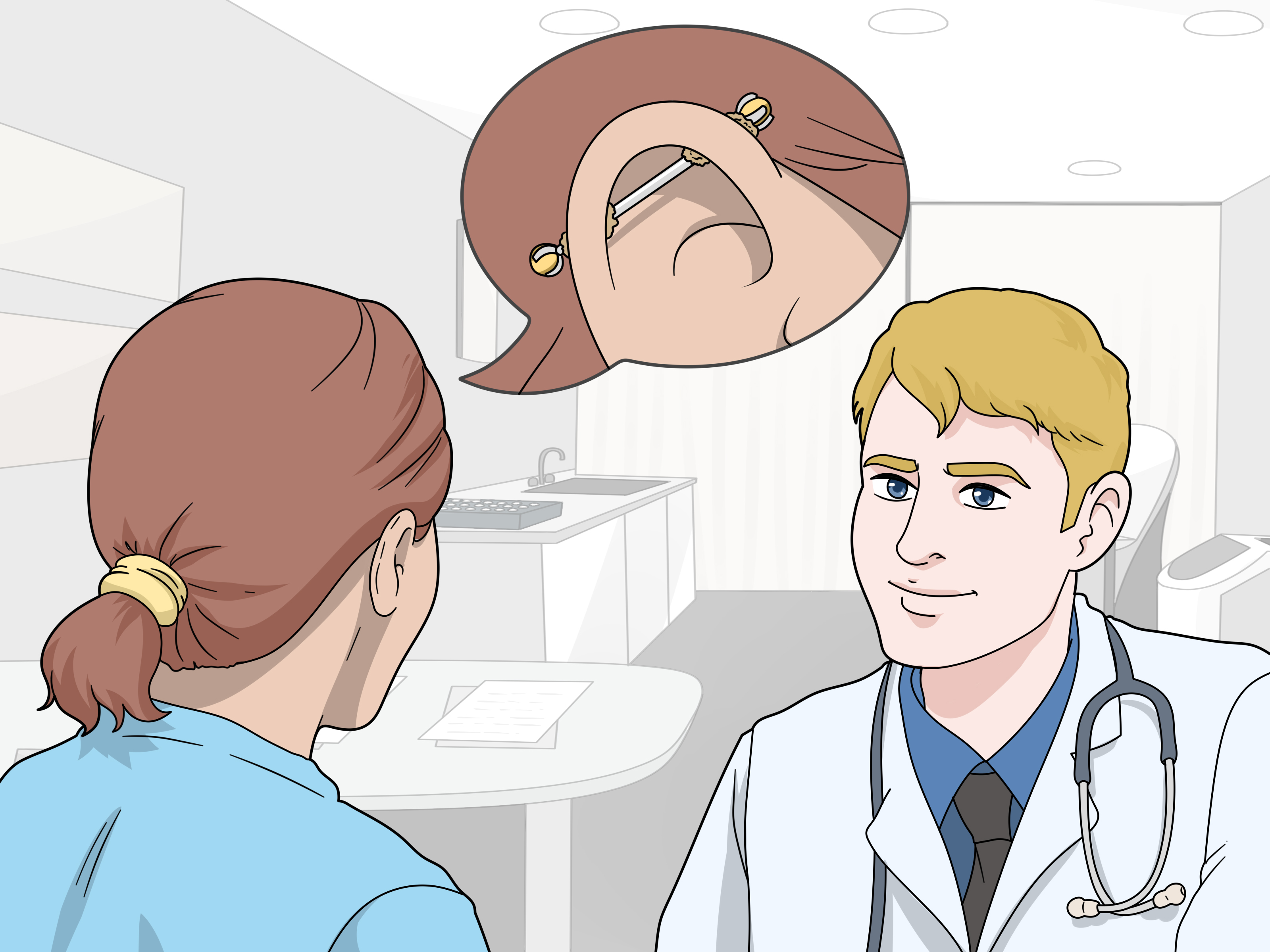
- You suspect infection in the cartilage
- You have pus, fever, spreading redness, or severe swelling
- The ear is very painful or hot to the touch
- The jewelry is embedded
- You think you may be having an allergic skin reaction that is getting worse
A piercer can help with jewelry, fit, and mechanical irritation. A doctor can diagnose infection, allergic dermatitis, or more serious complications. Sometimes you need both, just not at the same time in the same chair.
Conclusion
If you want to know how to heal an industrial piercing, think less about speed and more about strategy. Clean it gently with sterile saline, stop touching it, protect it from pressure, keep quality jewelry in place, and take warning signs seriously. Industrial piercings are not impossible to heal, but they do demand patience. The ear you save may be your own.
Common Experiences People Have While Healing an Industrial Piercing
One of the most frustrating parts of industrial piercing healing is that it rarely happens in a straight line. A lot of people expect a smooth week-by-week improvement, but what often happens is more like this: week one feels spicy, week three feels promising, week five gets weirdly swollen after you forget and sleep on it, and month three tricks you into thinking it is healed right before your hair wraps around the bar and ruins your confidence for the day. That roller coaster is extremely common.
Many people describe the first couple of weeks as manageable but annoying. The piercing is sore, a little swollen, and very aware of its own existence. Pulling a shirt over your head suddenly becomes a tactical operation. Brushing your hair turns into a trust exercise. Even hugging people can feel risky if they are the enthusiastic type.
Then comes the “false recovery” phase. The outside starts looking calmer, so people assume they are in the clear. This is the point where a lot of bad decisions happen. Someone swaps the jewelry too early, goes back to sleeping on that side, or starts poking the bar because it “doesn’t hurt that much anymore.” Industrial piercings love to punish that kind of confidence. The tissue may look fine on the outside while the inside is still fragile and easy to irritate.
Another very common experience is random flare-ups. People often report that the piercing behaves for two weeks and then suddenly gets crusty and tender again after a small snag, a long phone call on that ear, a sweaty gym session, or a night with over-ear headphones. That does not always mean something is seriously wrong. It often means cartilage remembers everything and forgives very slowly.
Sleep is probably the biggest real-life challenge. Side sleepers often say healing improves dramatically once they stop putting pressure on the piercing at night. Some people buy a travel pillow and never look back. Others build what can only be described as a small pillow fortress. Is it glamorous? Not especially. Does it help? Absolutely.
People also commonly talk about the mental side of healing. There is usually a period where they wonder whether the piercing is worth it, whether the bumps will ever go away, and whether they made a terrible life choice in the piercing studio. Then, once the irritation settles and the bar finally sits comfortably, the regret disappears and the piercing becomes part of their look instead of the center of their daily stress.
The happiest healing stories usually have the same pattern: minimal touching, consistent saline care, high-quality jewelry, and quick action when something seems off. The worst stories usually involve cheap metal, constant pressure, DIY jewelry changes, and a heroic commitment to ignoring obvious warning signs. So if your industrial piercing is testing your patience, you are not alone. Healing one is often less about being tough and more about being boringly consistent. And in piercing aftercare, boring is undefeated.