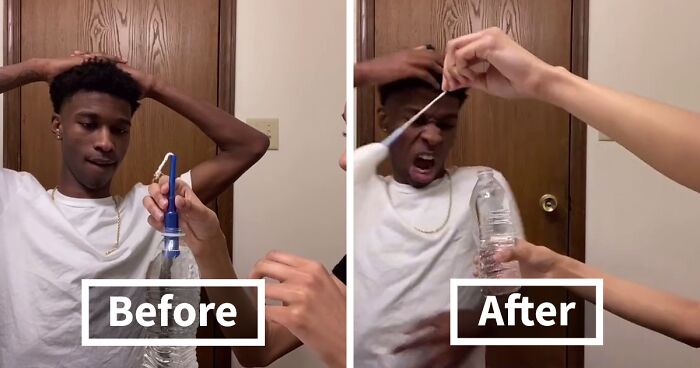
Every few years, the internet accidentally stumbles into a public service announcement. This time, it arrived wearing sweatpants, holding a tampon, and looking deeply alarmed. In a wave of TikTok videos, women demonstrated how tampons work while boyfriends, husbands, brothers, and male friends reacted with the kind of surprise usually reserved for magic tricks, tax bills, or learning that avocados are berries. The clips were funny, yes. But they were also revealing in a way that was a lot less cute.
Because when a grown man watches a basic explanation of a tampon and responds like he has just discovered a classified government project, the issue is not male stupidity. The issue is educational failure. These reactions did not happen in a vacuum. They happened because too many people move through school with only a partial, awkward, or wildly uneven understanding of how bodies work. And when menstruation still feels mysterious to half the room, that is not a “TikTok problem.” That is a sex education problem.
The viral trend struck a nerve for a simple reason: it turned a private knowledge gap into a public one. Suddenly, millions of people were watching the moment someone realized that periods are not vague monthly inconvenience clouds. They are a concrete biological process, and period products are practical tools, not secret artifacts from a forbidden aisle at the pharmacy. The laughs landed. So did the uncomfortable truth underneath them.
Why These TikTok Reactions Felt So Wild
What made the videos travel so fast was not just shock. It was recognition. Viewers were not only laughing at the reactions; they were recognizing a pattern they had seen before in classrooms, relationships, and everyday life. Plenty of women have had to explain period basics to a boyfriend who did not know how long a period lasts, what a tampon actually does, or why carrying one in a bag is not some dramatic personality trait. Plenty of men have admitted they were never really taught any of it.
That matters because menstruation is not niche knowledge. It is ordinary health knowledge. Schools teach digestion to students who are not aspiring gastroenterologists. They teach lungs to kids who are not planning careers in pulmonology. Yet menstruation, puberty, and reproductive health still get treated like elective trivia unless you personally experience them. That is a bizarre standard, and TikTok exposed it with brutal efficiency.
The bigger point is this: ignorance about tampons is rarely about tampons alone. It usually reflects a much wider gap in what students learn about puberty, anatomy, consent, communication, hygiene, and the realities of other people’s bodies. When education becomes vague, skipped, or shame-soaked, misinformation rushes in to fill the space. Social media becomes the teacher, jokes become the curriculum, and confusion becomes normal.
The Real Problem Is Not Curiosity. It Is Silence.
Curiosity is healthy. Genuine questions about periods, puberty, or period products are not embarrassing. In fact, they are exactly what good education is supposed to invite. The real problem begins when normal questions never get answered, or when students absorb the message that some topics are too awkward to discuss unless they are whispered, mocked, or split into “girl stuff” and “boy stuff.” That is where harmless confusion grows into lasting ignorance.
Too many sex ed programs still operate like they are sneaking through the school day in a trench coat. Students get a unit that is too short, too late, too political, too clinical, or too stripped down to be useful. Some are taught abstinence-heavy content. Some get a narrow lecture about risk without practical information. Some hear about puberty in a rushed, embarrassed tone that practically begs them to never ask a follow-up question. And some students get almost nothing at all.
That unevenness shows up in the data and in real life. If only some states require medically accurate instruction, and if practical topics are taught inconsistently across schools, then of course adults end up learning basic body facts from girlfriends, group chats, or viral videos. The internet is not creating the knowledge gap. It is simply filming it in vertical format.
What Better Sex Ed Should Actually Teach
1. Puberty should be taught as shared human knowledge
Puberty education should not function like two neighboring countries with closed borders. Students of all genders need a baseline understanding of menstruation, erections, wet dreams, hormonal changes, emotional shifts, and reproductive development. Not because everyone will personally experience every change, but because everyone lives in a world with other human beings. Shared knowledge creates empathy, and empathy tends to produce fewer ridiculous reactions in the tampon aisle.
2. Menstruation should be explained plainly and early
Good education should explain that menstruation is a normal part of puberty, that cycles vary, and that period products exist to help people manage daily life comfortably and safely. That means students should understand the difference between pads, tampons, period underwear, and cups in simple, factual language. No horror-movie vibe. No coded language. No treating menstrual products like evidence in a criminal investigation.
This matters even more because first periods do not wait politely for perfect curriculum timing. Some kids begin menstruating earlier than adults expect. If instruction arrives after the experience, education stops being preparation and becomes cleanup. That is not a strong system. That is a fire drill after the building is already smoky.
3. Practical information matters as much as moral messaging
A student can memorize the word “abstinence” and still not know how a tampon works, what is typical in early cycles, when to talk to a doctor, or how to support a friend who gets a period at school. Practical health knowledge is not scandalous. It is useful. Knowing what products do, how long a period may last, or when symptoms are unusual does not corrupt anyone. It equips them.
4. Communication should be part of the lesson
Better sex ed is not only about anatomy diagrams. It is also about teaching people how to ask respectful questions, discuss health without shame, and respond without mockery. The healthiest version of the TikTok trend was not “Ha, look how dumb he is.” It was “Here is a knowledge gap, and here is a conversation happening in real time.” That is what education should normalize before a phone camera ever gets involved.
Why Social Media Became the Substitute Teacher
When schools and families do not cover a topic well, the internet steps in wearing chaos and good lighting. TikTok, YouTube, Reddit, and group chats are now major sources of health information for young people, whether adults like it or not. Sometimes that is helpful. Sometimes it is a carnival of half-facts, myths, and suspicious confidence. Either way, it means formal education no longer has the luxury of being vague.
That is one reason the tampon-reaction trend felt bigger than a quick joke. People were not only consuming a trend; they were witnessing peer-to-peer education. A basic explanation of a menstrual product became more memorable than years of patchy schooling. That should make educators, parents, and policymakers think hard. When a viral challenge is doing more to explain periods than a classroom unit, the classroom unit may need a serious rewrite.
And to be fair, social media did what traditional institutions often struggle to do: it made the topic visible without pretending it was shameful. The best videos were funny, conversational, and surprisingly honest. They invited people to admit what they did not know. That part is worth keeping. The goal is not to kill humor. The goal is to build a world where humor sits on top of knowledge instead of replacing it.
The Cost of Weak Sex Ed Is Bigger Than One Awkward Reaction
It is easy to laugh at a stunned boyfriend staring at an applicator like it came from a science-fiction prop department. But weak sex education has consequences beyond awkwardness. It can fuel stigma around menstruation, make young people less likely to ask questions, delay care when symptoms are unusual, and leave partners unequipped to support each other in normal health situations. It also reinforces the idea that some forms of health knowledge are “for girls only,” which is both lazy and socially expensive.
Even the language around periods often reveals the problem. People still describe menstruation with euphemisms, coded phrases, or embarrassed jokes, as though the body needs a publicist before it can be mentioned out loud. That discomfort affects everyone. It teaches girls that normal biology should be managed discreetly and teaches boys that they are not expected to understand it. Then adulthood arrives, and both sides are somehow expected to instantly become informed, considerate, and competent. That is not how learning works.
There is also a civic cost. When public debates can still erupt over whether and when menstruation should be discussed in school, that sends a powerful signal about what kind of knowledge is treated as legitimate. The message students hear is not subtle: some body facts are acceptable only after politics approves them. That is a strange way to run a health education system in a country full of actual human bodies.
How Parents, Schools, and Health Professionals Can Fix This
For parents
Do not wait for one giant, movie-scene talk. Short, normal conversations work better. Explain puberty before it starts. Name body parts accurately. Answer questions without acting personally attacked by biology. If a child asks how periods work, congratulations: education has begun. Keep going.
For schools
Teach menstruation and puberty early enough to be useful, and teach them to all students. Build practical, age-appropriate lessons that cover products, hygiene, body changes, communication, and when to seek medical advice. Medically accurate information should not be treated like a controversial elective. It should be standard equipment.
For healthcare providers
Use routine visits to fill the gaps students may bring in from school. Adolescents often need clear reassurance that periods vary, questions are normal, and common products can be discussed without embarrassment. A two-minute calm explanation in a clinic can undo years of whisper-based education.
For everyone else
Retire the idea that understanding periods is only the responsibility of people who menstruate. If you can learn the rules of fantasy football, espresso extraction, or the entire backstory of a Marvel side character, you can absolutely learn what a tampon is for. The knowledge burden here is not exactly Everest.
The Bigger Lesson Behind the Trend
The TikTok tampon trend was funny because it revealed something real. That is usually where the best internet comedy lives. But the lasting takeaway is not that men are clueless or that women should keep turning basic anatomy into performance art for educational purposes. The takeaway is that a modern society should not need viral reaction videos to teach simple health information.
Better sex ed would not eliminate every awkward moment. Human beings are too creative for that. But it would make those moments less common, less stressful, and a lot less revealing. It would help kids enter adolescence with context instead of panic. It would help partners speak to each other with understanding instead of confusion. And it would make social media a supplement to learning, not the emergency backup plan.
So yes, laugh at the guy who looked at a tampon demonstration like he had just learned planes stay in the sky by collective optimism. Then ask the more important question: why was this news to him in the first place? The answer says far more about our educational system than it does about one stunned face on TikTok.
Experiences That Make This Topic Feel So Familiar
Part of the reason this trend exploded is that it mirrors experiences people have been quietly collecting for years. Anyone who sat through a lopsided health class probably remembers the feeling. The teacher moved quickly, the room got tense, someone giggled at exactly the wrong moment, and the lesson split into mystery and embarrassment before it even reached the useful part. Some girls left class with the basic sense that periods were normal but inconvenient. Some boys left class with almost no real understanding at all, except maybe the belief that this was “not their topic.” That divide does not stay in middle school. It follows people into dating, college, marriage, and parenting.
There is also the first-period-at-school experience, which too many people remember in cinematic detail. A student realizes what is happening, panics, and has to rely on one informed friend, one kind nurse, or one emergency sweatshirt tied around the waist like a heroic cape. In a better system, that moment would still be emotional, but it would not feel like a plot twist. Everyone around that student would understand enough to be calm, helpful, and normal about it. Instead, many people remember confusion first and education second.
Then there are the family experiences. A lot of adults can trace their knowledge gap back to a household where puberty talk was delayed, coded, or outsourced. Some dads wanted to be helpful but never got taught the language themselves. Some moms handled the conversation quietly with daughters while sons absorbed the message that periods were private female weather. Years later, those sons grow into decent men who are completely supportive in theory and totally baffled in practice. They are not malicious. They are underinformed.
College and adulthood create a new round of these moments. Roommates discover who knows what. Partners make awkward pharmacy runs and stare at shelves full of products like they are trying to defuse a bomb with pastel packaging. Someone asks a basic question and braces for judgment. Someone else realizes they have been believing a weird myth since ninth grade. What is striking is not that these conversations happen. What is striking is how late they happen.
That is why the TikTok clips resonate beyond the joke. They compress years of missed education into one visible moment of surprise. Viewers see not only a funny reaction, but the whole chain behind it: the incomplete class, the skipped conversation, the social taboo, the silence, the myth, the catch-up lesson. In that sense, the trend is not just about tampons. It is about the experience of learning too late what should have been taught early, clearly, and without shame. And once you see that pattern, the laughs land a little differently. They are still funny, but they are also an argument for doing better.