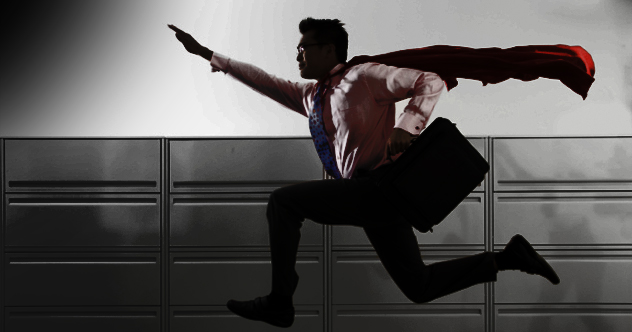
Comic-book heroes have capes, indestructible shields, and suspiciously reliable hair during explosions. Real-life heroes usually have none of those advantages. They are ordinary people confronted with burning buildings, battlefield chaos, freezing rivers, murderous regimes, or impossible decisionsand they act anyway.
The phrase “superhuman heroic feats” does not mean these individuals possessed magical strength. Their extraordinary power came from courage, preparation, compassion, moral conviction, and a remarkable willingness to put someone else’s survival ahead of their own comfort. Some carried wounded soldiers through gunfire. Others turned paperwork into a lifeline, guided strangers through smoke, or challenged armed men to protect defenseless civilians.
The following ten acts are based on documented historical events. Together, they demonstrate that the most astonishing human achievements are not always about lifting the heaviest object or running the fastest mile. Sometimes the greatest feat is refusing to leave another person behind.
1. Desmond Doss Rescued Approximately 75 Soldiers Without Carrying a Weapon
During the Battle of Okinawa in 1945, Army medic Desmond Doss climbed onto the Maeda Escarpment, later nicknamed Hacksaw Ridge, with his infantry unit. Doss was a conscientious objector who refused to carry a firearm, but he did not refuse danger.
When intense fighting forced American troops to retreat, wounded soldiers remained scattered across the ridge. Doss stayed behind. Working under enemy fire, he treated injured men, dragged them to the edge of the escarpment, and lowered them one at a time using a rope sling. He reportedly continued while praying for the strength to save “one more.” By the end of the ordeal, he was credited with rescuing approximately 75 men.
Doss later suffered severe wounds but still gave up his place on a stretcher to another injured soldier. His feat was not powered by invulnerability. It was powered by the stubborn belief that every life within reach was worth another trip into danger. He became the first conscientious objector to receive the Medal of Honor.
2. Roy Benavidez Survived Six Hours of Combat While Saving His Teammates
On May 2, 1968, Master Sergeant Roy Benavidez heard that a Special Forces reconnaissance team was surrounded west of Loc Ninh, Vietnam. Although he was not assigned to the rescue mission, he boarded a helicopter and voluntarily entered the battle.
Benavidez jumped from the hovering aircraft and ran through heavy fire toward the trapped soldiers. He was wounded almost immediately, yet he organized the survivors, treated casualties, distributed ammunition, directed air support, recovered classified documents, and helped load the injured onto evacuation helicopters.
Even after suffering additional gunshot, grenade, and bayonet wounds, he continued fighting and assisting others. The engagement lasted roughly six hours, and his actions saved at least eight men. At one point, rescuers reportedly believed he was dead until he managed to show that he was still conscious.
Benavidez’s story sounds like something rejected by a movie producer for being “a little too unrealistic.” It happened, however, and his refusal to stop became one of the most extraordinary military rescue feats of the Vietnam War.
3. Harriet Tubman Helped Free More Than 700 People in One Raid
Harriet Tubman is best known for guiding enslaved people to freedom through the Underground Railroad, but her Civil War service included an achievement on an even larger scale.
On June 2, 1863, Tubman helped lead Union forces during the Combahee River Raid in South Carolina. Drawing on intelligence gathered from local people, including information about Confederate defenses and underwater mines, the raiding force moved along the river, damaged plantations supporting the Confederacy, and created an escape route for enslaved families.
More than 700 people gained freedom during the operation. Tubman’s contribution combined planning, reconnaissance, leadership, local knowledge, and enormous personal courage. She was operating in a region where capture could have meant enslavement or death, yet she returned to help hundreds of people escape.
This was not a spontaneous burst of bravery. It was organized liberation conducted under wartime conditionsproof that heroic feats can require both a fearless heart and an excellent map.
4. Hugh Thompson Placed His Helicopter Between Civilians and American Troops
Some heroic acts involve confronting an enemy. Others require confronting people who are supposed to be on your side.
During the My Lai massacre in Vietnam on March 16, 1968, Army helicopter pilot Hugh Thompson Jr. and his crew saw American soldiers killing unarmed Vietnamese civilians. Thompson landed his helicopter between soldiers and a group of villagers. He instructed his crew members, Glenn Andreotta and Lawrence Colburn, to protect the civilians if the soldiers continued advancing.
Thompson confronted officers on the ground, coordinated helicopters to evacuate villagers, transported wounded children for treatment, and reported what he had witnessed. His intervention is credited with saving at least ten civilians and possibly preventing additional killings.
Moral courage is easy to praise after the danger has passed. Thompson demonstrated it in real time, surrounded by armed men, without knowing whether his own uniform would protect him. His feat remains a powerful example of choosing human life over blind obedience.
5. Welles Crowther Returned Repeatedly to the South Tower’s Upper Floors
After United Airlines Flight 175 struck the South Tower of the World Trade Center on September 11, 2001, survivors on the 78th-floor sky lobby encountered a young man whose nose and mouth were covered by a red bandana.
That man was 24-year-old equities trader and volunteer firefighter Welles Crowther. Witnesses later described how he directed people toward a usable stairway, carried injured victims, extinguished fires, and returned to the damaged upper floors multiple times. The 9/11 Memorial & Museum reports that he made three trips to the sky lobby and saved at least ten people.
Crowther could have continued downward after reaching relative safety. Instead, he climbed back toward smoke, fire, and structural collapse because other people remained above him. He died when the tower fell.
For months, survivors knew their rescuer only as “the man in the red bandana.” His identity was eventually confirmed through their descriptions, transforming an ordinary handkerchief into an enduring symbol of selfless heroism.
6. Rick Rescorla Prepared Thousands of People to Escape the World Trade Center
Heroism is often imagined as a sudden decision, but Rick Rescorla’s greatest lifesaving achievement began long before September 11.
Rescorla, a decorated Vietnam veteran and Morgan Stanley’s director of security, believed the World Trade Center remained vulnerable after the 1993 bombing. He insisted that employees practice evacuation drills, learn stair routes, and take emergency procedures seriously. Colleagues may not have enjoyed the drills, but very few people send thank-you cards to a fire drill until the building is actually on fire.
When the attacks occurred in 2001, Rescorla supervised the evacuation of Morgan Stanley personnel from the South Tower. His preparation and leadership are credited with helping thousands reach safety. Rather than leaving after the evacuation was underway, he went back upstairs to search for remaining employees.
Rescorla did not survive the tower’s collapse. His feat demonstrates that extraordinary bravery is sometimes built from years of ordinary preparation. The dramatic rescue was possible because he had already done the unglamorous work.
7. The Crew of Flight 1549 Landed a Powerless Airliner on the Hudson River
On January 15, 2009, US Airways Flight 1549 struck a flock of Canada geese shortly after departing New York’s LaGuardia Airport. Both engines lost almost all thrust while the Airbus A320 was still at low altitude.
Captain Chesley “Sully” Sullenberger, First Officer Jeffrey Skiles, and the cabin crew had only minutes to respond. Returning safely to an airport was not practical, so the pilots guided the powerless aircraft toward the Hudson River and completed a controlled ditching.
The flight attendants directed an evacuation as water entered the aircraft. Nearby ferry crews, emergency personnel, and other rescuers rapidly approached the floating plane and pulled passengers from the wings, exits, and frigid water. All 150 passengers and five crew members survived.
The “Miracle on the Hudson” was not magic. It was an exceptional chain of professional decisions involving pilots, cabin crew members, ferry captains, deckhands, police officers, firefighters, and medical responders. Sometimes a superhuman feat is really a team of well-trained humans refusing to panic at the same time.
8. Arland Williams Gave the Rescue Line to Other Survivors
After Air Florida Flight 90 crashed into Washington, D.C.’s 14th Street Bridge and plunged into the frozen Potomac River on January 13, 1982, only a small group remained alive near the wreckage.
One survivor, bank examiner Arland D. Williams Jr., was trapped in his seat. When a U.S. Park Police helicopter lowered rescue equipment, Williams repeatedly passed the line to other injured passengers instead of using it himself. Four people survived with his assistance.
By the time the helicopter returned for him, Williams had disappeared beneath the water. He was the only person who survived the initial impact but died from drowning.
His decision is difficult to comprehend because it involved no expectation of recognition, reward, or even survival. Williams simply kept choosing another person. His action represents self-sacrifice in its purest form: a man with almost nothing left giving away every chance he received.
9. Irena Sendler Helped Smuggle Thousands of Children Out of the Warsaw Ghetto
During the Holocaust, Polish social worker Irena Sendler used her access to the Warsaw ghetto to help Jewish children escape. Working under the alias “Jolanta” and cooperating with the underground Council for Aid to Jews, known as Żegota, she helped arrange hiding places in convents, orphanages, hospitals, schools, and private homes.
Sendler and her network are widely credited with helping approximately 2,500 children. The operation required false identities, forged documents, trusted families, secret transportation, and constant communication. Sendler recorded children’s original names in code so they might later be reunited with surviving relatives.
The Gestapo eventually arrested and tortured her, but members of the resistance secured her escape. She then continued assisting Jewish people while living under a false identity.
This heroic feat was not accomplished through physical strength. It was a sustained logistical rebellion against a system designed for mass murder. Each hidden name, forged paper, and opened door became an act of resistance.
10. Chiune Sugihara Turned a Diplomatic Stamp Into an Escape Route
In the summer of 1940, thousands of Jewish refugees were trapped in Lithuania as Nazi power expanded across Europe. Chiune Sugihara, Japan’s acting consul in Kovno, received desperate requests for transit visas that could allow refugees to cross the Soviet Union and travel through Japan.
Despite instructions restricting his authority to issue the documents, Sugihara began writing visas at an exhausting pace. He reportedly worked for long hours each day, producing more than 2,000 visas that helped several thousand people escape with their families.
Sugihara continued signing documents as his consulate prepared to close. Survivor accounts describe him issuing visas until shortly before his departure. The papers did not guarantee an easy journey, but they created a legal path out of a rapidly closing trap.
His feat reminds us that bureaucracy is merely a tool. In careless hands, it can block the door. In courageous hands, one signature and one rubber stamp can become lifesaving equipment.
What Makes These Heroic Feats Seem Superhuman?
Preparation Reduced the Power of Panic
Sullenberger had spent decades developing aviation judgment. Rescorla repeatedly drilled evacuation procedures. Doss knew medical treatment and rope techniques. Their actions looked spontaneous to observers, but each feat rested on knowledge practiced before the emergency arrived.
They Focused on the Next Useful Action
None of these heroes could solve the entire crisis at once. Doss concentrated on one wounded soldier. Sugihara completed one visa and then another. Crowther guided one group toward the stairs before returning for more. Huge acts of courage were assembled from manageable decisions.
They Accepted Personal Risk Without Worshipping It
Heroism is not the same as reckless thrill-seeking. These people took risks because lives were in immediate danger, not because danger made a good social-media clip. Their goal was rescue, protection, or liberation. The risk was the cost, not the prize.
Their Courage Was Directed Toward Other People
Endurance alone can be impressive, but selfless heroism requires responsibility for someone beyond oneself. Every person on this list used training, authority, strength, or opportunity to help others survive. That outward focus is what turns an astonishing achievement into a heroic feat.
Experiences and Lessons Inspired by Superhuman Heroic Feats
Reading accounts of real-life heroes can feel strangely disorienting. At first, the stories seem too large to connect with everyday life. Most readers have never landed a powerless airliner, entered a burning skyscraper, or organized an escape operation under military occupation. It is tempting to place heroic people in a separate category marked “built differently” and return to worrying about unanswered emails.
A closer examination produces a different experience. The heroes begin to look less like mythical figures and more like recognizable human beings. They felt pain, uncertainty, exhaustion, and fear. Some had extensive professional training, while others were ordinary civilians who happened to be standing near a disaster. What separated them was not the absence of fear but the decision that another person’s need mattered more than their fear.
One practical lesson is that preparation changes how people experience an emergency. Someone who has practiced first aid, learned an evacuation route, or rehearsed an emergency procedure does not become fearless. Instead, that person has a useful task available when panic begins competing for control. Even a basic CPR course, fire-safety plan, or swimming-rescue lesson can replace helplessness with a sequence of actions.
Another lesson concerns attention. In ordinary life, people become skilled at looking away. We assume someone else will call for help, check on the injured person, confront misconduct, or guide the confused stranger. The heroes in these accounts noticed what was happening and accepted that they had become part of the situation. Their first courageous act was often simply refusing to behave like a spectator.
These stories also change the way we understand leadership. Rescorla led by preparing people before danger arrived. Tubman led through intelligence, trust, and knowledge of the terrain. Thompson led by opposing wrongdoing when cooperation would have been safer. Leadership was not always a title or a speech. Sometimes it was a clear instruction delivered in smoke, a helicopter placed in the path of violence, or a route quietly opened for frightened families.
There is also an important emotional experience in recognizing teamwork. Popular retellings often turn rescues into stories about one flawless individual. Real events are usually more complicated. Sendler depended on an underground network. Flight 1549’s passengers survived through the combined work of the cockpit crew, flight attendants, ferry operators, and emergency responders. Tubman’s raid relied on soldiers, scouts, boat crews, and local knowledge. Acknowledging teamwork does not reduce anyone’s courage; it reveals how courage spreads.
The most useful response to these heroic feats is not to wonder whether we could perform the exact same actions. No one can honestly answer that question from a comfortable chair. A better question is whether we are becoming more capable, attentive, and dependable before our own difficult moment arrives.
That preparation can begin without dramatic music. Learn basic first aid. Take evacuation drills seriously. Check on vulnerable neighbors during extreme weather. Speak when another person is being mistreated. Call emergency services instead of assuming someone else already has. Develop the physical fitness needed to help without becoming an additional casualty. Small habits do not look superhuman, but neither did many of these heroes before history suddenly asked more of them.
Conclusion
These ten superhuman heroic feats were performed by people with no supernatural protection. They were wounded, frightened, exhausted, outnumbered, or operating under enormous pressure. Nevertheless, they rescued soldiers, freed families, protected civilians, evacuated skyscrapers, landed an airliner, and transformed official documents into passports to survival.
Their stories should inspire admiration, but admiration is only the beginning. The deeper lesson is that courage can be prepared, practiced, and strengthened. We may never face a moment as dramatic as Hacksaw Ridge or the Hudson River. We can still become the kind of people who notice danger, develop useful skills, resist injustice, and act when somebody needs help.
Real heroes rarely wake up knowing that history has scheduled them for that afternoon. They simply build the character and competence to answer when it calls.