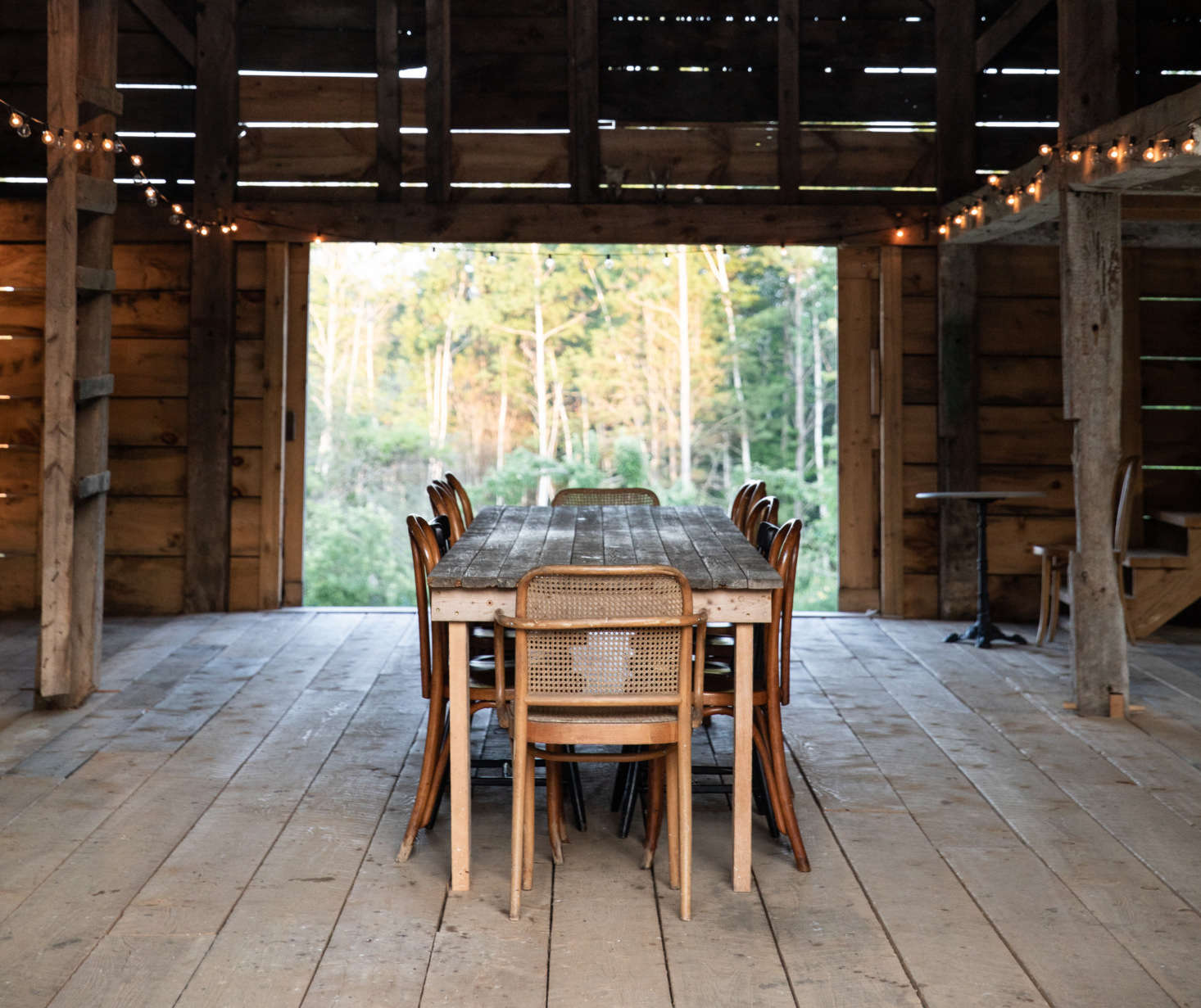
There is something deeply appealing about a garden that looks beautiful but also knows how to earn its keep. A row of herbs becomes dinner. A meadow feeds pollinators. An old barn gets another century of usefulness. Chickens wander through grass instead of posing beside a decorative coop that has never met an actual chicken. This is the world suggested by “Trending on Gardenista: The Modern Farmer”a world where design, agriculture, sustainability, and everyday life stop pretending they are separate subjects.
The original Remodelista roundup, published on August 17, 2018, highlighted Gardenista’s Modern Agrarian issue and its exploration of a new generation of working farmers. Among the featured stories were young farmers rebuilding a Maine property, a modern New England home overlooking active farmland, and an intensely cultivated rental garden in Brooklyn. Different settings, same idea: land becomes more interesting when people actually participate in it.
Years later, that idea feels even more relevant. Modern farming and gardening increasingly emphasize healthy soil, efficient water use, biodiversity, local food production, adaptable growing spaces, and landscapes that do more than sit around looking photogenic. The modern farmer aesthetic, in other words, has matured into something more useful than rustic chic.
What Does “The Modern Farmer” Really Mean?
The modern farmer is not necessarily someone with 200 acres, a tractor, and an alarm clock set to an hour that should legally still count as nighttime. The term increasingly includes market gardeners, suburban growers, rooftop farmers, community garden organizers, homesteaders, permaculture practitioners, and people growing tomatoes in containers outside an apartment.
The USDA describes urban agriculture broadly enough to include community gardens, rooftop farms, hydroponic and aquaponic systems, vertical production, suburban growing, and other forms of food cultivation close to population centers. These operations can improve access to fresh food, create green space, support jobs, and strengthen community connections.
That broader definition helps explain why the Gardenista approach remains compelling. It treats agriculture as a continuum. At one end is a working farm in rural Maine. At another is a thousand-square-foot Brooklyn backyard. Between them are suburban orchards, raised vegetable beds, pollinator borders, edible landscapes, greenhouses, and backyards where the basil population has somehow become politically powerful.
Three Landscapes That Define the Modern Agrarian Idea
1. High Ridge Farm: Grow Food, Restore Buildings, Build Community
One of the strongest examples in Gardenista’s original coverage was High Ridge Farm in Maine. Katee Lafleur and Andrew White found a 35-acre property containing an 1835 farmhouse and an early-19th-century barn in serious need of attention. They developed a diversified operation with vegetables, herbs, flowers, chickens, pigs, and food-centered community events.
The farm embodied several principles that now appear repeatedly in conversations about sustainable agriculture. Its vegetable production used permanent beds and a low-till approach. Animals were integrated with the land. Existing buildings were repaired instead of casually discarded. Old orchards contributed fruit for cider. Farm products became meals served on the property rather than anonymous commodities immediately shipped elsewhere.
Perhaps the most useful lesson is Gardenista’s wonderfully simple advice: grow what you want to eat. It sounds obvious until you remember how many gardeners devote half their available space to zucchini and then spend August approaching acquaintances with the nervous energy of someone trying to unload suspicious merchandise.
2. A New England Farm Landscape Where Restraint Wins
Another Gardenista feature examined a modern home positioned above working farmland in New England. Instead of surrounding the house with a hyper-manicured landscape that ignored its setting, the designers leaned into the existing agricultural character.
Meadow plantings, white pines, serviceberries, sugar maples, local fieldstone, salvaged granite, grasses, lupines, and daisies helped connect the domestic landscape to the fields and woodland beyond. Plant choices were deliberately restrained, making the property appear as though it belonged to the larger landscape rather than having landed on it from a luxury catalog.
This is an important modern garden design lesson: sometimes the best addition is fewer additions. A landscape does not need seventeen unrelated ornamental themes competing like contestants on a reality show. Repeating locally appropriate plants and materials can produce a calmer, more convincing result.
3. The Brooklyn Garden That Refused to Stay Put
The third example shrinks the concept dramatically. Writer and gardener Marie Viljoen cultivated an approximately 1,000-square-foot rental backyard in Brooklyn while knowing she would eventually have to move.
Her garden combined ornamental plants, unusual edibles, native shrubs, herbs, citrus, vegetables, milkweed, lilies, and container-grown specimens. Because renting limited permanence, mobility became part of the garden plan. Plants could move, adapt, be divided, or find new homes.
The garden was managed without herbicides and pesticides, allowing beneficial insects, bees, butterflies, birds, and other wildlife to become part of the system. The result demonstrates an important point: serious ecological gardening does not require owning serious acreage. A rented backyardor even a balconycan contribute useful habitat.
Why the Modern Farmer Mindset Matters Now
Healthy Soil Comes Before Instagram-Worthy Plants
Modern agriculture increasingly recognizes soil as a living system rather than a brown substance that prevents plants from falling over. USDA Natural Resources Conservation Service soil-health principles emphasize keeping living roots present, minimizing unnecessary disturbance, maintaining soil cover, and increasing biodiversity.
Practices such as cover cropping, diverse rotations, reduced tillage, and keeping soil protected can support nutrient cycling, water infiltration, biological activity, and long-term productivity.
Home gardeners can borrow the same principles without purchasing a combine harvester. Mulch bare soil. Compost intelligently. Disturb beds only when necessary. Rotate crops when practical. Leave roots in place when they are not diseased. Consider cover crops in unused beds.
There is one caution: more compost is not automatically better. University extension programs increasingly recommend soil testing before repeatedly adding amendments because excessive nutrients or unfavorable pH can create their own problems. Cornell has documented similar issues in urban farms with very high organic matter and elevated pH.
Raised Beds Make Productive Gardening Possible Almost Anywhere
Raised beds have become one of the defining structures of modern edible gardens, and not merely because cedar rectangles photograph well.
They can improve accessibility, organize intensive planting, provide control over growing media, and make food production possible over pavement or questionable urban soil. Cornell notes that raised beds can be particularly useful where contamination is a concern, although gardeners should still choose construction materials carefully and use clean soil.
This makes the modern farm scalable. A homeowner might manage six permanent beds. A restaurant might maintain rooftop planters. A school could grow vegetables in a courtyard. The principles remain similar even when the acreage contains a decimal point followed by several zeros.
Water-Smart Gardening Is Becoming Essential
Water efficiency is another place where traditional farming wisdom and modern technology happily shake hands.
EPA WaterSense guidance recommends designing landscapes around climate, site conditions, soil, appropriate plants, and actual landscape needs. Drought-tolerant vegetation, rain gardens, healthy soil, rainwater capture, efficient irrigation, and reduced dependence on thirsty turf can all lower unnecessary outdoor water use.
For vegetable beds, drip irrigation is particularly useful because water can be delivered near root zones instead of sprayed across foliage, pathways, fences, neighboring cars, and one surprised mail carrier. Colorado State University Extension identifies drip systems as well suited to raised beds and block-style vegetable gardens, although filters, pressure regulation, and occasional maintenance are important.
Pollinator Habitat Is Productive Infrastructure
The modern farmer also recognizes that insects are not automatically villains. Bees, butterflies, hoverflies, beetles, wasps, and other beneficial organisms contribute to pollination and ecological balance.
The Xerces Society recommends creating habitat with diverse flowering plants, nesting or shelter opportunities, and protection from unnecessary pesticides. Regionally native plants can be particularly valuable because they support local pollinators, specialist bees, caterpillars, and beneficial insects adapted to those plants.
That means a productive landscape does not need to be shaved, clipped, sprayed, and vacuumed into submission. Seed heads can remain. Some stems can overwinter. Meadows can replace portions of lawn. A slightly wild edge may provide more ecological value than another perfectly edged strip of grass.
How to Create a Modern Farmer Garden at Home
Start With Function, Not Decoration
Before buying anything, decide what your landscape should accomplish. Do you want fresh herbs? Tomatoes? Cut flowers? Shade? Habitat? Rainwater infiltration? Outdoor dining? A place for children to explore?
A modern agrarian garden usually serves several purposes simultaneously. A fruit tree provides food and shade. Native flowers support insects and beautify the yard. Herbs feed people and pollinators. A pergola supports vines while creating an outdoor room.
Create Permanent Growing Areas
Instead of rebuilding the vegetable plot every spring, establish repeatable beds and pathways. Permanent beds reduce unnecessary soil disturbance and make irrigation, crop planning, mulching, and maintenance easier.
Keep beds narrow enough that you can reach their centers without standing on cultivated soil. Compaction is much easier to prevent than to apologize to your carrots for later.
Plant What Your Household Actually Uses
The romantic version of farming involves wicker baskets overflowing with flawless vegetables. The realistic version asks whether anyone in your household actually likes turnips.
Prioritize expensive, flavorful, frequently used crops: herbs, salad greens, specialty tomatoes, peppers, berries, snap peas, unusual beans, or culturally important ingredients that may be difficult to buy locally.
Modern Farmer’s recent small-farm guidance also highlights succession sowingplanting repeated small batches rather than producing one enormous harvest at once. The method extends production and makes better use of limited growing space.
Allow Some Controlled Wildness
One of the most memorable ideas from High Ridge Farm was simply to leave things a little wild.
Controlled wildness does not mean abandoning the yard until neighborhood children begin telling legends about it. It means distinguishing between useful ecological complexity and genuine neglect.
Create defined paths and intentional edges, then allow selected areas to behave more naturally. Plant meadow species. Keep native grasses. Let certain seed heads remain through winter. Preserve patches of leaf litter where appropriate. The boundaries communicate intention while the planting supplies habitat.
Reuse What Already Exists
The modern agrarian mindset is refreshingly suspicious of unnecessary replacement. Repair a shed before demolishing it. Reuse suitable stone. Turn fallen leaves into mulch when disease is not a concern. Compost plant waste. Repurpose sound containers. Save seeds from suitable open-pollinated crops.
This does not mean every rusty bucket must become a planter. Restraint remains a virtue.
Connect Food With Community
High Ridge Farm’s dinners reveal something that vegetable-yield spreadsheets cannot measure. Farms and gardens are social spaces.
A home gardener can borrow that idea on a smaller scale: share extra seedlings, swap tomatoes for a neighbor’s peaches, invite friends for a dinner built around the garden, participate in a community garden, or send surplus produce to a local food organization where accepted.
The harvest becomes more meaningful when it circulates.
The Modern Farmer Is Not Just an Aesthetic
It is tempting to reduce modern agrarian design to weathered wood, galvanized metal, linen aprons, handsome hand tools, and a strategically positioned chicken. Those things can certainly be attractive. They are not, however, the substance of the idea.
A truly modern farming landscape is measured by relationships: soil to roots, rainfall to irrigation, insects to flowers, food to people, buildings to their surroundings, and gardeners to the land they manage.
The smartest modern gardens therefore look different depending on location. A Maine property may feature meadow, woodland, apples, and livestock. A California garden may emphasize drought-resilient species and efficient irrigation. A Brooklyn gardener may rely on containers, vertical growing, and movable plants. Climate and context should lead; Pinterest can follow behind carrying the tools.
Experience Notes: What Happens When You Start Gardening Like a Modern Farmer?
The most noticeable change is usually psychological before it is horticultural. Instead of viewing every square foot as an area requiring decoration, gardeners begin asking what each space can do.
A sunny strip beside the driveway suddenly looks less like wasted ground and more like a possible herb bed. A soggy corner becomes a candidate for moisture-tolerant plants or a rain garden. Fallen leaves stop looking exclusively like trash and start looking suspiciously like free organic material.
Then comes the second lesson: productive landscapes are rarely perfectly tidy. Growing food involves compost, stakes, hoses, temporary covers, insect damage, seedlings waiting for transplanting, and tomatoes that occasionally develop their own architectural ambitions. Trying to conceal every sign of cultivation creates unnecessary work.
Experienced growers tend to solve this by creating structure around the messiness. Straight paths, repeated bed dimensions, simple fencing, neatly organized tools, and strong garden edges provide visual order. Inside those boundaries, plants are allowed to grow more naturally.
The third lesson concerns soil. Beginners often focus on the plant above ground. With experience, attention moves downward. When beds contain good organic matter, drain appropriately, hold moisture without remaining waterlogged, and support abundant biological activity, many plant problems become easier to manage.
That shift also reduces the desire to solve every issue by buying another product. Instead of reaching immediately for fertilizer, an experienced gardener might test the soil. Instead of spraying an insect, the gardener may identify it first and discover that it is harmlessor even helpful. Instead of watering automatically every day, soil moisture gets checked.
Another common experience is discovering that diversity creates resilience. A garden containing vegetables, perennial herbs, flowers, shrubs, ground covers, and native plants usually offers something useful throughout more of the year. If the cucumbers have a terrible season, perhaps the peppers are magnificent. If one flower finishes blooming, another begins providing nectar.
And then there is the harvest problemthe nicest problem in gardening.
Three basil plants become thirty pesto emergencies. Cherry tomatoes appear faster than anyone can eat them. Zucchini performs its annual magic trick in which a six-inch fruit becomes a baseball bat while you are answering an email.
This is where the community side of the modern farmer philosophy becomes practical. Sharing produce, preserving it, planning succession plantings, and growing according to actual household demand gradually replace the beginner’s strategy of planting everything that looked charming on a seed packet.
Water management produces another revelation. Once drip lines or well-positioned soaker hoses are installed under mulch, gardening can require substantially less repetitive labor. Plants receive moisture near their roots, pathways stay drier, and the gardener gains time for pruning, harvesting, observing, or simply sitting outside and enjoying the outrageous luxury of not holding a hose.
Finally, gardeners often become more tolerant of other living things. A chewed leaf stops being a personal insult. Bees become expected visitors. Birds hunting insects are recognized as workers who refuse to submit invoices. Seed heads left standing in fall no longer look unfinished; they become winter structure and potential habitat.
That may be the most important experience associated with the modern farmer approach. Gardening stops being an attempt to control nature and becomes an ongoing negotiation with it. The gardener still weeds, prunes, irrigates, harvests, protects crops, and makes hundreds of decisions. But the goal shifts from absolute control to intelligent participation.
Conclusion: The Farm Is a Way of Thinking
Trending on Gardenista: The Modern Farmer captured a design movement that turned out to be much larger than a visual trend. The memorable farms and gardens were attractive because they were useful, connected to their settings, and visibly alive.
Today, the strongest version of the modern agrarian garden combines edible plants, soil-conscious management, efficient irrigation, native habitat, adaptable infrastructure, local materials, and enough wildness to remind us that a garden is an ecosystem rather than an outdoor living room with unusually demanding furniture.
You do not need a barn, livestock, or 35 acres to participate. Start with one productive bed. Replace a little lawn with habitat. Improve the soil. Grow something you genuinely enjoy eating. Capture water more intelligently. Plant flowers that feed insects as well as the human eye.
That is the enduring appeal of the modern farmer: the landscape becomes not just something to look at, but something to work with, learn from, eat from, share, and gradually improve.
Note: Gardenista’s original “Modern Agrarian” coverage referenced in this article was published in 2018. This independent article expands those themes using more recent U.S. agricultural, horticultural, soil-health, urban-farming, water-conservation, and pollinator guidance.