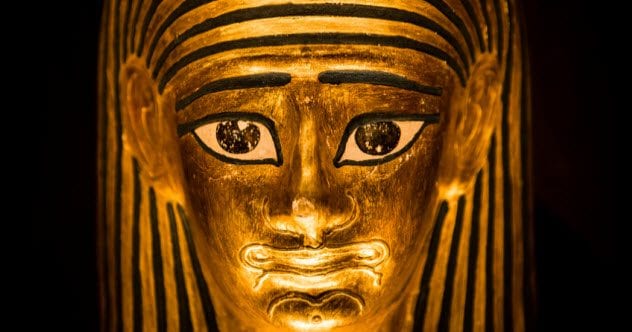
Ancient Egypt usually arrives in our imagination polished to a golden shine. There are magnificent pyramids, jewel-covered pharaohs, elegant hieroglyphs, dramatic eyeliner, and enough treasure to make a modern billionaire feel under-accessorized. What the postcards rarely include are the parasites, infected teeth, swarming flies, portable toilets, contaminated medicine, and bread with the texture of construction material.
Daily life in ancient Egypt was not uniformly filthy, of course. Egyptian civilization lasted for more than 3,000 years, and living conditions varied by period, region, occupation, and social class. The wealthy had better homes, richer diets, servants, cosmetics, and access to trained physicians. Farmers and laborers faced much harsher conditions. Ancient Egyptians also cared deeply about cleanliness, grooming, and personal appearance. Unfortunately, good intentions could not invent antibiotics, indoor plumbing, window screens, or dental floss several thousand years early.
With that historical reality check in place, prepare your stomach. Here are 10 truly disgusting facts about life in ancient Egypt.
1. The Nile Could Give You a Parasite That Made You Urinate Blood
The Nile River made Egyptian civilization possible. It watered crops, supported transportation, provided fish, and turned surrounding soil into fertile farmland. It also brought people into regular contact with freshwater parasites.
One particularly nasty disease was schistosomiasis, caused by parasitic blood flukes. The parasites develop in freshwater snails and can penetrate human skin when a person wades, bathes, fishes, or works in contaminated water. Once inside the body, they mature and lay eggs. Urinary schistosomiasis can cause abdominal pain, organ damage, and blood in the urinea symptom that must have made an ordinary trip to the river considerably less relaxing.
Researchers have identified evidence of schistosomiasis in ancient Egyptian remains thousands of years old. A modern meta-analysis of mummy studies estimated that a substantial percentage of tested individuals showed signs of infection, although prevalence differed among samples and testing methods. In other words, the river that fed the country could also quietly install worms in its residents. Nature has always enjoyed complicated customer-service policies.
2. Mosquitoes Carried More Than an Annoying Buzz
Mosquitoes were another hazard of life beside irrigation canals, marshes, and seasonal floodwaters. Ancient people did not know that mosquitoes transmitted malaria, but they certainly understood that the insects were irritating. Nets, oils, smoke, and other barriers could reduce bites, yet they could not eliminate the threat.
Scientific testing has detected genetic evidence associated with Plasmodium falciparum, the parasite responsible for severe malaria, in multiple Egyptian mummies. Tutankhamun was among the royal individuals whose remains tested positive in one major study. Researchers have debated precisely how malaria interacted with his other health problems, but the evidence demonstrates that even palace walls and royal status offered no magical exemption from mosquito-borne disease.
For ordinary farmers sleeping near wet fields, the risk was likely even more persistent. Imagine ending a punishing workday only to discover that the local mosquitoes had scheduled a banquet, and you were the buffet.
3. Head Lice Were Common Enough to Influence Fashion
Ancient Egyptian art is famous for elaborate wigs, carefully arranged braids, and smooth, closely shaved heads. These styles were attractive, practical in a hot climate, and sometimes associated with ritual purity. They also helped people wage war against lice.
Head lice and their eggs have been recovered from Egyptian mummified remains. A review of ancient parasite evidence found that lice were common enough to leave a noticeable biological record. Men and womenespecially among elite groups and the priesthoodcould cut their hair very short or shave it. Wigs made from human hair or other fibers provided fashionable coverage without giving lice the same easy access to a warm permanent apartment.
Shaving was not universal throughout every period or social class, and Egyptians wore wigs for many reasons beyond pest control. Still, the preserved combs, razors, wigs, insects, and eggs reveal an uncomfortable truth: some of history’s most glamorous hairstyles were partly designed around the ancient equivalent of an infestation notice.
4. Everyday Bread Could Grind Down Your Teeth
Bread was a staple of the ancient Egyptian diet. Unfortunately, it sometimes came with an unwanted mineral supplement.
Grain was processed with grinding stones, while flour and dough were prepared in an environment where windblown sand was almost impossible to avoid. Tiny stone fragments from the grinding equipment could also enter the mixture. The result was bread containing abrasive particles that gradually wore away tooth enamel.
Examinations of ancient Egyptian teeth frequently reveal extreme wear. As enamel disappeared, the sensitive inner portions of teeth became exposed. Cracks, infections, inflammation, and painful abscesses could follow. Without modern root canals or antibiotics, a dental infection might become chronic or life-threatening.
Egyptian physicians developed tooth-cleaning powders, mouth rinses, and treatments for dental pain, demonstrating that they took oral care seriously. Unfortunately, no toothpaste could fully defeat a diet that occasionally behaved like edible sandpaper. Breakfast may have been nutritious, but it also seemed determined to file down your molars.
5. Flies Were So Relentless That People Turned Them Into Symbols
Hot weather, livestock, food preparation, wet riverbanks, human waste, and open markets created excellent conditions for flies. Egyptian art frequently shows important people holding fly whisks, which were not merely decorative accessories. They were practical tools for preventing insects from landing on faces, food, wounds, and anything else the flies considered available real estate.
The irritation was so culturally familiar that flies appeared as amulets and jewelry. Their persistence could symbolize courage and tenacity; military fly pendants were reportedly awarded to recognize determined service. It is a remarkably positive rebranding campaign for an insect that spends much of its day moving between garbage, excrement, animals, and your lunch.
Bedbugs also have an ancient Egyptian record. Specimens recovered at Tell el-Amarna show that these nighttime blood-feeders were bothering humans in Egypt roughly 3,500 years ago. A wealthy household might own linen bedding and fine furniture, yet still wake up covered in bites from tiny roommates who had not contributed a single deben toward the rent.
6. A Luxury Toilet Was Still Basically a Seat Over a Pot
Some wealthy ancient Egyptian homes included bathrooms, washing spaces, and limestone or wooden toilet seats. Compared with having no private facility, this was sophisticated. Compared with a modern flushing toilet, it was a chair positioned above tomorrow’s unpleasant household chore.
At sites such as Amarna, archaeologists have identified toilet seats designed to sit above a removable bowl or container. Waste did not disappear through a municipal sewer network. Someone had to remove the receptacle, empty it, clean the area, and return it. Depending on the household, that person might be the user, a family member, or an extremely underappreciated servant.
Drainage channels and wastewater systems existed in certain temples, palaces, workshops, and elite residences, but they were not equivalent to universal modern sanitation. For much of the population, pots, pits, outdoor areas, and manually emptied containers remained part of daily life. The ancient Egyptian luxury-bathroom experience therefore came with a strict rule: never look beneath the throne.
7. Some Medicines Contained Human and Animal Excrement
Ancient Egyptian medicine deserves genuine respect. Physicians recorded symptoms, set broken bones, treated wounds, used honey for its practical healing properties, performed minor surgical procedures, and developed an extensive pharmacopoeia. Some workers at Deir el-Medina even received organized medical support and paid sick leave.
Then there was the dung.
Medical texts included remedies containing human waste or droppings from animals such as dogs, donkeys, gazelles, and flies. These ingredients could be mixed into ointments, swallowed in preparations, or applied to injured tissue. Healers may have believed that foul substances repelled harmful spirits or transferred useful properties to the patient. A few organic ingredients might accidentally have contained compounds with beneficial effects, but placing contaminated fecal material on a wound could also introduce dangerous bacteria.
This strange combination of careful observation, herbal knowledge, magic, and poop-based experimentation reminds us that scientific progress is rarely a straight road. Sometimes it is a winding desert path, and someone has left donkey dung in the middle of it.
8. Eye Makeup Could Include Lead Compounds
The famous dark eyeliner worn by ancient Egyptian men and women was not merely fashionable. Kohl reduced glare, helped discourage flies, carried religious meaning, and was associated with protection against eye disease.
Some formulas contained galena, a mineral composed largely of lead sulfide. Researchers have also identified manufactured lead-based compounds in ancient cosmetic preparations. Applying lead near the eyes sounds like a plan developed by a beauty influencer with a personal grudge, but the chemistry is more complicated than it first appears.
Laboratory research suggests that very low concentrations of certain lead salts used in Egyptian cosmetics could stimulate a cellular immune response that helped combat infection. That does not make lead harmless, and the long-term exposure levels of ancient users are difficult to reconstruct. It does show that the eyeliner was not simply foolish decoration. It may have served as an early medicinal technology developed in response to dust, insects, and frequent eye irritation.
Ancient cosmetics were therefore elegant, functional, religiously meaningful, chemically clever, and potentially toxic. Finally, a beauty routine with something for everyone.
9. Beetles and Other Pests Could Share Your Food
Ancient Egyptian households and institutions stored large quantities of grain, flour, dried food, textiles, oils, and other supplies. Unfortunately, storage rooms also offered free room and board to beetles, weevils, flies, rodents, and their larvae.
Archaeologists have recovered insect remains from Egyptian food offerings, storage locations, and harbor facilities. Identified pests include beetles associated with grain and dried products, as well as house flies. Insects could consume supplies, contaminate flour, damage packaging, and leave behind eggs, droppings, shed skins, and fragments of their bodies.
People undoubtedly sifted, cleaned, baked, and cooked their food, but complete pest control was impossible. If a small beetle entered the flour and survived long enough to become part of a loaf, there was no customer-service desk where you could demand a fresh one. You simply received extra protein with a side of historical resilience.
10. Mummification Was a Professional Encounter With Human Decay
Mummies look dry and dignified behind museum glass. Creating one was considerably messier.
In elaborate forms of mummification, embalmers washed the corpse, removed internal organs through an incision, and extracted brain tissue through the nostrils with hooked instruments. The body was packed and covered with natron salts to remove moisture. Oils, resins, waxes, plant products, linen, and filling materials were used to preserve the remains and restore a recognizable shape.
The process could take many weeks. Before dehydration and preservation were complete, workers handled bodily fluids, internal organs, fats, decaying tissue, and powerful odors in Egypt’s heat. Plant oils and fragrant resins helped preserve the corpse and mask unpleasant smells, but an embalming workshop was unlikely to resemble a peaceful aromatherapy spa.
Even the leftovers required ritual treatment. Materials associated with royal embalmingincluding natron, linen, pottery, food remains, and other refusecould be collected and buried near the tomb. For embalmers, death was not an abstract religious symbol. It was a full-time occupation involving anatomy, chemistry, ceremony, and an extraordinary tolerance for things most people would prefer not to find under their fingernails.
An Immersive Experience: Spending One Imaginary Day in Ancient Egypt
Imagine waking before sunrise in a modest mud-brick house near the Nile. The air is already warm. Your sleeping mat has offered limited support, and several itchy marks suggest that something else enjoyed it during the night. You reach for a comb, inspect it with reasonable suspicion, and decide that keeping your hair short was one of yesterday’s better decisions.
Breakfast is bread, fruit, and perhaps beer. The bread smells fresh, but every few bites produce a faint crunch. You tell yourself it is grain. Your teeth know it is not grain. One molar has been aching for weeks, and chewing on the other side is becoming a complicated engineering project. There is no emergency dentist, so you rinse your mouth and hope the pain remains merely terrible instead of becoming catastrophic.
Outside, flies immediately arrive to welcome you. They investigate your eyes, lips, food, and every damp surface with the confidence of officials conducting an inspection. You wave them away, but they return before your hand has completed the motion. Somewhere nearby, livestock, refuse, bread ovens, fish, and human waste combine into an aroma that no modern candle company will ever reproduce as “Morning Along the Nile.”
Your work takes you close to irrigation water. The river is life: crops depend on it, families drink from it, and boats carry people and goods across the country. You step into the shallows because the task requires it. You cannot see the microscopic parasites capable of entering your skin, and you have no concept of their life cycle. The water feels cool, which is pleasant enough to make the invisible danger seem particularly rude.
At midday, mosquitoes gather around any exposed skin. You apply oil and make smoke where practical, but neither defense is perfect. Fever is common enough that people recognize its rhythms without understanding the organism behind it. Illness might be explained through physical causes, divine forces, hostile magic, or some mixture of all three. A physician could offer useful herbs, honey, bandaging, and carefully documented treatment. The same medical tradition might also recommend an ingredient that recently exited an animal.
Later, you visit a wealthier home. It contains a washing area and an actual toilet seat, which seems wonderfully civilized until you notice the removable container underneath. Somewhere in this household is a servant whose job description has taken a sharp and tragic turn.
As evening falls, lamps illuminate painted walls and carefully arranged cosmetics. A person applies dark eye makeup containing minerals that may reduce glare and help fight infection. Beauty and medicine are not separate categories here. Neither are religion and science. Practical knowledge, experimentation, ritual, and magic overlap because people are trying to survive in a world whose microorganisms remain completely invisible.
On the way home, you pass a workshop associated with burial preparations. The smell of resin mixes with something heavier and more organic. Inside, specialists are transforming a corpse into a body meant to last for eternity. Organs are being treated, linen prepared, prayers recited, and salts packed around human remains. The work is unpleasant by modern standards, yet deeply respected because preserving the body protects the deceased’s future existence.
Finally, you return to your house, brush insects away from the sleeping area, and lie down. The day has included grit, parasites, questionable medicine, bodily waste, biting insects, and the smell of mummification. It has also included family, skilled labor, faith, humor, food, music, community, and hope. That mixture is the most important experience to remember. Ancient Egyptians were not dirty caricatures living in a horror show. They were intelligent people adapting creatively to environmental conditions and medical dangers they could observe but not fully explain.
Conclusion
The most disgusting facts about life in ancient Egypt reveal something more valuable than gross historical trivia. They show how geography, technology, disease, class, and belief shaped ordinary routines. Egyptians shaved to manage lice, developed cosmetics partly in response to eye irritation, recorded extensive medical treatments, constructed toilets where resources allowed, and created preservation techniques sophisticated enough to keep human tissue recognizable for millennia.
Their solutions were sometimes ingenious and sometimes alarmingly contaminated. That is precisely why ancient Egyptian daily life is so fascinating. Behind the gold masks were people dealing with toothaches, insects, sewage, fevers, spoiled food, and difficult jobsjust with fewer pharmacies and considerably more natron.
Note: Ancient Egypt covered many regions and more than three millennia of history. Practices differed substantially across periods and social classes, so these examples should not be treated as universal experiences shared by every Egyptian.