Coming home after a long day should be one of life’s least complicated activities. You find the door, enter the building, reach your apartment, and beg D’Arreion Toles, however, returning to his downtown St. Louis loft in October 2018 turned into an unwanted interrogation. A white neighbor stood in the entrance of the luxury apartment building and demanded that he prove he belonged there. She wanted to know where he lived, whom he was visiting, and whether he had a key fob.
Toles was not a visitor. He was not wandering through the lobby. He was a resident trying to enter his own home.
The encounter was recorded, posted online, and viewed millions of times. What began as one woman appointing herself the building’s unofficial border-control agency quickly became a national example of racial profiling, everyday discrimination, and the consequences of treating suspicion as authority.
What Happened at the St. Louis Luxury Apartment Building?
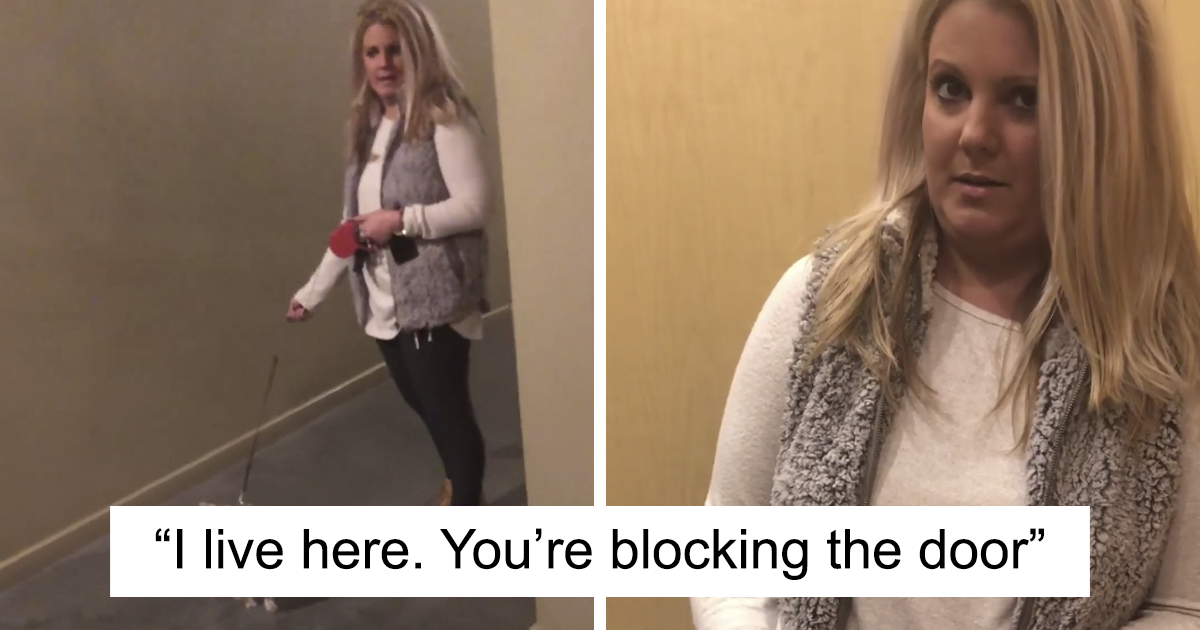
On the night of October 12, 2018, Toles returned from work to the Elder Shirt Lofts, a condominium building in downtown St. Louis. At the entrance, he encountered Hilary Brooke Mueller, who was also a resident of the building.
According to contemporaneous reports from ABC News, CBS News, the Associated Press, and St. Louis Public Radio, Mueller stood in the doorway and repeatedly questioned whether Toles lived there. She asked him to show his key fob and disclose his unit number.
Toles declined to provide personal information to a stranger who had no official security role. He repeatedly asked her to move, explaining that she was blocking the entrance to his home.
His position was simple: she was not the owner, the property manager, a police officer, or a security guard. Being a neighbor did not give her the authority to conduct a lobby-side residency exam.
Eventually, Toles moved past her and entered the building. That should have ended the encounter. Instead, Mueller followed him into the elevator, continued questioning him, and walked behind him to his fourth-floor apartment.
When Toles used his key to open his apartment door, the mystery should have been solved with all the subtlety of a flashing neon sign. Yet reports indicated that Mueller later called 911. St. Louis police responded, although no citation was issued and no formal report was written.
The Video That Changed the Entire Story
Without video, the confrontation might have become a familiar dispute involving two sharply different accounts. Mueller could have described herself as a cautious resident following building rules. Toles could have described being unfairly targeted. Outsiders might have shrugged and declared that the truth was probably “somewhere in the middle,” society’s favorite hiding place when it would rather not examine uncomfortable evidence.
But Toles recorded the interaction.
The footage allowed viewers to observe the persistence of the questioning, the physical obstruction at the door, and Mueller’s decision to follow him after he entered. It also showed Toles repeatedly explaining that he lived in the building and did not owe her his unit number.
The videos spread rapidly across Facebook and other platforms, attracting millions of views. Social media users gave Mueller several nicknames, including “Apartment Patty” and “Key Fob Kelly,” connecting the encounter to a series of viral incidents in which white people called police or attempted to exercise authority over Black people engaged in ordinary activities.
Those nicknames were designed for internet sharing, but the underlying issue was serious. Toles was being asked to prove that a Black man could legitimately belong in an upscale residential building.
Why Many Viewers Saw the Encounter as Racial Profiling
Mueller later argued that she had been following instructions from the condominium association not to admit unfamiliar people. She denied that racism motivated her actions and said she believed she had done nothing wrong.
Building security is a legitimate concern. Residents should not intentionally hold secure doors open for unknown visitors. However, sensible security procedures must be applied consistently and handled by people with actual authority.
The problem was not merely that Mueller initially wondered whether Toles lived there. The problem was how quickly private uncertainty became public control.
She did not simply allow the door to close and let the access system determine whether he could enter. She physically occupied the entrance, demanded his address, followed him through the building, watched him unlock his home, and reportedly contacted police afterward.
That behavior reflected a familiar racial stereotype: the assumption that a Black person in a wealthy, private, or predominantly white space is probably a visitor, worker, trespasser, or threat rather than a resident, customer, executive, or owner.
In other words, the issue was not curiosity. It was presumed authority combined with presumed non-belonging.
The Burden of Proving You Belong
For people who have never experienced racial profiling, showing a key may sound like a minor inconvenience. Why not simply prove residency and move along?
That question overlooks the unequal burden being imposed. Toles was expected to surrender personal information because another resident had decided he looked suspicious. Compliance would have reinforced the idea that she had the right to challenge him.
There is also a meaningful difference between using a key at a building’s official access point and presenting it for inspection to a self-appointed gatekeeper. One is a neutral security process. The other depends on an individual deciding who appears to belong.
A key fob should open a door. It should not come with an oral examination administered by someone walking her dog.
The Consequences Arrived Quickly
Once the footage spread, internet users identified Mueller and connected her to Tribeca-STL, a property-management company where she worked.
The company reviewed the incident and terminated her employment. In a public statement, Tribeca-STL emphasized that the confrontation did not occur at one of its properties and did not involve one of its tenants. Nevertheless, it said it wanted residents, guests, and visitors to feel safe, respected, and welcome.
The company also stated that it would not tolerate racism or racial profiling.
For Mueller, the lesson was immediate: conduct outside the office can still affect employment when it directly conflicts with an employee’s professional responsibilities. That connection was especially relevant because she worked in property management, an industry in which fair treatment, resident trust, and compliance with housing laws are fundamental.
A person responsible for managing residential property cannot easily separate her professional credibility from a viral video showing her attempting to control another resident’s access to his home.
Was Losing Her Job Fair?
Whenever a viral incident leads to termination, debate follows. Some people argue that employers should not punish workers for private conduct. Others believe companies must protect their residents, employees, and reputations when an individual’s behavior contradicts organizational values.
There are reasonable concerns about online mobs. Social media can misidentify people, remove important context, and deliver punishment faster than facts can be verified. Harassment, threats, and attempts to destroy someone’s life are not constructive forms of accountability.
This case, however, involved recorded conduct, a clearly identified participant, multiple news investigations, and an employer whose business centered on housing. Tribeca-STL said it conducted a review before acting.
Employment consequences are not the same as criminal punishment. A company may determine that an employee can no longer represent its standards, particularly when the conduct is closely connected to the employee’s professional role.
The better lesson is not that every bad moment should result in permanent exile. It is that actions have consequences, and employment does not provide immunity from behavior that damages trust.
Why Calling the Police Made the Situation More Dangerous
The decision to involve law enforcement added another level of concern. Toles had already entered his apartment with a key, demonstrating that he belonged there. Calling 911 after that point was not necessary to secure the building.
For Black Americans, unnecessary police calls are not always harmless requests for clarification. Encounters with law enforcement can escalate because officers arrive with incomplete information and may be told that a person is suspicious, aggressive, or trespassing.
The caller’s discomfort can therefore become someone else’s investigation.
During the same period, the United States saw numerous widely reported incidents involving police being called on Black people for sitting in a coffee shop, using a swimming pool, barbecuing in a park, selling bottled water, checking out of a rental home, or entering residential property.
These incidents became associated with the phrase “Living While Black,” which described how routine behavior could trigger suspicion when performed by a Black person.
Not every uncomfortable interaction becomes violent. Still, unnecessary police involvement introduces risks that the caller may not personally face. Responsible citizens should contact emergency services because of observable danger or unlawful conduct, not because a neighbor refuses to satisfy their curiosity.
Housing Discrimination Is Bigger Than One Viral Video
The Fair Housing Act prohibits discrimination in housing-related activities on the basis of race and other protected characteristics. Federal protections apply to renting, buying, financing, and other aspects of access to housing.
The St. Louis incident was not a traditional case in which a landlord refused to rent an apartment. However, it reflected a broader question at the heart of fair housing: who is treated as a legitimate resident, and who is repeatedly required to prove the right to occupy space?
Research reviewed by the U.S. Department of Housing and Urban Development has found persistent differences in how equally qualified white and minority home seekers are treated. Some forms of overt discrimination have declined, yet subtler practicesincluding steering, unequal information, and differences in available optionscontinue to appear in housing studies.
Pew Research Center surveys have also documented wide racial gaps in how Americans perceive discrimination. Black adults are substantially more likely than white adults to say that Black people receive unfair treatment in policing, employment, lending, stores, restaurants, and other institutions.
The encounter at Elder Shirt Lofts condensed those larger patterns into a few uncomfortable minutes. Toles had achieved the income, employment, and housing access commonly associated with success, yet his presence was still questioned.
Racism did not stop at the building’s polished entrance simply because the lobby had luxury finishes.
What Apartment Communities Can Learn
Create Clear, Neutral Access Procedures
Secure buildings should rely on functioning locks, access cards, intercoms, staffed desks, and written policies. Residents should not be encouraged to physically confront people they do not recognize.
A neutral system asks everyone for the same credential. A biased system begins when individuals decide who deserves extra scrutiny based on appearance.
Train Staff and Residents Properly
Fair-housing and implicit-bias training should include realistic situations involving entrances, pools, gyms, parking garages, shared lounges, and package rooms. Simply telling people “do not discriminate” is less useful than teaching them how to respond appropriately.
When there is no immediate danger, residents can step away and contact authorized building personnel. They should not block doors, follow neighbors, demand apartment numbers, or manufacture a criminal investigation.
Protect Privacy
Residents have valid reasons not to tell strangers exactly where they live. Unit numbers, schedules, household details, and access credentials are private information.
Ironically, demanding that a resident announce his unit number in a hallway may create more of a security problem than the behavior supposedly being prevented.
Respond Transparently to Complaints
Property managers should document incidents, preserve relevant video, interview the people involved, and communicate their findings. A vague promise to “look into the matter” is not enough when residents are questioning whether rules are applied fairly.
Accountability Should Leave Room for Learning
Toles’ response after the encounter stood out. Rather than encouraging harassment, he said he wished Mueller well and urged people to send positive energy instead of hatred.
That did not erase what happened, nor did it require him to minimize the experience. It demonstrated that accountability and cruelty are not the same thing.
People can condemn discriminatory conduct without sending threats, targeting relatives, publishing private addresses, or turning humiliation into entertainment. The purpose of accountability should be safer behavior and fairer institutions, not an endless competition to see who can be the loudest person on the internet.
The most useful lesson is not simply that Mueller lost her job. It is that ordinary people can cause extraordinary harm when they confuse personal suspicion with legitimate authority.
Related Experiences: When “Do You Belong Here?” Becomes a Pattern
The following scenarios are representative examples based on commonly reported experiences involving racial profiling in residential and public spaces. They are not presented as additional events involving Toles.
The Resident Questioned at the Pool
Imagine living in an apartment complex for more than a year, paying rent every month, and spending a summer afternoon beside the community pool. A security employee approaches and asks for proof that you live there.
You show your key, but that is not considered sufficient. A manager arrives and asks for your exact address. You hesitate because you do not know the security worker and do not want to announce your home address in front of strangers.
Instead of recognizing that privacy concern, the manager treats your hesitation as evidence of wrongdoing. Suddenly, you are the problemnot because you broke a rule, but because you questioned how the rule was enforced.
A similar confrontation involving Black resident Shayne Holland was reported at an Indianapolis apartment complex in 2018. The company later apologized and promised fair-housing and implicit-bias training. The incident illustrated how even a legitimate residency policy can become discriminatory when staff communicate poorly or demand more proof from some residents than others.
The New Homeowner Mistaken for a Worker
Now consider a Black homeowner standing outside a newly purchased house while waiting for furniture delivery. A neighbor approaches and asks whether he is the contractor, gardener, or delivery driver.
Any one of those questions might be an innocent mistake. But the experience changes when the neighbor refuses to accept the answer, asks to see identification, photographs the homeowner’s vehicle, or calls the homeowners association.
The message is not merely, “I do not recognize you.” It becomes, “I have already decided what role someone who looks like you is allowed to have here.”
The homeowner may laugh awkwardly to prevent escalation, even though the interaction is humiliating. Later, he may wonder whether walking through his own neighborhood will produce another inspection.
The Delivery That Turns Into an Interrogation
A Black resident enters a secured building while carrying groceries or packages. Another tenant assumes he slipped through the door without authorization and begins following him.
The resident uses the elevator, walks to his apartment, and unlocks it. Rather than apologizing, the suspicious neighbor says she was “only trying to keep everyone safe.”
Safety is important, but an apology matters because intent does not cancel impact. Refusing to acknowledge the mistake leaves the targeted resident with a clear impression: even proof may not be enough once suspicion has attached itself to his identity.
The Emotional Cost of Repeated Scrutiny
Each encounter may last only a few minutes, but repetition changes how people move through the world. A person who has been questioned in his lobby may begin carrying identification everywhere, avoiding shared amenities, changing clothes before running errands, or preparing to record interactions before they escalate.
That constant preparation is exhausting. Home is supposed to be the place where vigilance decreases. When residents must defend their presence at the front door, the promise of home has already been damaged.
Research from psychological organizations has linked everyday discrimination with stress and concerns about personal safety. The harm is not limited to one insult or one awkward conversation. It includes the accumulated pressure of anticipating the next challenge.
The Experience of a Bystander Who Chooses to Intervene
Not every witness has to become the star of the confrontation. A useful bystander can calmly ask whether anyone is in immediate danger, remind the questioning resident that building staff handle access disputes, or offer to contact management.
A bystander can also refuse to validate unsupported suspicion. A simple statement such as, “He said he lives here, and you are not security,” may interrupt the assumption that the loudest person automatically has authority.
The goal is not to create a second argument. It is to lower the temperature, protect the targeted person’s dignity, and direct legitimate concerns toward a neutral process.
Conclusion: The Real Lesson Was About Belonging
The viral St. Louis apartment confrontation was not memorable because it involved a complicated legal mystery. It was memorable because the facts were painfully simple: a man tried to enter his home, and a neighbor decided he needed her permission.
Mueller’s employment ended after her company reviewed the footage. Toles continued to emphasize positivity rather than retaliation. Millions of viewers were left to consider how quickly bias can transform an ordinary doorway into a checkpoint.
The lesson of a lifetime is not merely “Do not behave badly when a camera is recording.” Cameras are nearly everywhere, but morality should not depend on whether the red light is blinking.
The deeper lesson is that discomfort is not evidence, suspicion is not authority, and a person does not become a trespasser simply because someone cannot imagine him living in a luxury apartment.
Good neighbors do not demand that people audition for the right to go home. They respect boundaries, follow neutral security procedures, and recognize that belonging is not determined by skin color, clothing, occupation, or another resident’s imagination.
Editorial note: This article synthesizes contemporaneous reporting from ABC News, CBS News, the Associated Press, St. Louis Public Radio, The Washington Post, NPR, GQ, Essence, and other established U.S. publications, together with guidance and research from HUD, the Department of Justice, Pew Research Center, and the American Psychological Association.