There is a special kind of optimism that arrives with a fresh journal. The cover is spotless, the pages are crisp, and suddenly you are the sort of person who drinks enough water, remembers birthdays, stretches before bed, and has never once eaten cereal over the kitchen sink.
Reality, naturally, may have other plans. But that is exactly why a good wellness journal can be useful. It is not a magic notebook that transforms you into a fully hydrated forest sprite. It is a practical place to slow down, notice patterns, set gentler goals, and make room for the thoughts that otherwise bounce around your brain like socks in a dryer.
For this guide to the best wellness journals in the UK for 2025, we looked at the features that make a journal genuinely worth using: thoughtful prompts, flexible layouts, room for habits and moods, attractive design, portability, and enough breathing space that you do not feel as though you have been assigned homework by a very polite piece of stationery.
Whether you want to track sleep, write a gratitude practice, plan nourishing meals, process a tough week, or simply stop forgetting why you walked into a room, these are the wellness journals that stand out.
What Makes a Great Wellness Journal?
A wellness journal should feel supportive rather than bossy. The best ones do not demand that every day be productive, peaceful, photogenic, and packed with green smoothies. Instead, they help you observe your routines and emotions with a little more honesty.
The strongest guided journals usually include a mix of daily reflection, habit tracking, intention setting, gratitude prompts, mood check-ins, and open space for free writing. That combination matters because wellness is not one tidy category. It can include sleep, food, relationships, energy, stress, movement, creativity, and the small but significant achievement of replying to an email you have been avoiding since Tuesday.
Before choosing a journal, think about how you naturally write. Some people thrive with detailed prompts and trackers. Others see a page full of boxes and immediately feel as though they are being audited. A journal is only helpful when you want to open it, so choose one that suits your actual personality, not the version of you who owns color-coded storage baskets.
Best Wellness Journals UK 2025: Our Top Picks
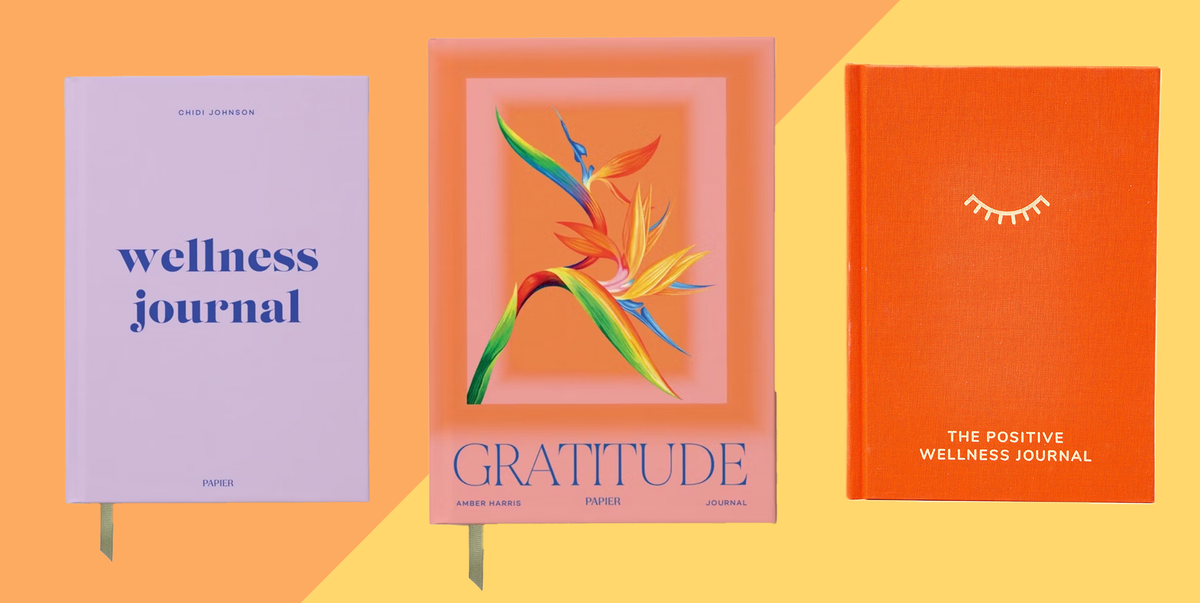
1. Best Overall: Papier Wellness Journal
The Papier Wellness Journal earns the top spot because it manages to be structured without becoming overwhelming. It is designed for people who want more than a blank notebook but less than a lifestyle boot camp disguised as a book.
The layout is especially useful for building awareness around everyday routines. It gives you places to note intentions, meals, hydration, sleep, movement, thoughts, feelings, gratitude, and self-care ideas. The result is a holistic snapshot of your day. Instead of treating wellness as one giant goal called “be better,” it breaks it into smaller, more manageable moments.
A major advantage is its 12-week format. Three months is long enough to notice patterns but short enough to feel approachable. You may realize that your mood dips after several late nights, that a short walk helps you reset, or that your “I am fine” days contain suspiciously large amounts of coffee.
The Papier Wellness Journal is ideal for anyone who likes beautiful stationery but also wants pages with a purpose. Its polished design makes it gift-worthy, while the guided structure makes it useful long after the excitement of a new notebook wears off.
Best for: Everyday wellbeing tracking, gentle habit building, and people who want a balanced guided journal.
2. Best for Positivity and Planning: Oliver Bonas The Positive Wellness Journal
The Positive Wellness Journal from Oliver Bonas is a strong option for people who want their journal to bridge reflection and everyday organization. It blends wellbeing prompts with practical planning tools, which is helpful because life does not pause simply because you are trying to become more mindful.
Its sections for intentions, daily reflections, mood check-ins, meal planning, shopping lists, and monthly diary spreads give it a distinctly useful feel. This is the journal for someone who wants to record how they feel but also needs to remember to buy oat milk and book the dentist.
The tone is upbeat without being aggressively cheerful. That distinction matters. A journal should not make you feel guilty for having a difficult day. The Positive Wellness Journal works best when used as a place to acknowledge both the good and the messy parts of life.
It is particularly well suited to people who enjoy having a clear routine. You can use it in the morning to set a focus for the day, then return in the evening for a quick reflection. Even five minutes of writing can turn a chaotic day into something that feels more understandable.
Best for: Journalers who want self-care prompts, positivity exercises, and practical weekly planning in one place.
3. Best for a More Design-Led Routine: Yop & Tom Wellness Journal
The Yop & Tom Wellness Journal is a good choice for people who need their stationery to feel cheerful enough to lure them away from their phone. Its bright, modern design makes it feel less like a duty and more like a small ritual you might actually look forward to.
Inside, the journal provides space for planning, reflection, and journaling, along with gentle prompts that encourage a more balanced mindset. It is a strong middle ground for someone who wants guidance but still wants plenty of room to write in their own voice.
This style of journal can be especially helpful if highly detailed trackers make you feel boxed in. Rather than asking you to quantify every minute of sleep or every glass of water, it invites you to pause and consider the broader picture. How are you doing? What needs more attention? What has been working lately?
That softer approach is valuable. Not every wellness practice needs a graph, a score, or a gold star. Sometimes the most productive thing you can write is, “Today was hard, but I got through it.”
Best for: People who want a stylish journal with gentle guidance and less pressure to track every detail.
4. Best for Gratitude Practice: Papier Gratitude Journal
If your main goal is to create a simple habit of noticing what is going well, the Papier Gratitude Journal is one of the best choices. It is built around morning and evening prompts, affirmations, reflective activities, and regular check-ins.
Gratitude journaling can sound slightly suspicious at first, particularly on a day when your train is delayed, your inbox is feral, and someone has reheated fish in the office microwave. But the point is not to pretend everything is wonderful. It is to notice details that might otherwise disappear: a kind message, a warm shower, a good laugh, a quiet cup of tea, or the fact that your favorite socks came out of the laundry without becoming one sock.
This journal is a strong fit for beginners because the prompts remove the blank-page problem. You do not need to invent a profound insight every day. You can simply respond to a question, write a few sentences, and move on with your life.
It is also useful for people who find traditional diary writing intimidating. The guided pages create a clear entry point while still leaving space for personal reflection.
Best for: Beginners, gratitude habits, and anyone who prefers short daily prompts over long free-writing sessions.
5. Best for Self-Reflection: Papier Guided Journal
For people who want prompts without a heavy emphasis on tracking, the Papier Guided Journal is a smart alternative. It is designed around reflective questions and affirmations, helping users explore wellness, gratitude, sleep, goals, or personal growth in a more conversational way.
This style works well when you want to understand yourself rather than optimize yourself. There is a difference. One approach says, “How can I improve every area of my life by next Thursday?” The other asks, “What has been taking up space in my mind lately?” The second question is usually more useful, and considerably less exhausting.
A guided reflection journal can be a good companion during transitions such as moving house, starting a new job, recovering from burnout, navigating a breakup, or simply trying to feel more grounded in a busy season.
Best for: Thoughtful writers, life transitions, and people who prefer meaningful prompts to detailed trackers.
6. Best for a Creative Wellness Routine: Oliver Bonas Come As You Are Guided Wellness Journal
The Come As You Are Guided Wellness Journal from Oliver Bonas is designed for people who enjoy a little personality in their self-care routine. With guided pages, progress tracking, and a sticker sheet, it offers a more playful route into reflection.
This kind of journal is not for everyone, and that is perfectly fine. Some people love stickers. Some people believe stickers are decorative ambushes. But for visual thinkers, creative planners, and anyone who is more likely to use a journal when it feels fun, this format can make a real difference.
The key strength is accessibility. It does not ask you to become a poet, therapist, nutritionist, and personal assistant before breakfast. Instead, it creates a friendly space to check in, track progress, and make self-care feel less serious in the intimidating sense.
Best for: Creative journalers, visual planners, and people who want a lighter, more playful wellness format.
7. Best Budget-Friendly Option: A Simple Blank Notebook
Not every wellness journal needs a built-in mood tracker, inspirational quote, or embossed cover worthy of a small museum gift shop. A plain notebook can be one of the best wellness tools available, especially if you want complete freedom.
With a blank journal, you can create your own system. One page might be a brain dump. The next could be a sleep log. Another may contain three things you are grateful for, a grocery list, a doodle of your dog, and an increasingly emotional review of a television show. All of that counts.
Blank notebooks are best for people who resist rigid formats or want to experiment before committing to a more guided journal. They are also useful if your needs change from week to week.
Best for: Free writers, bullet journal fans, and anyone who wants maximum flexibility at a lower cost.
How to Choose the Right Wellness Journal for You
The best wellness journal is not necessarily the prettiest, the most expensive, or the one with the highest number of trackers. It is the one that makes you want to return tomorrow.
Choose a guided wellness journal if you want prompts, accountability, and a simple routine. Choose a gratitude journal if you want to shift your attention toward positive moments and everyday appreciation. Choose a blank notebook if you want freedom to write, sketch, list, complain, plan, or process without any structure.
Consider the practical details too. A5 journals are easy to carry in a work bag or backpack. Larger formats offer more writing space but are less likely to leave the house. Hardback covers feel durable and giftable, while lighter notebooks are more convenient for travel.
Most importantly, avoid choosing a journal that makes you feel behind before you have written page one. A wellness routine should support your life, not create another performance review.
How to Use a Wellness Journal Without Turning It Into Another Chore
Start embarrassingly small. Write for three minutes. Answer one prompt. List one thing that went well, one thing that felt difficult, and one thing you need tomorrow. You do not need an hour, a scented candle collection, or a playlist called “Healing Era” to make journaling useful.
Try attaching the habit to something you already do. Keep your journal beside the kettle, on your bedside table, or next to the charger where your phone spends the night pretending it is not the reason you are tired.
You can also change the purpose of your journal depending on the day. On a good day, use it to celebrate. On a difficult day, use it to vent. On a boring day, use it to notice something small. A wellness journal should be a flexible tool, not a daily test you can fail.
Real-Life Experience: What Using a Wellness Journal Can Actually Feel Like
The first week with a wellness journal often feels oddly formal. You may sit down with excellent intentions, write something polished about “embracing balance,” then immediately wonder whether it is acceptable to mention that you spent 40 minutes watching videos of tiny kitchens. It is acceptable. In fact, that is the point. A journal becomes more useful when it sounds like you rather than a motivational poster with Wi-Fi.
With a Papier Wellness Journal, the experience is often practical from the start. You might begin by filling in sleep, water, meals, and mood without thinking much of it. Then, after a few days, the patterns become more interesting. Perhaps your energy improves on the days you take a walk at lunchtime. Perhaps you sleep poorly after late-night scrolling. Perhaps you are far more patient with everyone when you remember to eat an actual lunch instead of surviving on coffee and a biscuit that technically came from a meeting.
Using the Oliver Bonas Positive Wellness Journal can feel more like having a personal planner that occasionally asks whether you are okay. You may start the morning with an intention such as “take one thing at a time,” then return at night to record what worked and what did not. The meal planner and shopping list sections can make the experience feel grounded in ordinary life rather than separate from it. Wellness is not always a spa day. Sometimes it is buying vegetables before the fridge becomes a museum of sauces.
A gratitude-focused journal offers a different experience. At first, you may repeat yourself. Tea. Family. Sunshine. The fact that nobody scheduled a meeting at 8:00 a.m. But repetition is not failure. Over time, the practice can train your attention toward more specific details: the way a friend checked in, the comfort of a familiar song, the smell of rain on warm pavement, or the satisfaction of finishing something you had been putting off.
Creative wellness journals, including colorful guided formats with stickers or progress trackers, can make journaling easier for people who do not connect with long blocks of writing. A mood symbol, a quick checklist, or a few lines beside a prompt may be enough to create a meaningful record. The goal is not to produce beautiful pages for social media. The goal is to have an honest conversation with yourself.
After a month, the journal often becomes less about perfect habits and more about recognition. You may notice that difficult weeks follow certain patterns. You may see that rest helps more than you expected. You may realize you are doing better than you give yourself credit for. Or you may simply find relief in putting a loud thought somewhere other than your head.
That is the quiet strength of a good wellness journal. It does not fix everything. It does not remove stress, create extra hours in the day, or stop your neighbor from drilling into a wall at precisely 7:13 a.m. But it can give you a pause, a record, and a little more perspective. In a very noisy world, that is a worthwhile place to begin.
Final Thoughts
The best wellness journals in the UK for 2025 are the ones that make self-reflection feel realistic, useful, and enjoyable. Papier remains the strongest all-around choice for guided wellbeing tracking, while Oliver Bonas offers smart options for people who want positivity, planning, and personality in the same book.
Whether you choose a structured wellness diary, a gratitude journal, a creative guided notebook, or a plain set of pages with no instructions at all, the most valuable feature is consistency. A few honest lines written regularly can be more meaningful than a perfectly designed journal left untouched on a shelf.