Squirrels are fluffy, clever, and apparently born with advanced degrees in mechanical engineering. Give one a bird feeder, and it will inspect the roof, test the suspension cable, calculate the launch angle from your maple tree, and begin stealing sunflower seeds before you have returned to the kitchen.
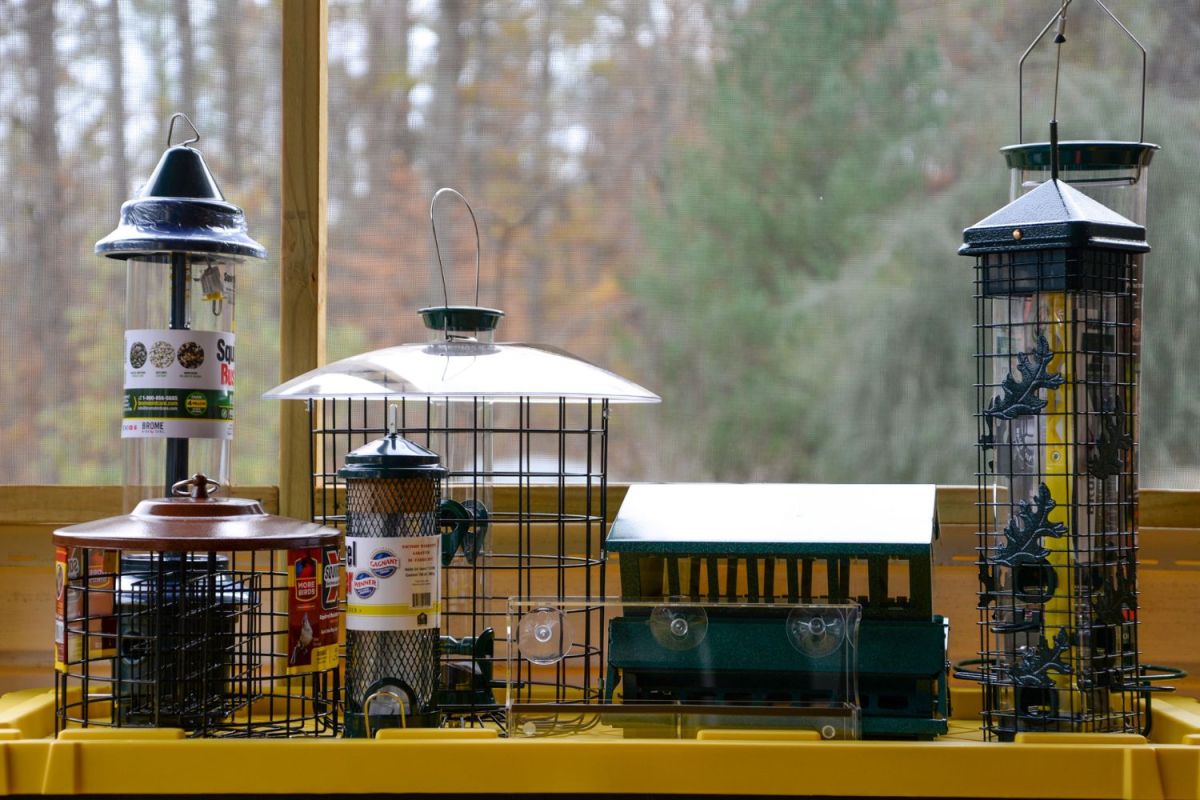
That is why the best squirrel-proof bird feeders rely on more than optimistic product labels. They use weight-sensitive mechanisms, protective cages, chew-resistant materials, locking lids, spinning perches, or a combination of defenses. Bob Vila’s product-testing team evaluated eight popular models over a one-week testing period, examining squirrel deterrence, bird attraction, durability, capacity, ease of filling, cleaning, and overall value. The Brome Squirrel Buster Plus earned the top position, but several alternatives performed better for smaller budgets, large-capacity feeding stations, suet, and especially persistent squirrels.
Sources:
Our Quick Verdict
Best overall: The Brome Squirrel Buster Plus offers the most balanced combination of reliable squirrel resistance, adjustable weight control, seed ventilation, sturdy construction, and support for several common songbird species.
Best budget choice: The Brome Squirrel Buster Mini delivers the same basic weight-activated defense in a smaller, less expensive feeder. Its limited capacity means more refilling, but that compact shape also gives squirrels fewer places to grab.
Best for serious squirrel drama: The Droll Yankees Yankee Flipper uses a motorized perch ring that rotates when a squirrel lands on it. The mechanism is effective, although the feeder is heavy and requires occasional charging.
Sources:
How Bob Vila Tested Squirrel-Proof Bird Feeders
Bob Vila’s team researched dozens of products before selecting eight popular feeders for hands-on evaluation. Each model was cleaned, filled, installed, and observed outdoors. Testers considered how easily birds could use the feeder, whether squirrels reached the food, how securely the feeder hung or mounted, and how convenient it was to refill and maintain.
The testing covered six areas and included feeders priced across a broad consumer range. Capacity, construction materials, appearance, bird attraction, cleaning convenience, and squirrel-deterrent performance all influenced the final rankings. This matters because a feeder that blocks squirrels but frightens every chickadee in the county is not much of a bird feeder.
Sources:
The Best Squirrel-Proof Bird Feeders
1. Best Overall: Brome Squirrel Buster Plus
The Brome Squirrel Buster Plus is the strongest all-around option for households that want effective protection without turning backyard bird feeding into a construction project. It arrives ready to hang and uses an adjustable spring mechanism connected to an exterior shroud. Birds can land and reach the feeding ports, but the additional weight of a squirrel lowers the shroud and blocks access to the seed.
The feeder holds roughly 5 pounds, or more than 3 quarts, of seed depending on how capacity is measured. Its six feeding ports and circular cardinal-friendly perch provide room for several birds. The weight setting can also be adjusted to discourage heavier visitors such as grackles or crows, although no setting will perfectly exclude every large bird.
Ventilation is another useful advantage. Openings allow warm, humid air to escape from the seed tube, reducing the likelihood of damp seed spoiling after muggy weather. Exposed components are made from metal, plastic, resin, and chew-resistant materials. The feeder can also be taken apart without tools, which makes routine cleaning less irritating than dismantling a mysterious patio umbrella.
Best for: Most suburban yards, mixed songbird populations, and owners who want dependable squirrel resistance with moderate-to-large capacity.
Possible drawback: It costs more than a basic tube feeder and needs sufficient open space around it. A squirrel hanging from a nearby branch can bypass the weight-sensitive perch by reaching directly toward the ports.
Sources:
2. Best Value: Brome Squirrel Buster Mini
The Squirrel Buster Mini is a smart entry-level choice for a small yard, balcony, or feeding station with moderate bird traffic. It uses the same basic tension-spring concept as the larger Plus model: excess weight moves the protective structure and closes the four feeding ports.
Its approximately 1-pound capacity is both a weakness and an advantage. Active feeders may need to be replenished several times per week, particularly when chickadees, titmice, finches, and cardinals discover the buffet. On the other hand, less seed sits outdoors long enough to become damp, stale, or contaminated. The compact body also offers little leverage for a squirrel attempting a midair pantry raid.
The Mini received top marks from Bob Vila for ease of use, effectiveness, durability, and value. It includes ventilation and chew-resistant components and slides easily onto an appropriate hook.
Best for: First-time birders, smaller outdoor spaces, lower seed consumption, and shoppers seeking affordable squirrel control.
Possible drawback: Frequent refilling may become tiresome in a busy yard.
Sources:
3. Best Large Feeder: Droll Yankees Yankee Flipper
The Yankee Flipper takes a more theatrical approach. Its motorized circular perch remains stable under a bird but spins when the weight of a squirrel activates it. The squirrel is safely redirected away from the feeder, usually with an expression suggesting it intends to contact management.
Comedy aside, the design performed well in testing. The feeder holds about 5 pounds of seed, has four ports, and uses a durable combination of powder-coated metal and UV-stabilized polycarbonate. An internal baffle helps keep seed moving toward the ports rather than forming a stubborn pile in the center.
The large capacity is convenient for households with heavy bird traffic, but a full feeder is quite heavy. Bob Vila’s tester found that it caused a shepherd’s hook to bend, so this model needs a strong support anchored securely in the ground. Its rechargeable motor also needs periodic charging, with frequency depending partly on how many squirrels apply for admission.
Best for: High-traffic feeding areas, infrequent refilling, and homeowners who want an active squirrel-deterrent mechanism.
Possible drawback: Greater weight, higher cost, and battery maintenance.
Sources:
4. Best Chew-Proof Design: Brome Squirrel Solution 200
Some squirrels accept defeat. Others begin chewing. The Brome Squirrel Solution 200 is designed for the second group. A metal cage surrounds the feeder, while resin components help resist gnawing, rust, water, and sun exposure. When a squirrel puts its weight on the cage, the exterior structure drops and covers the feeding ports.
The feeder holds about 2 quarts of seed and provides six ports. Small birds can perch normally or cling to the surrounding metal grid. In Bob Vila’s test yard, it regularly attracted nuthatches, finches, and chickadees while successfully blocking squirrels. Larger songbirds appeared less comfortable with the short perches, so cardinal enthusiasts may prefer the roomier Buster Plus.
Best for: Small clinging birds and yards where squirrels routinely chew plastic or wooden feeders.
Possible drawback: Small perches may be awkward for larger birds.
Sources:
5. Best Suet Feeder: More Birds Squirrel-X Double Suet Feeder
Suet attracts chickadees, nuthatches, wrens, and other insect-eating birds, but it can also bring in squirrels with the enthusiasm of diners spotting free dessert. The More Birds Squirrel-X encloses two suet cakes inside a powder-coated steel cage. Small birds can pass through the openings, while squirrels remain outside.
The secure top and protective cage proved effective in Bob Vila’s testing, and the feeder was easy to load and clean. However, its small openings also exclude larger suet-loving birds. Woodpeckers may be unable to reach the cakes comfortably, which is a significant compromise for anyone who buys suet specifically to attract them.
Best for: Small songbirds and households seeking a simple, nonmechanical suet feeder.
Possible drawback: Limited access for woodpeckers and other larger species.
Sources:
6. Best Post-Mounted Feeder: WoodLink Absolute
The WoodLink Absolute is less like a delicate hanging feeder and more like a backyard seed bunker. Its large reservoir can hold approximately 10 quarts to 12 pounds of seed, depending on the version. A weight-sensitive perch closes the seed tray when a squirrel lands, and the counterbalance can be adjusted to discourage larger birds.
Bob Vila’s tested model included a 5-foot pole and mounting hardware. The powder-coated steel construction, locking roof, double-sided feeding design, and clear seed windows make it practical for a busy feeding station. Testing showed that it stopped squirrels most of the time, although a few determined animals managed to grab small amounts of food.
Because this feeder is large and heavy, especially when filled, it is best mounted securely rather than suspended from an ordinary hook. Installation requires more effort, but the enormous capacity can substantially reduce refill frequency.
Best for: Large bird populations, dedicated feeding stations, and owners who prefer pole-mounted hopper feeders.
Possible drawback: Bulky construction and occasional minor squirrel access.
Sources:
How Squirrel-Proof Bird Feeders Work
Weight-Activated Shrouds
A spring supports the feeding area while lightweight birds perch. When a heavier squirrel lands, the outer shroud slides down and covers the seed openings. Adjustable models let owners change the activation threshold, although finding the ideal setting may require several days of observation.
Collapsible Perches
These feeders use a perch that folds or lowers under excess weight. Birds remain supported, while squirrels lose their position before they can settle in for brunch.
Protective Cages
A metal cage creates a physical barrier around the seed container. Small birds pass through or reach between the bars, but squirrels cannot fit. Cage dimensions influence which birds are admitted, so a design that favors chickadees may also exclude cardinals or woodpeckers.
Spinning Mechanisms
A motorized perch rotates when excess weight is detected. This approach can be extremely effective, but it adds batteries, charging, and moving parts to the maintenance routine.
Baffles
A pole-mounted baffle blocks squirrels climbing from below, while a hanging baffle can prevent access from above. Audubon cautions that calling any setup completely squirrel-proof invites embarrassment, but a properly positioned metal pole and baffle can come remarkably close.
Sources:
What to Consider Before Buying
Feeder Placement
Even an excellent feeder can fail when it hangs beside a fence, roof, railing, or tree limb. Squirrels do not need to land politely on the perch; they can hang from a nearby surface and reach around the protective mechanism. Place the feeder in open space, ideally around 10 feet from practical launch points, and use a baffle when mounting it on a pole.
Window safety matters as well. The U.S. Fish and Wildlife Service recommends keeping feeders within 3 feet of windows so birds cannot build enough speed for a severe collision. Treat nearby glass with exterior screens, closely spaced markers, or other bird-visible materials when collisions are a concern.
Sources:
Capacity
A small feeder keeps seed turnover high but requires more frequent refills. A large model reduces chores but becomes heavy and may allow seed to remain outdoors during extended wet weather. Match the capacity to the number of visiting birds rather than automatically buying the biggest seed silo available.
Materials
Powder-coated steel resists chewing and weather damage. UV-stabilized polycarbonate maintains visibility without discoloring as quickly in sunlight. Resin can protect vulnerable components from gnawing. Wood may look attractive, but it is generally a poor choice wherever squirrels have direct access.
Sources:
Bird Species
Tube feeders work well for finches, chickadees, titmice, and many cardinals. Mesh surfaces suit clinging birds such as nuthatches. Suet feeders attract insect eaters, including woodpeckers, provided the protective cage is large enough. Before purchasing, decide which birds you want to welcome and which larger species you might prefer to discourage.
Cleaning Access
The ideal feeder comes apart without a wrestling match. Removable tubes, trays, perches, and bases make it easier to remove old hulls, droppings, and damp seed. A feeder that cannot be cleaned thoroughly will eventually become a very expensive container for mold.
How to Make Any Squirrel-Proof Feeder More Effective
- Create open space. Keep the feeder away from branches, deck rails, roofs, fences, and patio furniture that can serve as launching platforms.
- Add a pole baffle. A properly installed metal baffle can stop squirrels climbing from the ground.
- Use a sturdy support. Large feeders can bend lightweight shepherd’s hooks and become easier for squirrels to manipulate.
- Adjust the spring gradually. Set the trigger to admit the birds you want without allowing squirrels or unwanted heavy birds.
- Control spilled seed. Sweep or rake beneath the feeder because food on the ground attracts squirrels, rats, and other opportunistic diners.
- Consider less appealing seed. Safflower and nyjer may attract desirable birds while generating less enthusiasm among some squirrels, although local preferences vary.
Sources:
Cleaning and Maintenance
Clean seed feeders approximately every two weeks, and more often during wet weather, periods of heavy use, or local disease concerns. Empty the feeder, take it apart, scrub away visible debris, and wash the components with hot soapy water or an appropriate diluted bleach solution. Cornell recommends no more than 1 part bleach to 9 parts water and notes that a 10-minute soak can be effective after debris has been removed.
Rinse every part thoroughly and let it dry completely before adding fresh seed. Damp seed encourages mold and clogs feeding ports. Clean the ground beneath the feeder as well, removing hulls, droppings, and uneaten food. When sick birds appear, follow local wildlife guidance and consider taking feeders down temporarily after cleaning them.
Sources:
Real-World Experience: What Living With a Squirrel-Proof Feeder Is Actually Like
The first lesson from a squirrel-resistant setup is that the feeder and its location function as one system. Imagine hanging a premium weight-activated feeder three feet from an oak branch. The squirrel may never touch the perch. Instead, it stretches from the branch, grips the feeder’s cable, and eats sideways like a furry action hero. Move that same feeder into open space and add a pole baffle, and the performance changes dramatically.
During the first few days, expect investigation. Squirrels may climb the pole, jump toward the feeder, test the lid, or hang from the top. A weight-sensitive shroud usually closes as soon as one settles on the body. After several unsuccessful attempts, visits often become shorter. The squirrel has not forgotten the feeder; it has simply added it to a mental spreadsheet titled “Projects Requiring Further Research.”
Birds may also need time to adapt. Chickadees and titmice are often among the earliest visitors because they investigate new objects quickly. Finches can arrive in groups once one bird discovers the ports. Cardinals may hesitate around narrow perches, which is why a circular ring or broader platform can make a noticeable difference. A feeder that technically accommodates a species may not match that bird’s preferred posture.
Weight adjustment can involve trial and error. Set the spring too lightly, and a cardinal may close the ports while landing. Set it too heavily, and a small squirrel may continue feeding. Make one small adjustment at a time, then observe the feeder for a full day. Constantly turning the control in both directions makes it difficult to determine what actually worked.
Capacity affects the experience more than shoppers often expect. A compact feeder is easier to lift, clean, and reposition, but active birds can empty it quickly. A large feeder saves refill trips, yet five or more pounds of seed creates significant strain on the hook and pole. After rain, the entire unit may become even heavier. A leaning shepherd’s hook is not charming yard decor; it is a squirrel access ramp under construction.
Spinning feeders provide the most visible deterrence. They can stop squirrels effectively and offer a few seconds of harmless backyard slapstick, but the novelty should not distract from practical considerations. The motor must remain charged, and the feeder needs clearance so the spinning animal does not strike a wall, railing, or hard object. The goal is to deny seed, not operate a woodland amusement park.
Maintenance becomes the long-term test. Feeders with tool-free disassembly are far more pleasant to own after several months. Seed dust settles inside tubes, hulls collect around ports, and rain finds tiny openings that appeared perfectly sealed in the store. A removable base and wide filling opening can save substantial time. The feeder you happily clean every two weeks is healthier for birds than a complicated fortress you postpone cleaning until spring.
Finally, complete squirrel elimination may be unrealistic. A successful setup is one that prevents substantial seed loss without harming wildlife, not one that guarantees a squirrel never touches the feeder. Combining a well-designed model with smart positioning, a baffle, a sturdy pole, controlled spillage, and regular maintenance usually produces better results than relying on a single gadget. The squirrel may still appear in the yard, but it will be searching the ground instead of emptying a week’s supply of black-oil sunflower seed before breakfast.
Sources:
Frequently Asked Questions
Are squirrel-proof bird feeders completely squirrel-proof?
No design can overcome every poor installation location or unusually determined animal. The most effective approach combines a proven feeder with open placement, a suitable baffle, and enough clearance from jumping points.
Can squirrels climb metal bird-feeder poles?
Yes. Metal alone does not stop a squirrel. Install a properly sized pole baffle and keep the entire feeding station away from nearby structures.
Do weight-activated feeders harm squirrels?
Properly designed models simply close the food ports, lower a perch, or rotate a landing ring. They are intended to deny access rather than trap or injure the animal.
What birdseed works best?
Black-oil sunflower seed attracts a broad range of songbirds but is also popular with squirrels. Safflower, nyjer, and white proso millet may be less appealing to squirrels in some areas. Select seed according to the birds you want to attract and monitor what is actually eaten.
Which feeder is best for cardinals?
The Brome Squirrel Buster Plus is a strong choice because its circular ring provides a more comfortable position for cardinals than tiny individual perches.
Which feeder requires the least refilling?
The WoodLink Absolute offers the largest capacity among Bob Vila’s highlighted models. The Yankee Flipper is another large-capacity option, holding about 5 pounds of seed.
Final Thoughts
The Brome Squirrel Buster Plus stands out as the best squirrel-proof bird feeder for most households. Its adjustable weight-activated system, generous capacity, ventilation, tool-free maintenance, and durable materials address the problems that matter most in everyday use. The smaller Buster Mini provides excellent value, while the Yankee Flipper is ideal for shoppers who want maximum capacity and an active deterrent.
Whichever model you choose, placement is just as important as construction. Give the feeder adequate clearance, install a baffle where appropriate, clean it regularly, and use a support strong enough for the filled weight. Do that, and your backyard birds can enjoy dinner while the squirrels are politely directed toward other career opportunities.