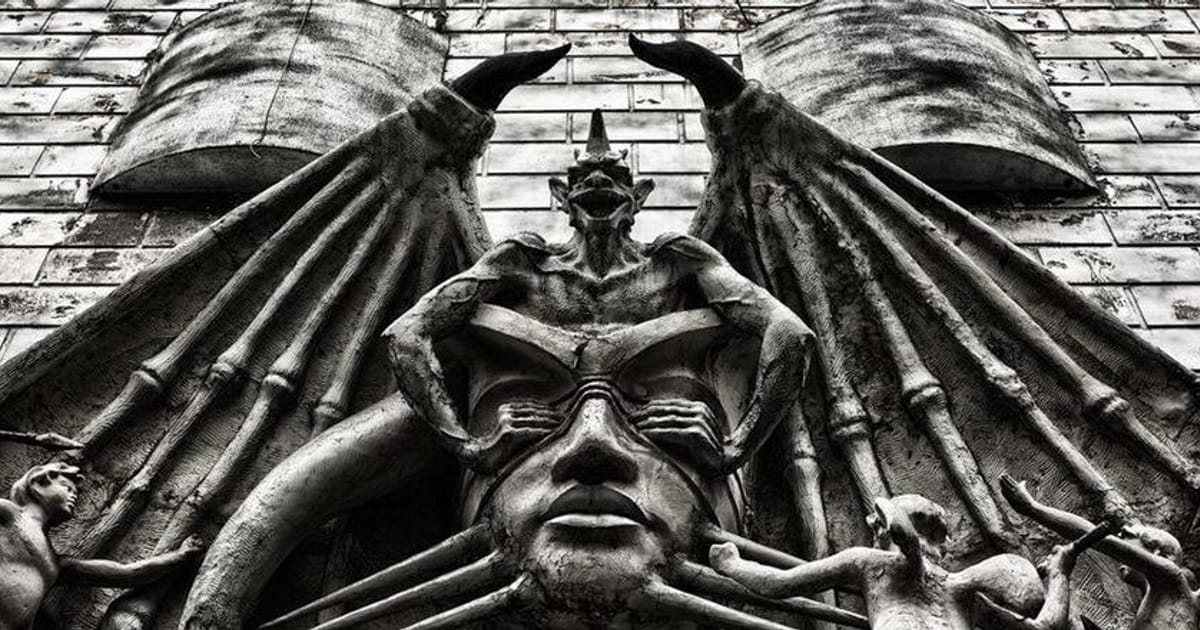
Human beings have always been wonderfully creative at explaining what goes bump in the night. Sometimes the bump is a loose window shutter. Sometimes it is a raccoon in the trash can, behaving like it pays rent. And sometimes, according to religious folklore, mythology, and demonology, it is a supernatural being with claws, wings, horns, serpent hair, or a personality best described as “aggressively unsuitable for dinner parties.”
This list of terrifying religious demons explores figures from ancient Mesopotamian religion, Jewish and Christian demonology, Islamic tradition, Hindu mythology, Buddhism, Zoroastrianism, Greek myth, and Japanese folklore. The word “demon” does not mean the same thing in every tradition. In some cultures, demons are fallen angels. In others, they are spirits, tempters, disease-bringers, chaotic beings, symbolic forces, or morally complicated supernatural creatures. In other words: not every demon arrives with a pitchfork and a dramatic thunderclap. Some are much more subtle, which is frankly rude.
Below are 15 terrifying religious demons you never want to run into, whether you are wandering through a desert, meditating under a tree, reading ancient texts at midnight, or simply trying to sleep without imagining a lion-headed nightmare at the foot of the bed.
What Makes Religious Demons So Terrifying?
Religious demons are frightening because they usually represent more than physical danger. They embody hunger, temptation, chaos, illness, death, pride, rage, greed, spiritual failure, and the fear that something unseen may be working against human order. A monster can chase you. A demon, in many traditions, can accuse you, tempt you, confuse you, corrupt your household, or turn your own weakness into a trap. That is horror with paperwork.
Many of these beings also appear in protective rituals, sacred stories, cautionary tales, and moral lessons. They were not invented merely to scare people around the ancient campfire. They helped communities explain suffering, teach values, warn against dangerous behavior, and create rituals for protection. Still, if any of them knocks on your door, do not open it. Not even if it says it is from “spiritual customer service.”
15 Terrifying Religious Demons from Around the World
1. Pazuzu: The Wind Demon with a Complicated Resume
Pazuzu, from ancient Mesopotamian religion, is one of the most visually unforgettable demons ever imagined. Often described as the king of evil wind demons, Pazuzu appears with a terrifying hybrid body: wings, talons, a snarling face, bulging eyes, and a scorpion-like tail. If nightmare designers had a professional guild, Pazuzu would be chairing the annual conference.
Yet Pazuzu is not a simple villain. In Mesopotamian belief, he could bring destructive winds and disease, but he was also invoked as a protector against even worse forces, especially the demoness Lamashtu. Amulets bearing his image were used for protection. That gives Pazuzu a strange “monster against monsters” status. You still would not want to meet him in a hallway, but in ancient Mesopotamia, he might have been the terrifying bodyguard you reluctantly hired.
2. Lamashtu: The Demoness Ancient Parents Feared Most
Lamashtu is one of the most terrifying female demons in Mesopotamian religion. She was associated with danger to pregnant women, infants, and households. Ancient depictions often show her as a horrifying hybrid creature, sometimes with a lion-like head, talons, and other animal features. In a world where childbirth and infant survival were frighteningly uncertain, Lamashtu personified one of the deepest human fears: harm coming to the most vulnerable.
What makes Lamashtu especially chilling is that she does not simply haunt battlefields or ruined temples. Her terror is domestic. She belongs to the bedroom, the nursery, the doorway, the window, the fragile spaces people most want to keep safe. Ancient protective amulets and rituals were used to drive her away, often with the help of Pazuzu. When your protective charm is another demon, you know the situation has become spiritually dramatic.
3. Lilith: The Night Spirit of Restless Legends
Lilith is one of the most famous figures in Jewish demonological tradition, though her identity has changed across texts, folklore, and modern reinterpretation. In post-biblical traditions, she appears as a night demon, sometimes associated with danger, seduction, and harm to infants. Over time, Lilith became a symbol layered with fear, rebellion, sexuality, independence, and mystery.
Part of Lilith’s power is that she refuses to stay neatly categorized. Is she a demon, a night spirit, a cautionary figure, or a symbol of feminine refusal? Depending on the source and era, the answer shifts. That ambiguity makes her more fascinatingand more unsettling. Lilith is not just a monster under the bed. She is the shadow in the story that keeps changing shape every time someone retells it.
4. Asmodeus: The Demon of Desire and Domestic Disaster
Asmodeus appears in Jewish and Christian demonological traditions and is especially known from the Book of Tobit, where he disrupts marriage and brings death to Sarah’s husbands. Later traditions often connect him with lust, wrath, and demonic kingship. In some stories, he is clever, dangerous, and oddly comic; in others, he is a force of ruin.
Asmodeus is terrifying because his battlefield is not always a haunted graveyard. It is desire, jealousy, intimacy, and obsession. He turns private longing into chaos. Unlike a roaring beast, Asmodeus does not need to smash the door. He waits for human weakness to leave it unlocked. That makes him one of the more psychologically creepy demons on this list.
5. Beelzebub: The Prince of Demons with a Fly Problem
Beelzebub is known in biblical and Christian tradition as a prince of demons. The name is connected to Baal-zebub, associated in the Hebrew Bible with the Philistine city of Ekron. Later Christian demonology elevated Beelzebub into a major demonic figure, often linked with corruption, decay, gluttony, and the grotesque image of flies.
Flies are not just annoying picnic criminals. Symbolically, they gather around rot, waste, and death. That is why Beelzebub’s “Lord of the Flies” association is so effective. He represents spiritual decay, the slow buzzing of corruption, and the way moral rot attracts more rot. If evil had a soundtrack, Beelzebub’s would be a thousand insects in a locked room.
6. Azazel: The Wilderness Demon of the Scapegoat
Azazel appears in Jewish tradition in connection with the ancient Yom Kippur scapegoat ritual. In Leviticus, one goat is designated for the Lord and another for Azazel, sent into the wilderness bearing the sins of the people. Later interpretations often understand Azazel as a demon or evil spirit associated with the desert and impurity.
Azazel’s terror is symbolic and spatial. He belongs to the wildernessthe place beyond the camp, beyond social order, beyond safety. The scapegoat carries guilt away, but it carries that guilt toward Azazel. This makes him less like a jump-scare monster and more like the spiritual gravity of exile, shame, and everything a community desperately wants removed from itself.
7. Samael: Accuser, Destroyer, and Angel of Death
Samael is a major figure in Jewish tradition, often described as an accuser, seducer, destroyer, prince of demons, and angel of death. He is sometimes connected with Satan-like roles, though the traditions around him are complex and not identical to later Christian ideas of the Devil.
Samael is terrifying because he stands close to judgment. He is not merely chaotic; he is legalistic, accusatory, and destructive. That is a very different kind of fear. A monster might attack your body, but an accuser attacks your standing, your guilt, your defense. Samael belongs to the horror of being exposed, condemned, and spiritually outmatched.
8. Mastema: The Spirit of Hostility
Mastema appears in Second Temple Jewish literature, especially the Book of Jubilees, where he is associated with hostility and the leadership of evil spirits. He functions as a tempter and tester, sometimes taking roles that resemble later ideas of Satan. His name itself is connected with enmity or persecution.
What makes Mastema frightening is his bureaucratic style of evil. He petitions, receives permission, organizes spirits, and turns testing into torment. He is not just a random demon hiding behind a tree. He is the manager of spiritual hostility, the middle executive of cosmic trouble. Somehow, that is worse. At least a monster is honest about wanting to eat you.
9. Iblis: The Refuser Who Became the Tempter
In Islamic tradition, Iblis is the being who refuses God’s command to bow before Adam. Often associated with al-Shaytan when acting as tempter, Iblis becomes a central figure of pride, rebellion, and misguidance. His terror lies not in fangs or claws, but in arrogance and persuasion.
Iblis is a warning about the spiritual danger of pride dressed up as principle. He does not simply disobey; he argues. He compares himself to Adam and refuses humility. That makes him uncomfortably human. The scariest thing about Iblis is not that he is strange, but that his logic can sound familiar whenever ego begins writing theology on a napkin.
10. The Jinn: Unseen Beings with Dangerous Freedom
Jinn in Islamic and pre-Islamic Arabian belief are not all evil. They are unseen beings with free will, capable of good or evil, belief or unbelief. Some traditions classify rebellious or wicked jinn as shayatin. This makes jinn more complicated than ordinary “demons” in the Western sense.
The frightening part is their invisibility and independence. Jinn are imagined as living alongside humans, occupying spaces we cannot easily perceive. They are not automatically monsters, but the dangerous ones can deceive, disturb, or harm. A purely evil demon is scary. A hidden, morally variable being who might be helpful, hostile, or offended by your bad manners is a whole different social problem.
11. Mara: The Demon Who Attacked Enlightenment
In Buddhism, Mara is the great tempter who tries to prevent Siddhartha Gautama from attaining enlightenment. Mara represents death, desire, distraction, fear, and the forces that keep beings trapped in suffering and rebirth. His famous confrontation with the Buddha under the Bodhi tree is one of religion’s great spiritual showdowns.
Mara is terrifying because he does not need to look monstrous. He can appear as temptation, doubt, comfort, fear, or ego. He is the voice that says, “You can meditate later. You deserve a distraction. Surely enlightenment can wait until after snacks.” Mara’s horror is subtle: he attacks awakening itself.
12. Ravana: The Ten-Headed Rakshasa King
Ravana, the great antagonist of the Hindu epic Ramayana, is a rakshasa king of immense power, intelligence, and ambition. He is famously depicted with ten heads and is associated with Lanka, extraordinary learning, devotion to Shiva, and serious violations of dharma, including the abduction of Sita.
Ravana is not terrifying because he is stupidly evil. He is terrifying because he is brilliant and undisciplined. His intelligence, devotion, power, and pride exist together in one dangerous package. He shows how greatness can become monstrous when desire overrides moral order. Ten heads are impressive, yesbut apparently not enough to guarantee good judgment.
13. Oni: The Giant Demons of Japanese Folklore
Oni are demonic beings in Japanese folklore, often portrayed as giant, horned, fearsome creatures with great strength. They may appear as punishers, bringers of disaster, or inhabitants of hellish realms. In some Buddhist-influenced stories, oni can even be converted, which suggests that not all terror is beyond transformation.
Visually, oni are hard to beat: horns, fangs, wild hair, clubs, and the general vibe of someone who just found out you scratched their car. They represent uncontrolled violence, punishment, and disaster. Yet their potential for conversion gives them a moral twist. Even the monster with the iron club may not be spiritually finished.
14. Aeshma: The Zoroastrian Demon of Wrath
Aeshma, from Zoroastrian tradition, personifies wrath, fury, and violent impulse. In religious imagination, this kind of demon is especially frightening because it is not only “out there.” It lives in the flash of anger before cruelty, the thrill of conflict, and the intoxication of rage.
Aeshma shows that some demons are best understood as forces that distort human behavior. Wrath can make a person feel powerful while actually making them easier to manipulate. That is Aeshma’s horror: he does not need to possess a castle. He only needs to light one match inside the human heart and let pride bring the gasoline.
15. Lamia: The Child-Devouring Daemon of Greek Myth
Lamia comes from Greek mythology and later folklore as a terrifying female daemon associated with devouring children and seducing young men. Ancient sources describe her as a tragic and monstrous figure, often connected to grief, jealousy, and transformation into a nightmarish being.
Lamia’s fear comes from the collision of beauty, sorrow, and predation. She is not merely ugly horror. She is grief turned outward, pain transformed into appetite. Greek mothers reportedly used her name as a warning to children, which proves that ancient parenting sometimes skipped the sticker chart and went directly to mythological terror.
Why These Demons Still Fascinate Us
Religious demons remain fascinating because they are not just old monsters. They are containers for human fear. Lamashtu embodies fear for children. Mara embodies distraction from liberation. Iblis embodies pride. Aeshma embodies rage. Mammon-like figures embody greed. Ravana embodies the danger of power without restraint. Beelzebub embodies corruption. These beings survive because the problems they represent survive.
Modern horror movies, fantasy novels, games, and internet folklore borrow heavily from ancient demonology because these figures already come loaded with atmosphere. They carry centuries of dread. A new monster may need an origin story. Pazuzu walks in with wings, talons, a scorpion tail, and three thousand years of reputation. That is efficient branding.
Experience-Based Reflections: What These Demon Stories Feel Like Today
Reading about terrifying religious demons is not the same as “believing” every story literally, and it does not require treating sacred traditions like a haunted-house attraction. The best experience comes from approaching these figures with curiosity, respect, and a flashlight for your imagination. Demon stories work because they turn invisible fears into something the mind can see. Anxiety becomes Mara. Rage becomes Aeshma. Corruption becomes Beelzebub. Parental fear becomes Lamashtu. Suddenly the abstract has claws, and claws are easier to talk about than dread.
Anyone who has walked through a museum gallery of ancient amulets knows the feeling. A small bronze head or carved stone object sits behind glass, quiet and harmless under perfect lighting. Then the label explains that it was meant to protect a household from a demon, and the room changes. The object is no longer just art. It becomes evidence of someone’s fear, hope, and nightly prayer. A parent once wanted a child to survive. A family once worried about sickness entering through the door. A traveler once feared the wilderness. The demon becomes less like fiction and more like a historical footprint of human vulnerability.
These stories also make horror more personal. A vampire may be frightening because it drinks blood, but Mara is frightening because he sounds like procrastination. Iblis is unsettling because pride can feel reasonable. Aeshma is disturbing because anger can feel righteous. Asmodeus is uncomfortable because desire can become destructive when it refuses wisdom. The most terrifying religious demons do not always roar. Sometimes they whisper in a voice suspiciously similar to your own.
That is why demonology still has cultural power. It gives shape to inner battles without reducing them to lectures. “Control your anger” is good advice, but “beware the demon of wrath” has better lighting, better music, and a much stronger chance of being remembered. Stories make morality dramatic. They turn ethics into an adventure where every choice matters, every temptation has a face, and every weakness might open a door.
There is also a strange comfort in these tales. If a culture names a demon, it also often creates a defense: prayer, ritual, wisdom, humility, discipline, community, courage, or laughter. The monster is terrible, but it is not always unbeatable. The Buddha faces Mara and does not move. Protective amulets confront Lamashtu. Sacred order challenges Ravana. Humility answers Iblis. In many traditions, the demon’s power is real, but not final.
So the next time a storm rattles the windows, your temper rises too fast, or your phone tempts you away from doing something meaningful, you do not have to imagine a winged nightmare in the corner. But you might appreciate why ancient people did. Demons gave fear a name. And once fear has a name, humanity can begin telling stories about how to survive it.
Conclusion
The world’s most terrifying religious demons are more than spooky decorations for late-night storytelling. They are spiritual symbols, cultural warnings, mythological villains, and psychological mirrors. Pazuzu and Lamashtu reveal ancient fears of disease and childbirth. Lilith, Samael, Azazel, Mastema, Asmodeus, and Beelzebub show how Jewish and Christian demonology wrestled with temptation, guilt, corruption, death, and exile. Iblis and the jinn demonstrate the power of pride, free will, and unseen moral danger. Mara, Ravana, Oni, Aeshma, and Lamia remind us that demons can represent distraction, ego, violence, wrath, grief, and chaos.
In the end, these terrifying religious demons endure because they make invisible struggles visible. They are frightening, yes, but they also teach. They warn us not to let pride become theology, anger become identity, desire become destruction, or fear become our master. Also, they strongly suggest that if an ancient winged creature with talons offers you a deal in a dark alley, you should politely decline and walk briskly toward better lighting.