Imagine holding a small, dark stone that is older than Earth, older than oceans, older than mountains, and definitely older than your neighbor’s mysterious fruitcake recipe. Meteorites are not just space souvenirs; they are time capsules from the birth of the Solar System. Some contain minerals that formed more than 4.56 billion years ago, when the Sun was still a young star surrounded by a swirling disk of gas, dust, metal, and cosmic chaos.
The phrase “oldest meteorites ever discovered” can mean a few different things. Do we mean the oldest meteorite as a whole rock? The oldest minerals inside a meteorite? The oldest igneous meteorite, meaning a rock that once melted and cooled like lava? Or the oldest material ever found on Earth, including grains that formed before the Sun existed? The answer is: yes, all of the above deserve a seat at the cosmic dinner table.
This guide breaks down the most ancient meteorites and meteorite materials known to science, including Murchison, Allende, Northwest Africa 11119, Erg Chech 002, NWA 2364, and several other record-holding space rocks. Grab your magnifying glass. We are going back to the beginningno time machine required.
What Makes a Meteorite “Old”?
A meteorite is a piece of rock or metal from space that survives its fiery fall through Earth’s atmosphere and lands on the ground. Most meteorites come from asteroids, though a small number come from the Moon or Mars. Scientists study them because many have changed very little since the earliest days of the Solar System.
To determine age, researchers use radiometric dating. This method measures radioactive isotopes and their decay products, like uranium-lead, aluminum-magnesium, manganese-chromium, and other isotope systems. It is not guesswork; it is atomic bookkeeping. If regular bookkeeping gave you the birth certificate of the Solar System, accountants would get invited to a lot more science parties.
The oldest Solar System solids are usually calcium-aluminum-rich inclusions, often called CAIs. These pale, mineral-rich specks are found inside primitive meteorites. CAIs are considered the first solid materials to condense from the hot solar nebula, and their ages help define the age of the Solar System itself: about 4.568 billion years.
The Murchison Meteorite: Home to the Oldest Material Found on Earth
If we are talking about the oldest material ever found on Earth, the Murchison meteorite is the superstar. This carbonaceous chondrite fell near Murchison, Victoria, Australia, in 1969. It became famous not only because it is ancient, but also because it contains organic compounds, amino acids, water-altered minerals, and tiny presolar grains.
Why Murchison Is So Important
Presolar grains are microscopic particles that formed around stars before the Sun existed. They were later swept into the cloud of material that became our Solar System. In Murchison, scientists found silicon carbide grains that range from about 4.6 billion to roughly 7 billion years old. That means some of these grains were already old when our Sun switched on the lights.
Calling Murchison “old” is almost an understatement. The meteorite itself formed early in Solar System history, but the stardust locked inside it predates the Solar System. It is like finding a family photo album in your attic and discovering one picture was taken before your house, city, and planet existed.
Allende: The Famous Meteorite Packed With Solar System Firsts
The Allende meteorite fell over Chihuahua, Mexico, in 1969, the same year as Murchison. Apparently 1969 was not content with the Moon landing; it also delivered two of the most important meteorites in scientific history. Allende is a carbonaceous chondrite, and it contains abundant CAIssome of the oldest known solids formed in the Solar System.
Allende’s Ancient CAIs
The CAIs in Allende are not just pretty pale bits in a dark matrix. They are records of high-temperature chemistry near the young Sun. These inclusions formed when the solar nebula was hot enough for refractory minerals rich in calcium and aluminum to condense. Later, those grains traveled through the protoplanetary disk and became part of the parent body that eventually broke apart and sent Allende toward Earth.
Allende helped scientists build the timeline of the early Solar System. When researchers date CAIs, they are not merely asking, “How old is this rock?” They are asking, “When did solid stuff first start forming around the infant Sun?” That is a much bigger questionand Allende has been answering it for decades.
NWA 2364: A Tiny Meteorite With a Big Solar System Age
Northwest Africa 2364, often shortened to NWA 2364, is not as famous as Allende or Murchison, but it plays a major role in Solar System chronology. Researchers studying a pristine inclusion in this meteorite measured an age of about 4.5682 billion years, helping refine the estimated birth date of the Solar System.
This matters because the first few million years of the Solar System were extremely busy. Dust became pebbles. Pebbles became planetesimals. Some planetesimals melted, separated into metallic cores and rocky mantles, and smashed into each other like bumper cars designed by a chaotic astrophysicist. A difference of one or two million years may sound tiny compared with 4.5 billion years, but in planet formation, it is a full season of cosmic drama.
Erg Chech 002: The Oldest Known Piece of Igneous Crust
Erg Chech 002, also called EC 002, is one of the most exciting meteorites ever discovered. Found in the Sahara Desert in Algeria in 2020, it is an ungrouped achondrite with an andesitic composition. In plain English, it is a piece of ancient volcanic crust from a vanished protoplanet.
Why EC 002 Is a Record Holder
EC 002 has been dated to about 4.565 billion years old. That makes it one of the oldest known igneous rocks, and specifically one of the oldest known pieces of differentiated crust from the early Solar System. Unlike primitive chondrites, which preserve unmelted early material, achondrites like EC 002 came from parent bodies that got hot enough to melt, separate, and form crust-like layers.
The really wild part is that EC 002 may come from a type of early planetary body that no longer exists in recognizable form. Scientists have looked for asteroid matches and found that EC 002-like material is extremely rare. That suggests many early crustal bodies were destroyed, swallowed into larger planets, or pulverized during the violent construction phase of the Solar System.
In other words, EC 002 is not just old. It is a postcard from a lost world.
Northwest Africa 11119: One of the Oldest Igneous Meteorites
Northwest Africa 11119, or NWA 11119, was found in Mauritania in 2016. It quickly caught scientists’ attention because it is silica-rich and very ancient. Research dated it to about 4.5648 billion years old, placing it among the oldest igneous meteorites ever recorded.
What Makes NWA 11119 Special?
Most meteorites are not silica-rich in the way many continental rocks on Earth are. NWA 11119 showed that silica-rich volcanism happened very early in Solar System history, just a few million years after the first solids formed. That is a big clue that early planetesimals were not boring gray lumps. Some were geologically active, melted inside, and produced unusual crustal rocks.
NWA 11119 is a reminder that planet formation was fast. The ingredients of rocky planets did not sit quietly for hundreds of millions of years waiting for someone to press “start.” Heating from short-lived radioactive isotopes, especially aluminum-26, helped small bodies melt early. Some of those bodies differentiated, formed crusts, and then got shattered before they could grow into full planets.
Angrites: Ancient Igneous Clues From Early Planetary Bodies
Angrites are a rare class of basaltic achondrite meteorites. They are among the oldest known igneous rocks, with ages around 4.56 billion years. These meteorites are especially valuable because they record early melting and crystallization on small planetary bodies.
Because angrites cooled and crystallized early, they act as anchor points for meteorite chronology. Scientists use them to compare different isotope dating systems and build a more precise timeline for early Solar System events. They are not household names, but in cosmochemistry circles, angrites are VIPsvery important pebbles.
Iron Meteorites: Ancient Cores of Broken Planetesimals
Iron meteorites may not always contain the oldest preserved primitive material, but they reveal another early chapter: core formation. These meteorites are thought to come from the metallic cores of differentiated parent bodies. For a body to produce an iron core, it had to accrete, heat up, melt internally, and separate metal from silicate rock.
That process happened very early, within the first few million years after CAIs formed. Ancient iron meteorites tell scientists that some planetesimals differentiated rapidly. Their parent bodies were later broken apart by collisions, sending fragments of once-hidden cores across space. When one lands on Earth, it is not just a lump of iron; it is a piece of a destroyed mini-planet’s heart. Dramatic? Yes. Accurate? Also yes.
NWA 7034 “Black Beauty”: One of the Oldest Martian Meteorites
Most meteorites come from asteroids, but NWA 7034, nicknamed “Black Beauty,” comes from Mars. It was found in the Sahara and is famous for its dark color, complex breccia texture, and unusually high water content compared with many other Martian meteorites.
Black Beauty contains ancient Martian crustal material, with components dated to roughly 4.4 billion years old. That makes it one of the oldest Martian rocks available on Earth. It offers a rare window into Mars when the planet was young, watery, volcanically active, and possibly more habitable than the dry, dusty world we see today.
Black Beauty is not older than the oldest asteroid meteorites, but it is priceless for understanding early Mars. It is the Red Planet’s ancient diary, written in minerals instead of ink.
Oldest Meteorites vs. Oldest Material: A Helpful Ranking
Because “oldest meteorite” can mean different things, here is a clear way to think about the record holders:
1. Oldest Material Found on Earth: Presolar Grains in Murchison
Some presolar grains in the Murchison meteorite are up to about 7 billion years old. They formed around ancient stars before the Sun existed.
2. Oldest Solar System Solids: CAIs in Primitive Meteorites
CAIs in meteorites such as Allende and NWA 2364 formed about 4.567 to 4.568 billion years ago, near the birth of the Solar System.
3. Oldest Igneous and Volcanic Meteorites: EC 002 and NWA 11119
Erg Chech 002 and NWA 11119 are among the oldest known igneous meteorites, dating to about 4.565 billion years ago.
4. Oldest Martian Meteorite Material: NWA 7034
Black Beauty contains ancient Martian crustal components around 4.4 billion years old, making it one of the most important meteorites for studying early Mars.
How Scientists Know These Ages Are Real
Dating meteorites requires extreme precision. Scientists measure isotope ratios in minerals that formed at specific times. Uranium decays into lead. Aluminum-26 decays into magnesium-26. Manganese-53 decays into chromium-53. Each system has strengths and limitations, so researchers often compare multiple methods.
Laboratories also work hard to avoid contamination. Some samples are dissolved, cleaned, separated, and analyzed in instruments capable of measuring tiny differences in isotope abundance. The process is not glamorous. Nobody is waving a magic wand over a space rock while dramatic music plays. It is more like careful chemistry, expensive machines, and enough patience to make a glacier look impatient.
When multiple isotope systems agree, confidence increases. That is why meteorite ages are so powerful. They are not one-off numbers; they are cross-checked pieces of a timeline.
Why the Oldest Meteorites Matter
The oldest meteorites matter because Earth has recycled much of its earliest crust through plate tectonics, weathering, volcanism, and impacts. Our planet is an active world, which is wonderful for life but terrible for preserving ancient rocks. Meteorites, especially primitive chondrites, escaped much of that planetary remodeling.
They help answer enormous questions: How old is the Solar System? What materials built the planets? How fast did planetesimals form? Where did organic molecules come from? Did water arrive early? What did the Sun’s birth environment look like? Every ancient meteorite is a small piece of that puzzle.
Meteorites also connect astronomy and geology. Telescopes show us stars, disks, asteroids, and planets from far away. Meteorites let us hold the evidence in our hands. They are astronomy with texture.
Experiences Related to Discovering and Understanding Ancient Meteorites
There is something strangely humbling about seeing a meteorite in person. At first glance, many look unimpressive: dark, dense, sometimes rusty, often smaller than expected. If you did not know better, you might walk past one and assume it was an awkward driveway rock. Then someone tells you it is 4.5 billion years old, and suddenly the room feels a little quieter.
A museum meteorite display can be one of the best ways to experience deep time. Unlike dinosaur bones, which are ancient enough to bend the brain, meteorites go far beyond biology. They predate life, oceans, continents, and even Earth’s final assembly. Standing near a chondrite is like standing near the raw ingredients list for the planets. The label may be small, but the story is enormous.
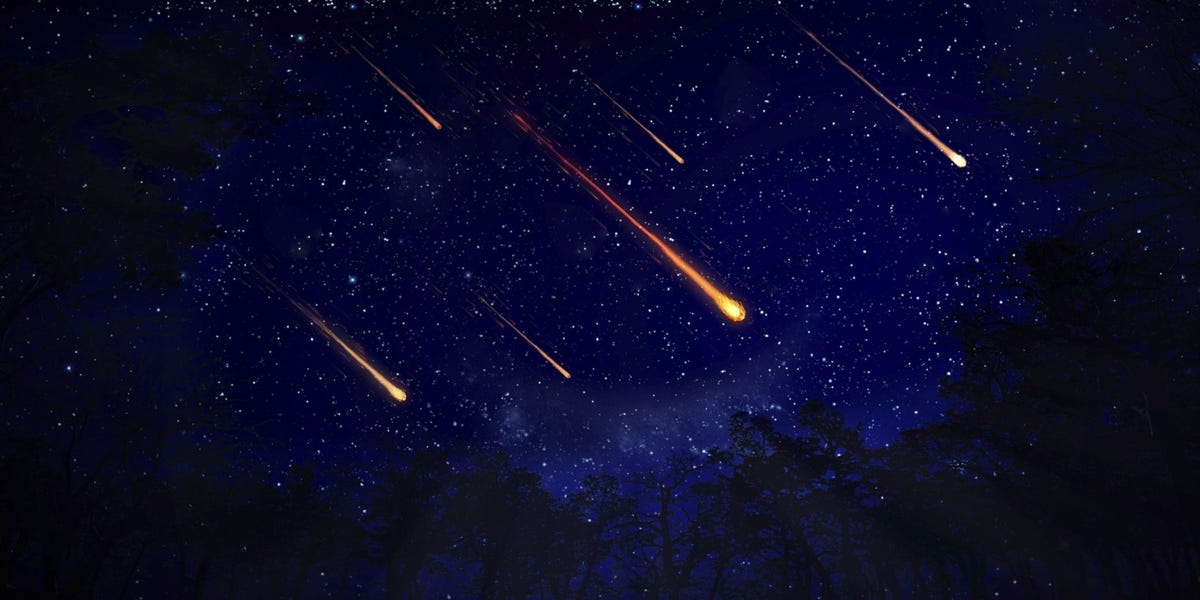
Many people first connect with meteorites through meteor showers. Watching bright streaks cross the night sky is thrilling, even though most meteors are tiny grains burning up in the atmosphere rather than recoverable meteorites. Still, the experience makes space feel close. The sky stops being a painted ceiling and becomes a real place with traffic.
For collectors and educators, even a small, legally obtained meteorite fragment can inspire curiosity. A slice of an iron meteorite reveals metallic patterns formed by slow cooling over millions of years. A chondrite may show tiny round chondrules, the bead-like droplets that formed in the early solar nebula. A carbonaceous meteorite may look plain but contain some of the most chemically fascinating material known.
The key experience is learning to look twice. Ancient meteorites rarely announce themselves with Hollywood sparkle. Their beauty is in their history. A tiny grain inside Murchison may be older than the Sun. A pale inclusion inside Allende may mark the beginning of solid matter in our Solar System. A chunk of EC 002 may have once been part of a volcanic crust on a world that no longer exists.
That changes how you think about rocks. It changes how you think about time. It may even change how you think about your daily problems. After all, if a stone can survive star birth, asteroid collisions, interplanetary travel, atmospheric fire, and a crash landing on Earth, maybe your inbox is not the most dramatic thing in the universe.
For students, meteorites are a gateway into chemistry, physics, astronomy, geology, and planetary science. For casual readers, they are proof that the universe has a long memory. For scientists, they are data-rich fragments of worlds we cannot otherwise visit. And for everyone else, they are a reminder that the ground beneath our feet is part of a much larger cosmic story.
Conclusion: The Oldest Meteorites Are More Than Ancient Rocks
The oldest meteorites ever discovered are not simply dusty stones with impressive birthdays. They are witnesses. Murchison preserves stardust older than the Sun. Allende and NWA 2364 carry some of the first solids of the Solar System. Erg Chech 002 and NWA 11119 reveal that small planetary bodies were melting and forming crusts almost immediately after the Solar System began. Black Beauty offers a rare look into ancient Mars.
Together, these meteorites show that the Solar System formed quickly, violently, and creatively. Planets did not appear all at once like furniture delivered from a cosmic warehouse. They grew from dust, heat, collisions, melting, and rebuilding. The oldest meteorites are the receipts.
Note: This article synthesizes information from reputable science sources, including NASA, the Smithsonian National Museum of Natural History, Arizona State University, the University of New Mexico, UC Berkeley, the Field Museum, the University of Chicago, the Meteoritical Society, USGS, Nature Communications, and PNAS. Key factual references include NASA’s meteorite research pages, Smithsonian meteorite education materials, ASU and UNM reports on NWA 11119, Field Museum and University of Chicago reports on Murchison presolar grains, Meteoritical Bulletin database descriptions, and peer-reviewed research on EC 002 and early Solar System chronology.