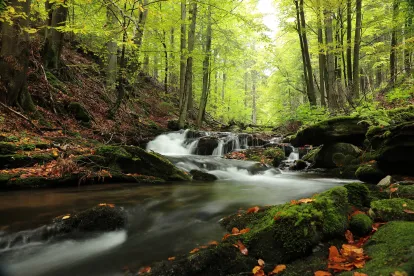
If you ever wanted one case that combines sacred land, copper, federal statutes, constitutional law, environmental review, and the kind of legal phrasing that makes normal people stare into the middle distance, Oak Flat is your case. At the center of the fight is Chí’chil Biłdagoteel, known in English as Oak Flat, a place in Arizona that Western Apache people consider holy, living, and irreplaceable. To mining interests, it is also a geological jackpot. Beneath it sits an enormous copper deposit. And once those two facts collided, a courtroom showdown was basically inevitable.
The headline that shook tribal advocates came in March 2024, when the Ninth Circuit, sitting en banc, ruled against Apache Stronghold and allowed the federal government to keep moving toward a land transfer that would place Oak Flat into the hands of Resolution Copper. The decision did not declare Oak Flat unimportant. Quite the opposite. The judges knew exactly how important the site is to Apache religion. But the court still concluded that, under its reading of the Religious Freedom Restoration Act, the government could transfer the land anyway. In legal terms, that was a loss. In human terms, many Apache families heard something even harsher: your sacred place matters, but not enough to stop the bulldozer of federal land policy.
What the Ninth Circuit Actually Decided
The case most people mean when they talk about the Ninth Circuit denying Apache rights at Oak Flat is Apache Stronghold v. United States. Apache Stronghold argued that the planned transfer of Oak Flat for the Resolution Copper project would violate the Religious Freedom Restoration Act, often shortened to RFRA, and also offend basic constitutional protections for religious exercise. Their point was simple, powerful, and hard to misunderstand: if a sacred site is physically destroyed, religious exercise tied to that site is not merely inconvenienced. It is ended.
The Ninth Circuit’s majority, however, framed the issue differently. The court leaned heavily on older precedent, especially Lyng v. Northwest Indian Cemetery Protective Association, and concluded that when the government disposes of its own real property, that action does not automatically count as a “substantial burden” on religion under RFRA. In plain English, the court said the government was not forcing Apache worshippers to violate their beliefs, penalizing them for those beliefs, or discriminating among religions in the way RFRA usually addresses. That legal distinction did all the heavy lifting in the case. It also did all the emotional damage.
This was not a polite, sleepy, everybody-go-home-early ruling. It was a deeply divided 6–5 decision from an en banc panel, which is judicial language for “the court knows this is a very big deal.” Five judges dissented. That alone tells you the law here is anything but tidy. Even many people who are comfortable with hard outcomes in hard cases found the majority’s logic unsettling. The core complaint from critics was blunt: if turning a sacred site into a giant crater is not a substantial burden on religion, what on earth would be?
The legal knot at the heart of the case
Here is the awkward little knot tying this case together: RFRA was written to provide strong protection for religious exercise, but courts still have to define what counts as a substantial burden. The Ninth Circuit majority said RFRA did not erase the basic limits recognized in older cases involving government land. Critics said that reading shrank RFRA so much that Native religions got the worst of both worlds: plenty of reverence in the rhetoric, but very little protection when sacred practices depend on a specific place. That tension is why Oak Flat became more than one land dispute. It became a referendum on whether American religious liberty law truly understands land-based Indigenous faith.
Why Oak Flat Is Not “Just Land”
For Western Apache communities, Oak Flat is not a scenic patch of public acreage with sentimental value and a nice view. It is a ceremonial landscape tied to creation, prayer, medicine gathering, healing, coming-of-age traditions, and the presence of the Ga’an, spirit messengers central to Apache belief. The site is associated with the Sunrise Ceremony for girls, other rites of passage, sacred plants and minerals, and springs understood to carry healing power. That is why advocates have long insisted that Oak Flat cannot be relocated, duplicated, or replaced with a spiritual coupon for somewhere else. Sacred geography does not come with a backup folder.
The history makes the issue even heavier. Oak Flat sits inside ancestral Apache homelands, yet those lands were gradually taken, constrained, and reorganized through the familiar machinery of westward expansion, federal control, and forced displacement. The Apache Stronghold litigation did not arise in a vacuum. It grew from generations of loss, layered on top of repeated promises that sacred places and tribal interests would be respected. So when Apache advocates argued that Oak Flat’s destruction would not merely inconvenience religion but erase a living place of worship, that was not poetic exaggeration. It was the literal point.
There is also a bitter historical irony here. Oak Flat had once been protected from mining. In 1955, President Dwight Eisenhower reserved part of the area from mineral entry, and that protection was renewed in 1971. But politics changed once the copper deposit under the site became impossible for lawmakers and mining interests to ignore. In 2014, Congress tucked the Southeast Arizona Land Exchange and Conservation Act into the National Defense Authorization Act, authorizing and directing the transfer of roughly 2,422 acres of federal land, including Oak Flat, in exchange for more than 5,300 acres owned by the company elsewhere in Arizona. That rider became the legal launchpad for everything that followed.
Why the Mine Keeps Winning Powerful Friends
To understand why the case became so fierce, you have to understand the copper. The deposit under Oak Flat has been described as one of the largest known copper resources on the planet, with estimates pointing to more than 40 billion pounds of copper. In an age obsessed with electric vehicles, transmission lines, grid expansion, batteries, electronics, and domestic supply chains, copper has gone from useful industrial metal to strategic celebrity. It is no longer just wiring in your wall. It is a policy talking point wearing a hard hat.
Resolution Copper, the joint venture backed by Rio Tinto and BHP, has long argued that the project could become a major domestic source of copper while creating jobs, tax revenue, and broader economic benefits for Arizona and the United States. Federal officials have echoed that case repeatedly. USDA materials have projected roughly 1,500 jobs, significant annual payroll, and major public revenue tied to the project. Supporters pitch the mine as a national-interest project: part economic development, part energy-transition muscle, part mineral-security strategy. Once a project gets marketed as vital to national defense and clean-energy infrastructure at the same time, it tends to collect powerful allies very quickly.
That does not mean the economics automatically settle the moral question. It means they supercharge it. Critics of the mine have never argued that copper is useless. They argue that the country should not solve one strategic problem by crushing an Indigenous sacred site. They also note that the proposed underground mining method, panel caving, would eventually trigger massive subsidence and leave a crater roughly two miles wide and around 1,000 feet deep. At that point, the phrase “compromise solution” starts sounding like stand-up comedy performed at the wrong funeral.
Why the Ruling Alarmed Religious Liberty Advocates
One reason the Oak Flat ruling drew national attention is that it did not worry only tribal advocates. It also rattled religious-liberty lawyers, civil-rights groups, and legal scholars who saw the case as a dangerous signal about how American law treats site-specific faith. A church can relocate. A congregation can rent another building. A sacred mountain, ceremonial spring, or holy land formation does not travel well. Native religions often depend on place in a way that the law, built largely around more portable models of worship, has struggled to understand.
That concern became even louder after the Supreme Court declined to hear Apache Stronghold’s appeal in May 2025. Justice Neil Gorsuch, joined by Justice Clarence Thomas, dissented from the denial of review and compared the result to allowing the destruction of a historic cathedral under shaky legal reasoning. Gorsuch’s dissent landed like a flare gun over the whole dispute. Even though the Court declined the case, the dissent underscored just how consequential the issue had become: not only for Apache worshippers, but for the broader meaning of religious liberty when the government controls land that another community regards as holy.
The criticism was not simply that the Apache lost. Courts rule against plaintiffs all the time. The deeper criticism was that the structure of the law itself appears more comfortable protecting religion when the burden looks like a fine, a permit denial, or a direct command than when the burden looks like total physical annihilation of a sacred place. That is the part many advocates found surreal. The law can recognize a burden when paperwork gets annoying, but not when a place of prayer is set to collapse into a mining crater? That logic has been a hard sell outside the courthouse.
What Happened After the Ninth Circuit Said No
The March 2024 en banc loss was not the end of the fight, though it was a major turning point. Apache Stronghold sought further review, and a broad coalition of tribal nations, advocates, and religious organizations lined up behind the effort. The Supreme Court ultimately refused to hear the case in May 2025, leaving the Ninth Circuit ruling in place. Meanwhile, the Forest Service moved ahead with the project record, including the Final Environmental Impact Statement and later the final Record of Decision tied to the land exchange process.
That meant the legal conflict shifted from one giant religious-liberty showdown into continuing litigation over environmental review, consultation, and procedural challenges. In 2025 and 2026, other plaintiffs, including tribal and conservation groups, kept pressing the issue in related lawsuits. The Ninth Circuit again denied efforts to block the land exchange in March 2026, and USDA announced that the Forest Service had completed the exchange that same month. So while the 2024 ruling was the symbolic earthquake, the aftershocks kept rolling.
That continuing timeline matters for anyone writing about Oak Flat today. The March 2024 decision was not just one disappointing court opinion. It was the legal foundation that made later federal action far easier. In that sense, the ruling did not merely comment on the dispute. It shaped the future of the site.
Experience, Memory, and the Strange Weight of a Place
To understand why this story refuses to stay inside legal briefs, you have to step away from case captions and imagine what Oak Flat means as an experience. For Apache families, supporters, and many observers, the place is not abstract. It is a campsite, a prayer ground, a place where songs carry differently, where ceremony connects the present to ancestors, where memory is stored not in paper archives but in land itself. That is one reason the public language around Oak Flat sounds so urgent. People are not describing the possible loss of a favorite park bench. They are describing the possible rupture of a relationship.
And relationships to place are not always easy to translate for institutions trained to count acres, minerals, and mitigation measures. Federal agencies can describe impacts in paragraphs, tables, appendices, and modeling scenarios. Courts can summarize religious claims with admirable seriousness. But neither format fully captures what it means when a community says, in effect, “our religion happens here, and nowhere else.” That sentence carries an emotional weight that administrative law often treats like a formatting issue. It is one thing to say there will be “irreversible impacts.” It is another to understand that irreversibility, in this context, means a ceremony may lose the ground that gives it meaning.
There is also the local experience of collision. In and around Arizona, Oak Flat has become a place where very different futures stare at each other across the same patch of earth. One future sees jobs, infrastructure, copper supply, and the promise of industrial relevance in an economy hungry for electrification. Another sees a sacred landscape that has already survived conquest, policy shifts, and decades of pressure, only to be threatened now by a project sold as modern necessity. Both sides talk about the future. The difference is that one future imagines extraction, while the other imagines continuity.
Even for people outside the Apache community, Oak Flat has become a strangely vivid symbol. Climbers, environmental advocates, religious-liberty groups, and legal observers have all projected different concerns onto the site, but many arrive at the same uneasy conclusion: once the law treats a sacred place as disposable because the government holds title, the precedent does not stay neatly in Arizona. It raises broader questions about whose spiritual maps count and whose are treated as sentimental footnotes. That is why the case has produced such lasting discomfort. It feels specific, but it points to a national blind spot.
And perhaps that is the most haunting experience tied to this story: the feeling that everyone in the case understood the stakes, yet the machinery kept moving anyway. Judges recognized Oak Flat’s holiness. Officials recognized tribal concern. Mining advocates recognized the controversy. No one can honestly say the sacred value of the site was hidden in fine print. It was discussed openly, repeatedly, and in great detail. The unresolved ache of Oak Flat comes from knowing the system looked directly at the problem and still answered with a transfer order.
In the end, Oak Flat is a legal battle, a political battle, and a resource battle. But it is also a story about whether the United States can meaningfully protect Indigenous sacred places when those places sit on something profitable. The Ninth Circuit answered that question one way. Apache advocates have spent years trying to answer it another. And long after the opinions are shelved and the headlines cool off, that deeper conflict will remain: what happens when a nation says it respects religious freedom, but a sacred place is standing over a fortune in copper?
The answer, at least so far, is not a comforting one.