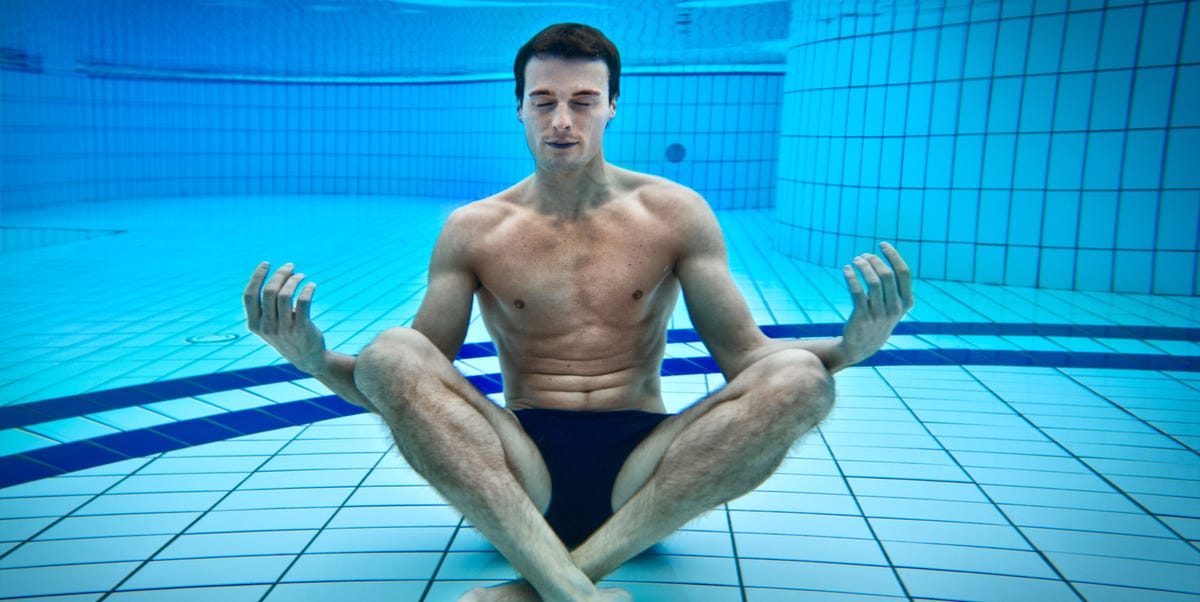
Most people start negotiating with their lungs after about 30 seconds underwater. Croatian freediver Vitomir Maričić remained submerged for 29 minutes and 3 secondslong enough to watch most television sitcoms without commercials.
His extraordinary performance set a Guinness World Record for the longest voluntary underwater breath hold by a man. However, there is an important detail behind that astonishing number: this was an oxygen-assisted static apnea attempt, not an ordinary breath hold performed after breathing room air.
Vitomir Maričić’s Record-Breaking 29-Minute Breath Hold
Maričić completed the record on June 14, 2025, in Opatija, Croatia. Floating face down in a pool at the Hotel Bristol, he held his breath for exactly 29 minutes and 3 seconds while judges, medical professionals, safety personnel, and approximately 100 spectators watched.
The setting was carefully controlled. The pool was about 10 feet deep, but Maričić remained near the surface and barely moved. That matters because swimming, diving, or battling currents would have consumed precious oxygen. Static apnea is an exercise in doing almost nothing with remarkable precision.
Before beginning, Maričić breathed pure oxygen for approximately 10 minutes. This preparation greatly increased the oxygen available in his lungs, blood, and other tissues. Under Guinness rules for this particular category, competitors may breathe pure oxygen before the clock starts.
His 29:03 performance beat the previous record of 24 minutes and 37 seconds, achieved by fellow Croatian freediver Budimir Šobat in 2021. Maričić did not merely squeak past the old mark. He added 4 minutes and 26 secondsan enormous improvement in a discipline where a few extra seconds can feel like a committee meeting held inside your diaphragm.
The essential record details
- Record holder: Vitomir Maričić
- Official time: 29 minutes, 3 seconds
- Date: June 14, 2025
- Location: Opatija, Croatia
- Discipline: Oxygen-assisted static apnea
- Previous record: 24 minutes, 37 seconds
Why the Pure-Oxygen Detail Matters
A headline saying a man held his breath for almost 30 minutes is accurate, but it can create the wrong mental picture. Maričić did not take one breath of ordinary air and casually disappear beneath the surface until lunchtime.
Room air contains roughly 21% oxygen, with most of the remainder being nitrogen. Breathing pure oxygen before an attempt replaces much of the nitrogen in the lungs with oxygen and substantially enlarges the body’s usable oxygen reserve.
That does not make the attempt easy or safe. Carbon dioxide continues accumulating, muscles continue using oxygen, and the body eventually produces an increasingly forceful demand to breathe. Pure oxygen extends the possible duration; it does not turn a human into a submarine.
Oxygen-assisted apnea versus competitive static apnea
Traditional freediving organizations such as AIDA conduct static apnea records without pure-oxygen preparation. Athletes begin after breathing normal air, which produces much shorterbut still remarkabletimes. The long-standing men’s AIDA record is 11 minutes and 35 seconds, set by Stéphane Mifsud in 2009.
Both achievements involve elite conditioning and mental control, but they belong to different categories. Comparing them directly is like comparing a marathon with an ultramarathon: related sports, different rules.
How Can a Human Stop Breathing for So Long?
The answer is not simply “large lungs.” Exceptional breath-holding performance depends on oxygen storage, metabolic efficiency, tolerance of carbon dioxide, cardiovascular adaptations, relaxation, and extensive supervised training.
Carbon dioxide creates the urge to breathe
During a breath hold, the body consumes oxygen and produces carbon dioxide. Rising carbon dioxide is one of the primary signals that generates air hunger. That uncomfortable feeling usually arrives well before the body has exhausted every available molecule of oxygen.
Trained freedivers become unusually familiar with that warning. They learn to remain calm as pressure builds and the diaphragm begins contracting involuntarily. These contractions are not the lungs running out of room; they are respiratory muscles responding to chemical changes in the blood.
Maričić said the first several minutes were comparatively manageable. As carbon dioxide accumulated, sharp discomfort and powerful contractions developed. Around the middle of the attempt, he began questioning whether he could continue. After 20 minutes, he reportedly felt more confident mentally, even while the physical strain kept increasing.
The human diving response conserves oxygen
Facial immersion and breath holding activate a group of automatic reactions commonly called the mammalian diving response. The heart rate may slow, blood vessels in the limbs constrict, and circulation becomes more focused on oxygen-sensitive organs such as the heart and brain.
The spleen can also contract and release additional red blood cells into circulation. These responses do not create new oxygen, but they help manage the limited supply more efficiently.
Stillness reduces metabolic demand
Every movement costs oxygen. Static apnea competitors therefore work to relax nearly every unnecessary muscle. The ideal posture may look uneventful from the pool deck, but internally the athlete is controlling tension, discomfort, attention, and the instinct to breathe.
Stress is expensive. A racing heart and tight muscles accelerate oxygen use, so mental training becomes a practical part of performance. Elite freedivers may use visualization, structured attention, and other calming strategies under professional supervision. The goal is not to ignore danger but to avoid wasting energy through panic.
The Physical Cost of the World Record
Maričić’s achievement was not a peaceful half-hour meditation with a pool accessory. He later described it as one of the worst experiences of his life.
Chest and diaphragm contractions became physically exhausting. Afterward, he reported a severe headache that continued for two days as well as intestinal bleeding. Those reported effects underline the difference between surviving an extreme performance and emerging from it completely unaffected.
A dedicated medical team of approximately 15 specialists supported the attempt. Multiple judges and safety personnel were also present. That infrastructure was not decorative. Prolonged apnea can lead to hypoxia, loss of motor control, unconsciousness, neurological injury, cardiac complications, drowning, or death.
Maričić’s broader athletic background includes freediving, mountaineering, climbing, skydiving, and underwater walking. Before the oxygen-assisted record, he had recorded a Croatian national static apnea performance of 10 minutes and 8 seconds without breathing pure oxygen. Years of experience came before the headline-making result.
Why Hyperventilation Is Not a Safe Shortcut
Some people assume that taking many rapid, deep breaths before entering the water loads the body with a huge amount of oxygen. In reality, normal blood is already highly saturated with oxygen. Hyperventilation mainly reduces carbon dioxide.
Lowering carbon dioxide can delay the urge to breathe while oxygen continues falling. A swimmer may therefore lose consciousness with little warning. The American Red Cross, Divers Alert Network, YMCA of the USA, and swimming-safety organizations warn that intentional hyperventilation followed by prolonged underwater breath holding can be deadly.
This danger is often called hypoxic blackout. It can happen in shallow water as well as deep water, so a swimming pool is not automatically a safe laboratory. If someone becomes unconscious face down, only a small amount of water is needed for a fatal outcome.
What the Record Teaches Us About Human Performance
The 29-minute breath-hold world record shows that human physiology can be trained far beyond everyday expectations. It also demonstrates why context is essential when reading spectacular headlines.
Maričić combined pure-oxygen preparation, exceptional tolerance of carbon dioxide, cardiovascular adaptations, minimal movement, psychological discipline, and professional safety support. Remove any of those elements and “almost 30 minutes” stops being a useful description of what occurred.
The achievement also served a purpose beyond collecting a certificate. Maričić used the event to draw attention to marine conservation and the work of Sea Shepherd, connecting his record with concerns about overfishing and ocean protection.
World records often invite people to ask, “Could I do that?” A better question here is, “What combination of science, training, supervision, and frankly alarming determination made that possible?” The answer is considerably more interestingand much less likely to end with the lifeguard filling out paperwork.
Frequently Asked Questions
Who held his breath for almost 30 minutes?
Croatian freediver and multisport athlete Vitomir Maričić held his breath underwater for 29 minutes and 3 seconds in June 2025.
Did he breathe pure oxygen first?
Yes. Maričić breathed pure oxygen for approximately 10 minutes before beginning the oxygen-assisted static apnea attempt.
What record did he break?
He broke the Guinness World Record for the longest voluntary underwater breath hold by a man. His time surpassed Budimir Šobat’s previous mark of 24 minutes and 37 seconds by 4 minutes and 26 seconds.
Can an average person hold their breath that long?
No. Most untrained adults can hold their breath for less than two minutes, although results vary with health, circumstances, and individual physiology. Maričić’s performance involved elite training, oxygen assistance, controlled conditions, and extensive safety support.
Is breath-hold training dangerous?
It can be, particularly in water. Hypoxic blackout may occur without adequate warning and can lead to drowning. Training should only take place through a reputable freediving program with qualified, attentive safety partners.
Conclusion: A Record That Deserves an Asteriskand Applause
Vitomir Maričić’s 29-minute, 3-second breath hold was a legitimate, officially recognized, and astonishing human achievement. The necessary asterisk is not an accusation; it is an explanation. This was an oxygen-assisted static apnea record performed under specialized rules and tightly controlled conditions.
The result reveals how dramatically training and preparation can influence the body’s response to oxygen loss and carbon dioxide buildup. It also offers an unmistakable safety lesson: elite performance should be admired, not casually imitated.
Experiencing a 29-Minute Breath Hold From the Pool Deck
Watching static apnea is an unusual experience because almost nothing appears to happen. There is no sprinting, splashing, or heroic soundtrack. The athlete floats face down while a timer steadily transforms ordinary seconds into something increasingly difficult to comprehend.
During the opening minutes, spectators may feel more tension than the athlete appears to show. Maričić’s body remains loose and quiet. Safety personnel stay close enough to intervene, but they avoid creating unnecessary disturbance. Judges monitor the procedure while medical specialists watch for trouble. The entire room is organized around one person doing something humans normally perform automatically: breathingexcept he is temporarily refusing to do it.
At five minutes, an observer may remember that this already exceeds what most people could safely imagine attempting. At 10 minutes, the performance has entered the territory of elite, non-oxygen-assisted static apnea. Yet the official timer continues.
The atmosphere changes as the body begins displaying strain. Respiratory contractions may produce small, rhythmic movements. These are physical signs of the escalating conflict between voluntary control and the brain’s demand for ventilation. The athlete’s calm exterior can conceal intense discomfort, making static apnea feel strangely intimate despite the crowd.
For Maričić, breaking the attempt into manageable mental sections helped make the remaining time seem less overwhelming. This is a familiar endurance-sports experience: the full distance may feel impossible, but reaching the next checkpoint feels negotiable. Marathon runners use aid stations, climbers use pitches, and a static apnea athlete uses minutes. The scenery is admittedly less varied.
As the clock passes 20 minutes, the performance becomes difficult to relate to normal experience. A person can prepare breakfast, answer several emails, or spend an impressive amount of time looking for a phone already in his hand during that interval. Maričić remained underwater, coping with worsening contractions and monitoring his condition.
The final minutes bring a complicated kind of suspense. Staying submerged longer builds the record, but it also narrows the margin for error. The audience wants the number to rise while the safety team remains prepared to end the attempt immediately if necessary. That tension is central to responsible freediving: achievement never cancels physiology.
When Maričić finally surfaced, the task was not complete simply because his airway had cleared the water. In competitive apnea, officials examine the athlete’s recovery and ability to respond appropriately. A person experiencing serious hypoxia may reach the surface yet still lose motor control or consciousness.
The most memorable part of the experience may therefore be the return of an ordinary breath. After 29 minutes of calculation, contractions, and intense concentration, inhaling becomes automatic again. The crowd can celebrate, the judges can confirm the result, and everyone else can rediscover how luxurious it is to breathe without a stopwatch.
Maričić’s later description complicates the triumphant scene. His headache, physical exhaustion, and reported intestinal bleeding show that the record imposed a real cost. The lesson is not that discomfort should always be defeated through willpower. It is that extraordinary feats require an honest understanding of consequences.
For readers inspired by the story, the safest useful experience is not a home-record attempt. It is learning about freediving through a qualified instructor, developing water awareness, and respecting the buddy system. The wonder of the achievement survives that caution. In fact, understanding the risks makes 29 minutes and 3 seconds seem even more remarkable.